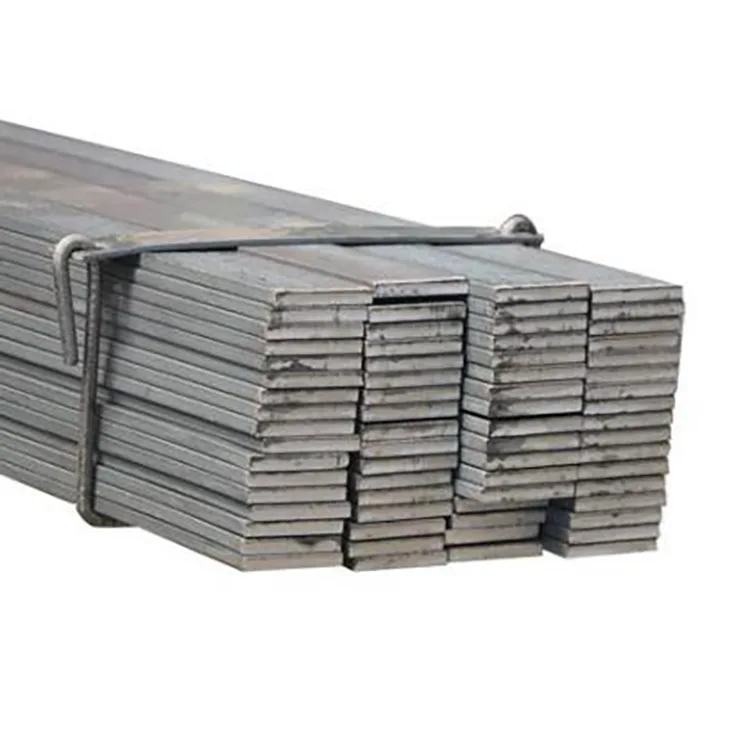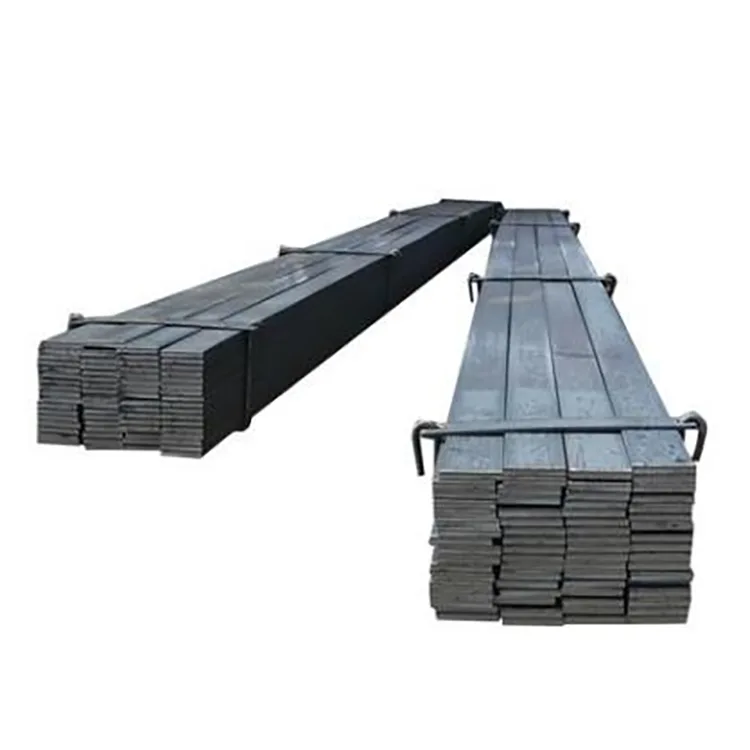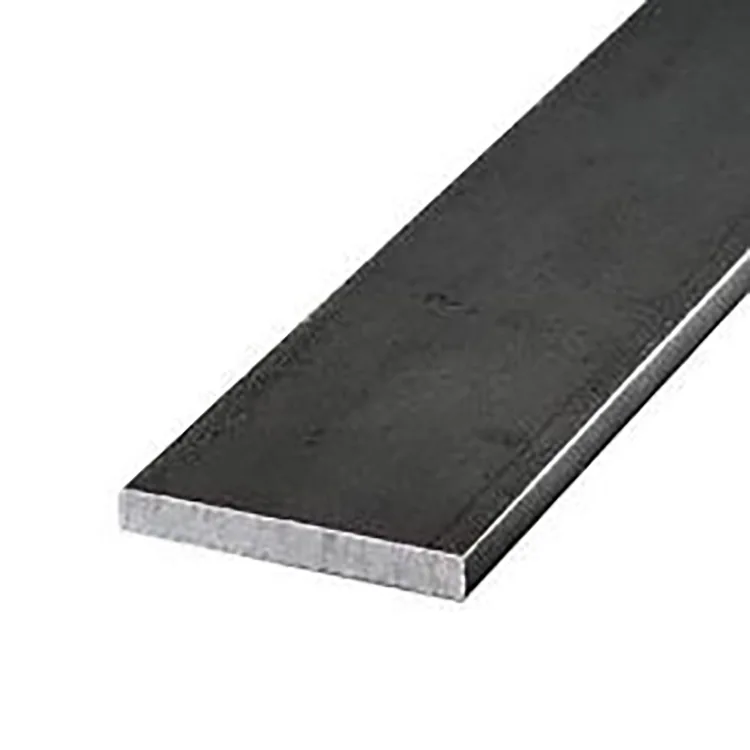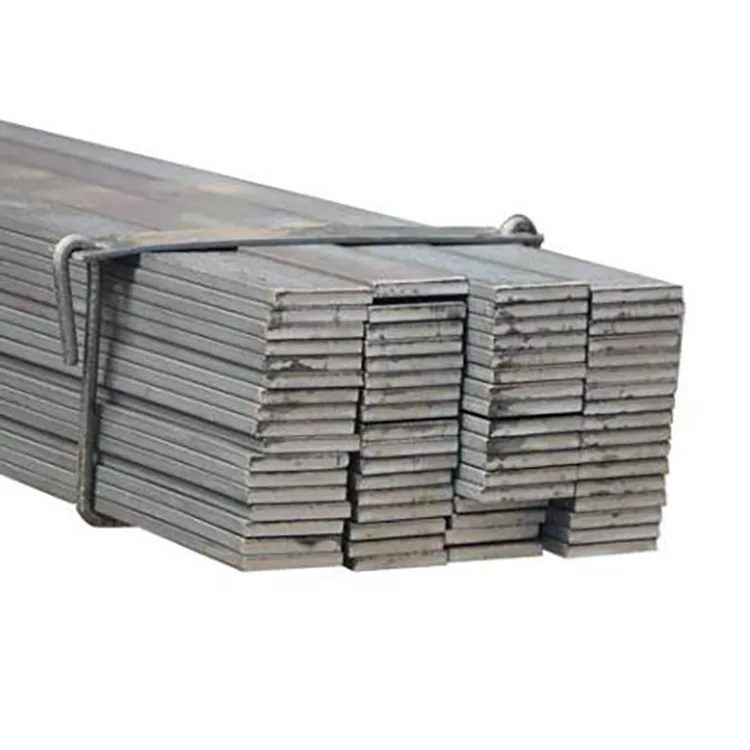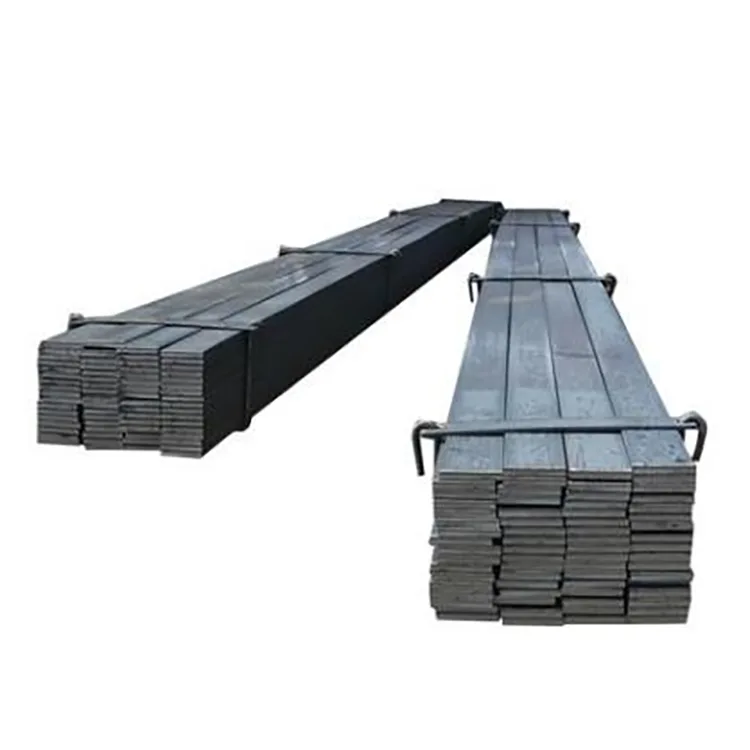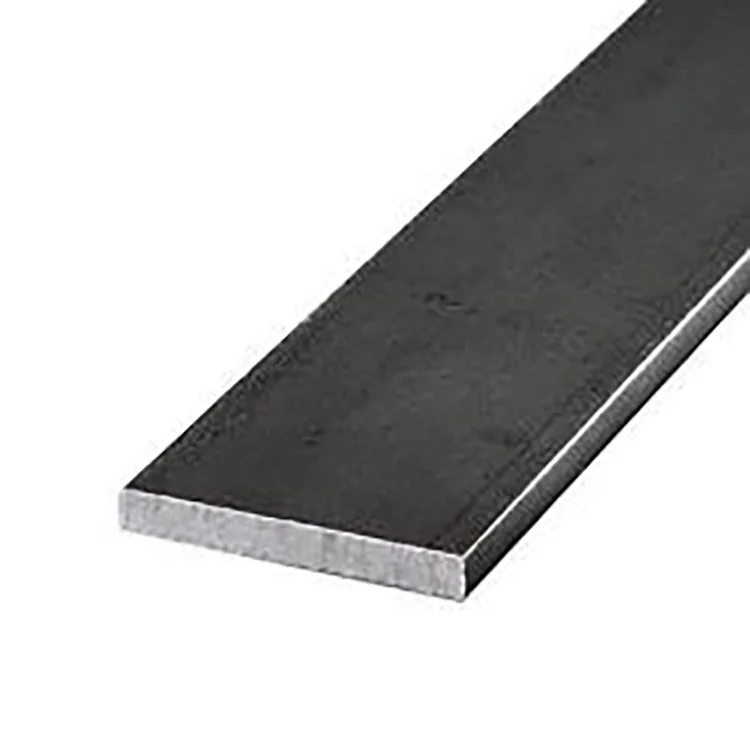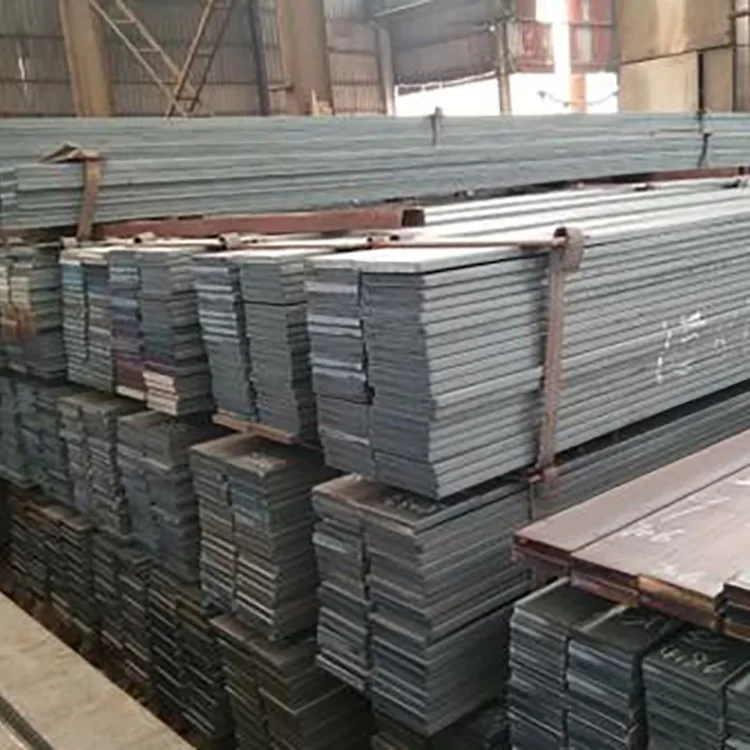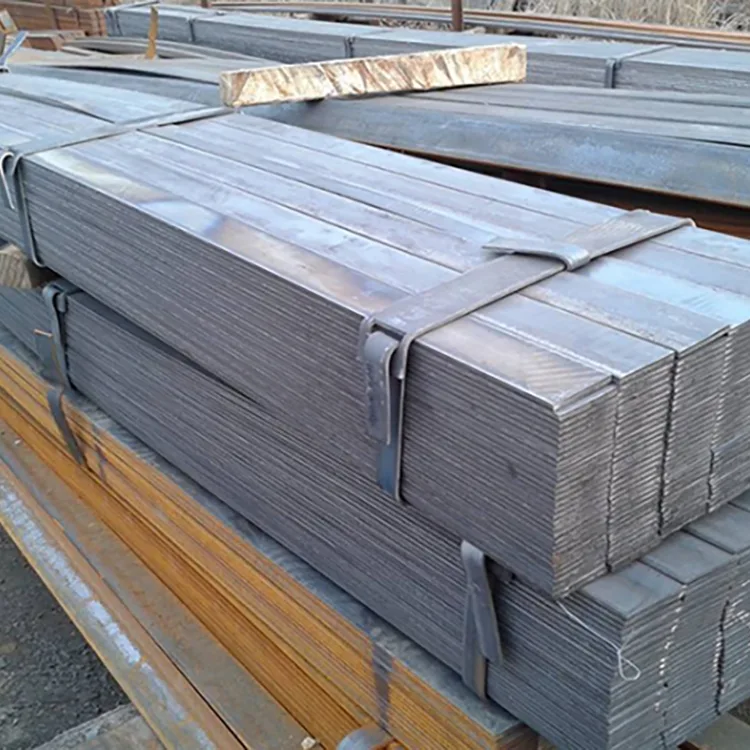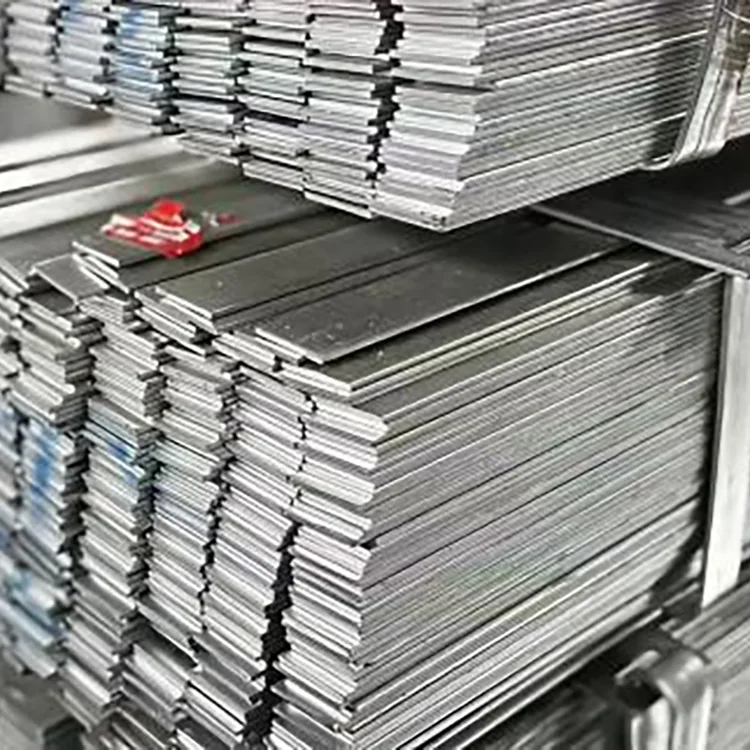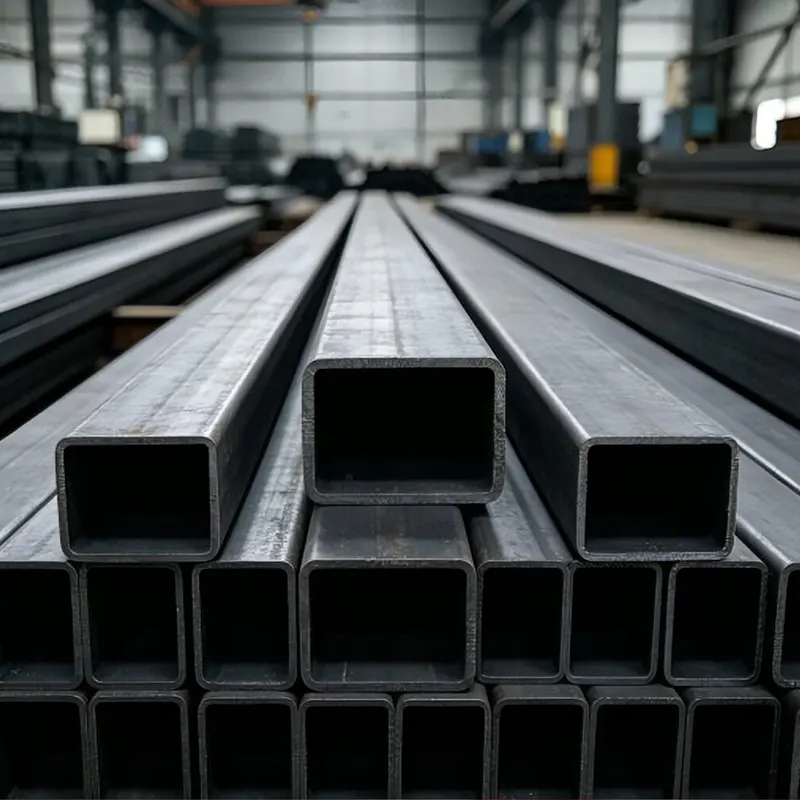
Made by rolling heated steel billets into solid rectangular sections, Hot-Rolled Steel Flat Bar is a basic material for fabrication, structural connections and machinery parts. Q235B and Q355B cover common and higher-load applications, with widths of 12–200 mm, thicknesses of 3–60 mm, and 6 m, 9 m or 12 m standard lengths. The untreated black surface can be painted, galvanized or powder coated after fabrication.
Hot-Rolled Steel Flat Bar is a solid rectangular steel section produced directly by hot rolling. Unlike flat strips slit from steel plate or coil, the bar is rolled to its finished section, with consistent width and thickness along its length.
The standard surface is black hot-rolled steel without a protective coating. This allows the material to be cut, drilled, welded, bent or machined before painting, galvanizing or another final surface treatment.
Common uses include steel fabrication, machinery components, construction connections, embedded parts, grounding systems and equipment supports.
Q235B is commonly used for general fabrication, connection parts, guardrails, embedded components and conventional steel structures where standard strength and weldability are required.
Q355B provides a higher yield-strength level and is used for heavier supports, equipment components and other applications where the design requires higher strength.
The correct grade depends on the engineering requirement. Width, thickness, loading condition and support arrangement also affect the final performance of the component.
How Hot Rolled Flat Bar Is Made
The basic production route is:
Steel billet → heating → rough rolling → finishing rolling → sizing → straightening → cutting → inspection → bundling
The rectangular section is formed directly during rolling rather than being slit from plate or coil. After rolling, the bars are checked for dimensions, straightness and visible surface condition.
The dark surface on hot-rolled steel is normally mill scale. It should not be confused with red-brown corrosion.
Why Use Hot-Rolled Steel Flat Bar?
The main advantage is its solid rectangular section combined with straightforward fabrication. It can be cut into connection pieces, drilled for bolted joints, welded into brackets or supports, and machined into thicker components.
For larger thicknesses, it can also serve as a machining blank for equipment bases, support blocks and fabricated machinery parts.
Because the standard product is supplied without a protective coating, the final surface treatment can be selected after fabrication according to the service environment.
Hot Rolled vs Cold Drawn Flat Bar
Hot-Rolled Steel Flat Bar and cold drawn flat bar are made for different requirements.
Hot rolled flat bar is mainly used for structural fabrication, welding, general machining blanks and applications where extremely tight dimensional tolerances are not the primary requirement.
Cold drawn flat bar undergoes additional processing to achieve tighter dimensions, a more consistent section and a smoother surface. It is more suitable for precision-machined parts where dimensional tolerance is important.
Hot Rolled vs Plate-Slit Flat Bar
Plate-slit flat bar is produced by cutting steel plate or coil into strips, while hot rolled flat bar is rolled directly into a rectangular section.
For fabrication work, the difference can affect edge condition, section geometry, straightness and fitting during cutting and welding. The manufacturing route should therefore be specified clearly when these characteristics matter to the finished component.
Applications
Steel Structures
Used for connection members, stiffeners, brackets, reinforcement pieces and embedded steel components.
Machinery and Equipment
Used for equipment bases, support plates, machine frames, machining blanks and heavy fabricated components.
Construction
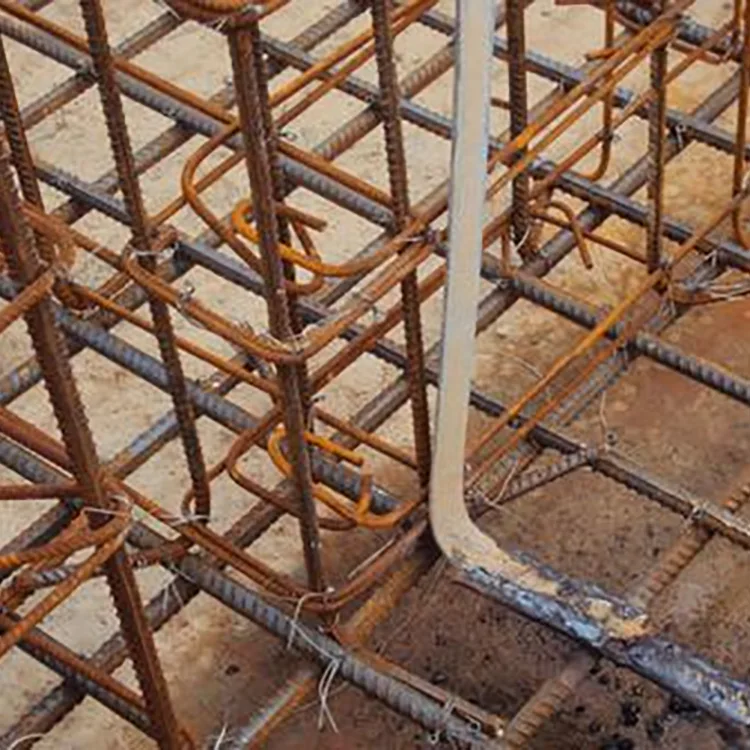
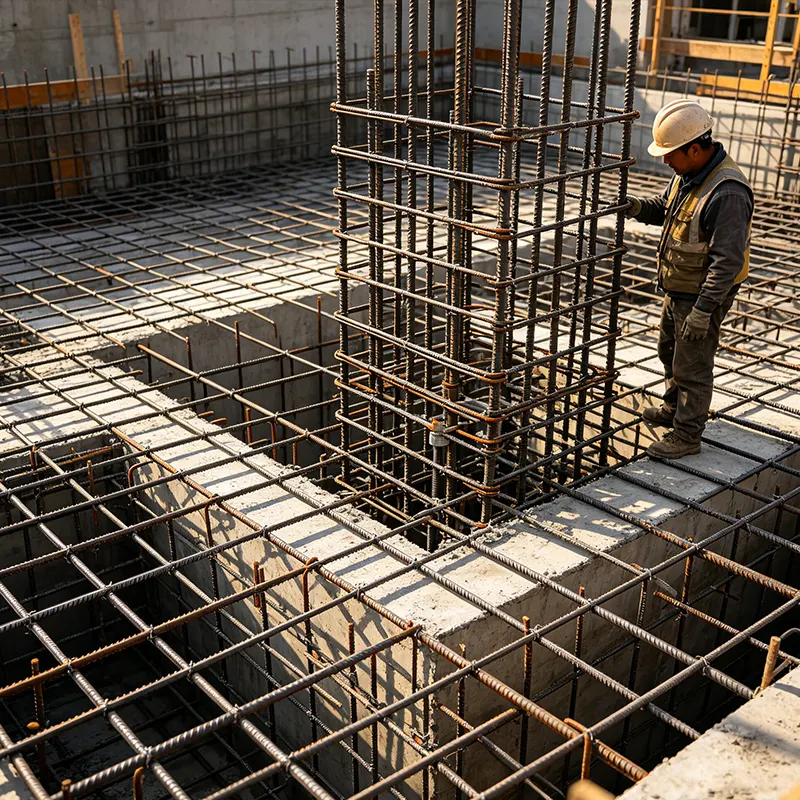
Used for embedded parts, reinforcement components, connection pieces and other fabricated steelwork.
Grounding Systems
Flat bar is used as a grounding conductor because it is easy to lay, fix and weld. Common sizes include 40×4 mm and 50×5 mm, although the final size should follow the electrical design and applicable requirements.
For exposed or buried grounding systems, corrosion protection may be required. Hot-dip galvanizing can be carried out after fabrication when additional protection against moisture and soil exposure is needed.
Outdoor and Municipal Steelwork
Common applications include guardrail components, sign supports, lamp-related structures, warehouse reinforcement and other fabricated outdoor steelwork.
Heavy Fabrication
Thicker flat bar provides a solid starting material for machining, support plates and heavy fabricated parts.
Examples include:
80×20 mm Q355B 100×25 mm Q355B
For machining applications, the required machining allowance, dimensional tolerance and surface condition should be considered together with the nominal section size.
Surface Treatment
The standard product has a black hot-rolled surface without a protective coating. Depending on the application, the fabricated component can subsequently be finished by:
Painting – for conventional indoor and outdoor steel structures.
Powder coating – for fabricated products where appearance and surface protection are required.
Hot-dip galvanizing – for outdoor, humid or buried service conditions.
Electrogalvanizing – where a thinner zinc coating is appropriate.
The surface treatment should be selected according to the operating environment and fabrication sequence.
Processing
Available processing includes:
Fixed-length cutting
Drilling and punching
Bending
Chamfering
Angled cutting
Deburring
For repetitive fabrication, pre-cut lengths can reduce on-site cutting and simplify production. When the finished parts will be galvanized, the fabrication requirements should be confirmed before the galvanizing stage.
Quality Control
Inspection can cover the properties that directly affect fabrication and application:
Material: Q235B or Q355B as specified
Dimensions: width and thickness
Straightness: for fitting and welding
Surface: visible cracks, laminations and other defects
Length: standard or fixed-length requirements
Documentation: material certificates and agreed inspection records
Mill scale is normal on black hot-rolled steel. Inspection focuses on defects that could affect fabrication, machining or the intended application.
How to Specify Hot-Rolled Steel Flat Bar
A quotation request should normally include the following information:
Steel grade
Width and thickness
Length
Quantity
Processing requirements
Surface treatment
Drawing, if fabricated parts are required
For example:
Q235B / 50×8 mm / 6 m / Hot-Rolled Steel Flat Bar / 20 tons
For processed material:
Q355B / 100×25 mm / fixed length / drilling and cutting according to drawing
Why Choose Us?
Our steel supply chain in Tianjin Daqiuzhuang supports hot-rolled flat bar supply together with cutting and downstream processing resources.
Size range: 12–200 mm width and 3–60 mm thickness
Grades: Q235B and Q355B
Standard lengths: 6 m, 9 m and 12 m
Processing: cutting, drilling, bending, chamfering and angled cutting
Documentation: material certificates and agreed inspection records
Export packing: bundled packing and moisture protection can be arranged
Delivery
Common specifications can be supplied from available stock, while non-standard sizes and processed parts are arranged according to production requirements.
For larger orders, customers can provide a size list and cutting schedule so that material planning is based on the required piece dimensions.
FAQ
Q1. Is Hot-Rolled Steel Flat Bar suitable for welding?
Yes. Q235B is commonly used for general welded fabrication, while Q355B can be selected for components where higher strength is required by the design.
Q2. Is the black surface rust?
Usually not. The dark surface is mainly hot-rolling mill scale. Red-brown rust is a separate corrosion condition.
Q3. Can flat bar be galvanized?
Yes. The bar can be galvanized after fabrication when the finished component requires additional corrosion protection.
Q4. What is the difference between hot rolled and cold drawn flat bar?
Hot rolled flat bar is mainly used for structural fabrication and general industrial applications. Cold drawn flat bar is processed further for tighter dimensions, more consistent geometry and improved surface finish.
Q5. Can the bar be cut to a fixed length?
Yes. Standard lengths are 6 m, 9 m and 12 m, and fixed-length cutting can be arranged according to the required dimensions.
Q6. Can flat bar be drilled or bent?
Yes. Cutting, drilling, punching, bending, chamfering and angled cutting are available for suitable sizes and requirements.
Q7. Should I choose Q235B or Q355B?
Q235B is commonly used for general fabrication, while Q355B is selected when the design requires a higher strength level. The choice should follow the engineering requirement rather than the material grade alone.
Q8. Can flat bar be used for grounding?
Yes. Sizes such as 40×4 mm and 50×5 mm are commonly used, but the final conductor size should be determined by the grounding design and applicable electrical requirements.
Q9. Can ASTM A36 or SS400 be supplied?
ASTM A36, SS400 and other agreed grades can be discussed for export orders, subject to the required material specifications and documentation.
Q10. What information should be included in a quotation request?
Provide the steel grade, width, thickness, length, quantity, processing requirements and surface treatment. For fabricated parts, a drawing should be included whenever available.
Hot Tags: Hot-Rolled Steel Flat Bar Manufacturer, Supplier, Wholesale
We use cookies to offer you a better browsing experience, analyze site traffic and personalize content. By using this site, you agree to our use of cookies. Privacy Policy