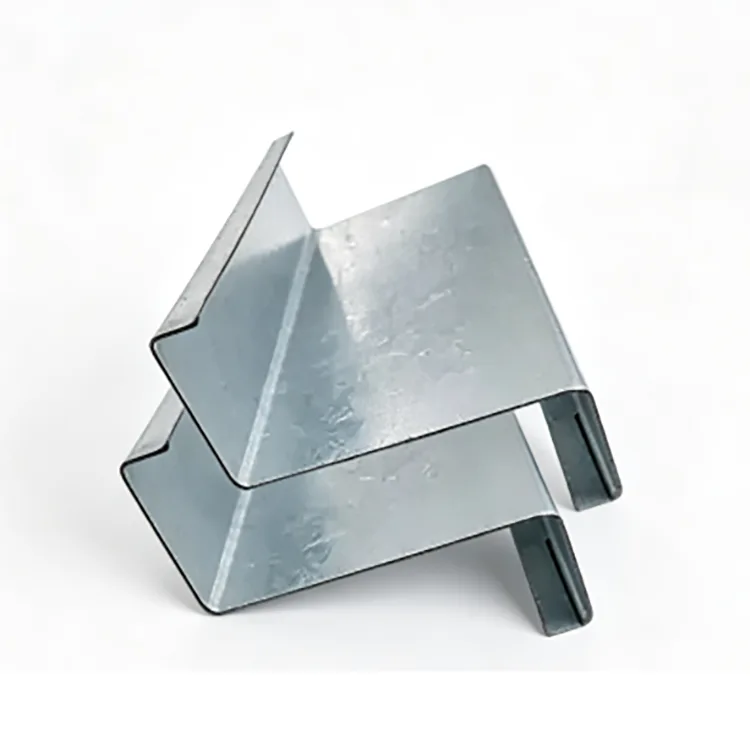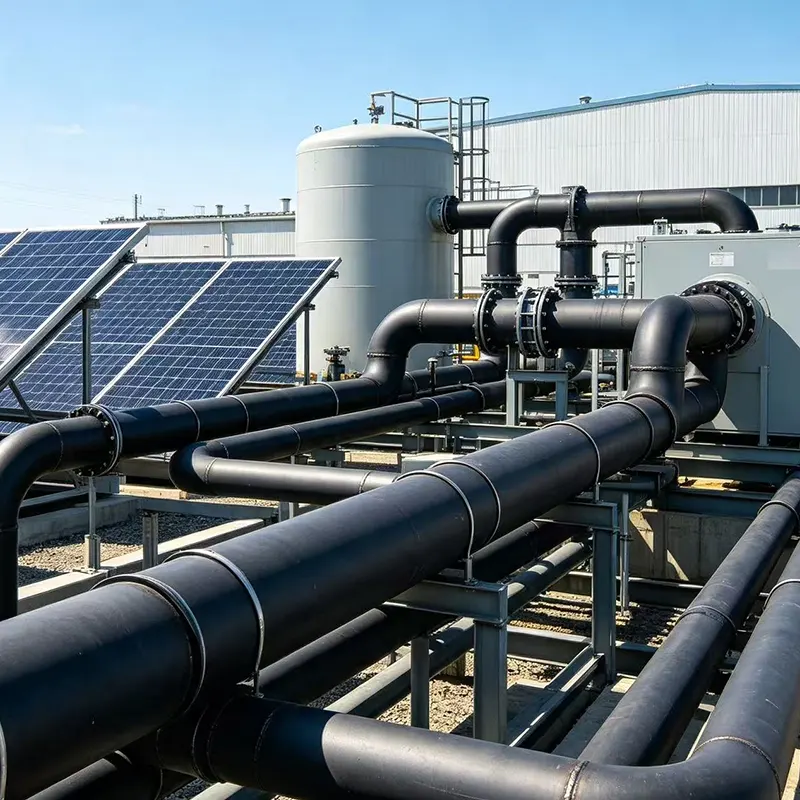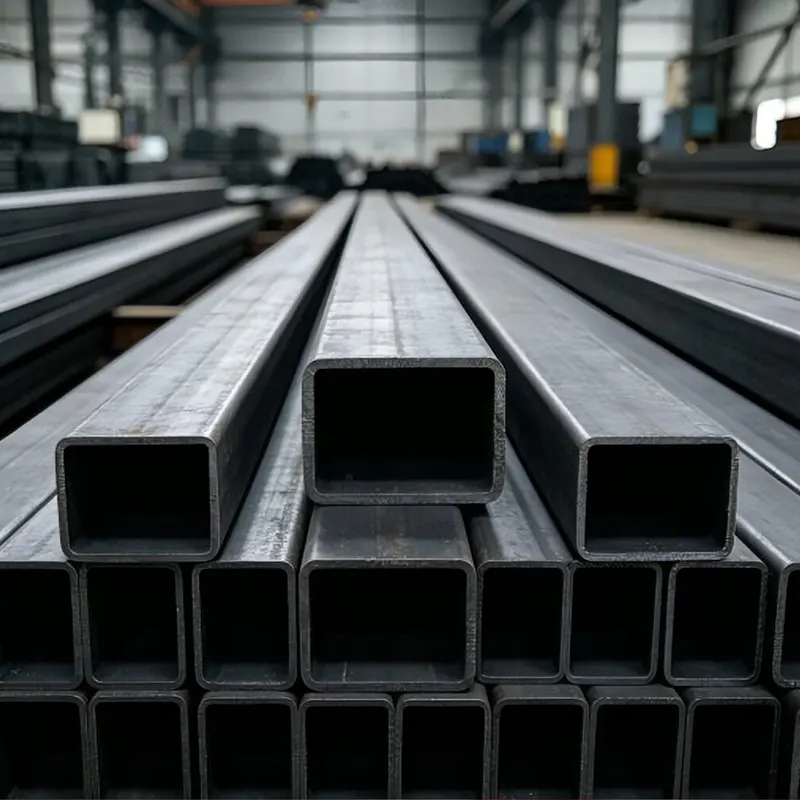

Rongheng provides Galvanized Z Purlin solutions for industrial buildings, factory roofs, rooftop photovoltaic systems, agricultural structures, and other light steel applications. Manufactured from Q235B or Q355B steel through cold roll forming and hot-dip galvanizing after fabrication, these Z-shaped structural members combine efficient roof-span design with corrosion protection for demanding outdoor environments.
Galvanized Z purlins are cold-formed structural steel members designed primarily for sloped roofs and light steel structures. Their Z-shaped geometry allows adjacent purlins to overlap, helping create continuous purlin lines across roof spans. When the finished Z section is hot-dip galvanized after forming, cutting, and punching, the completed profile receives a protective zinc coating across its exposed surfaces. This makes galvanized Z purlins suitable for factory roofs, rooftop solar projects, agricultural buildings, humid industrial facilities, and coastal structures. Selection should consider steel grade, section height, wall thickness, span, roof loads, purlin spacing, and corrosion environment rather than relying on thickness alone.
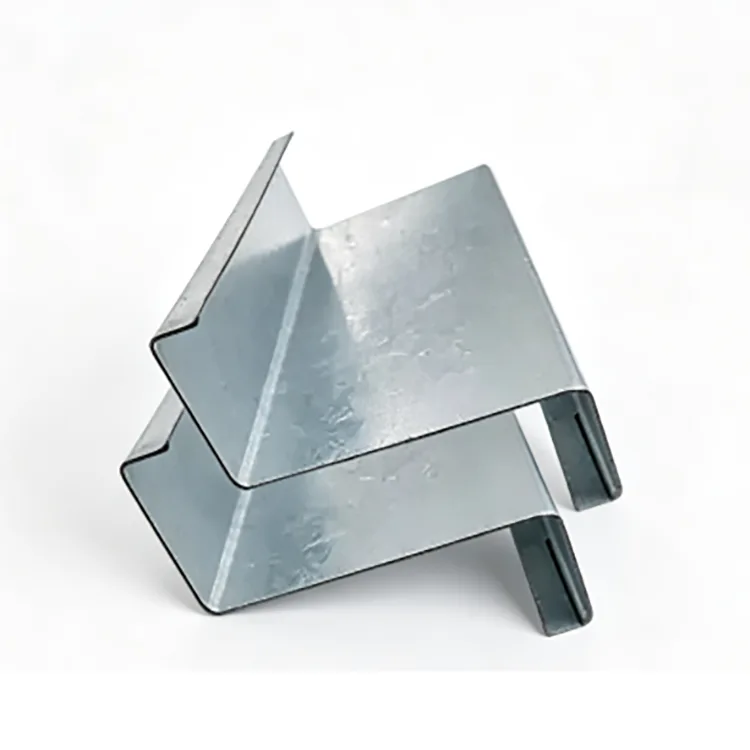
Table of Contents
- What Is Galvanized Z Purlin?
- Why Does the Z Section Matter in Roof Construction?
- How Is Galvanized Z Purlin Manufactured?
- What Are the Main Specifications of Galvanized Z Purlin?
- How Should Zinc Coating Be Selected?
- Should You Choose Q235B or Q355B?
- Where Is Galvanized Z Purlin Commonly Used?
- How Should Buyers Select the Right Z Purlin?
- What Quality Factors Should Buyers Check?
- FAQ About Galvanized Z Purlin
- Conclusion
What Is Galvanized Z Purlin?
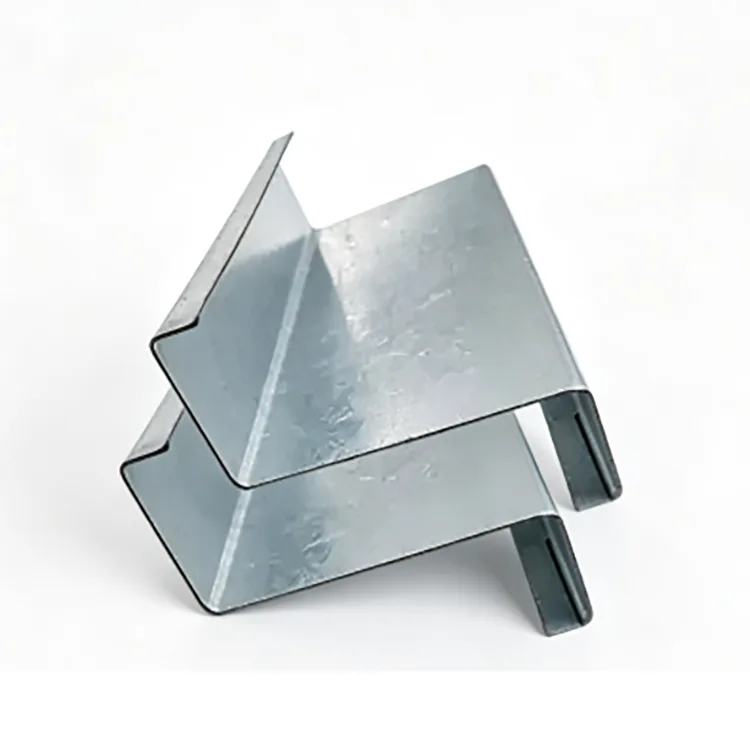
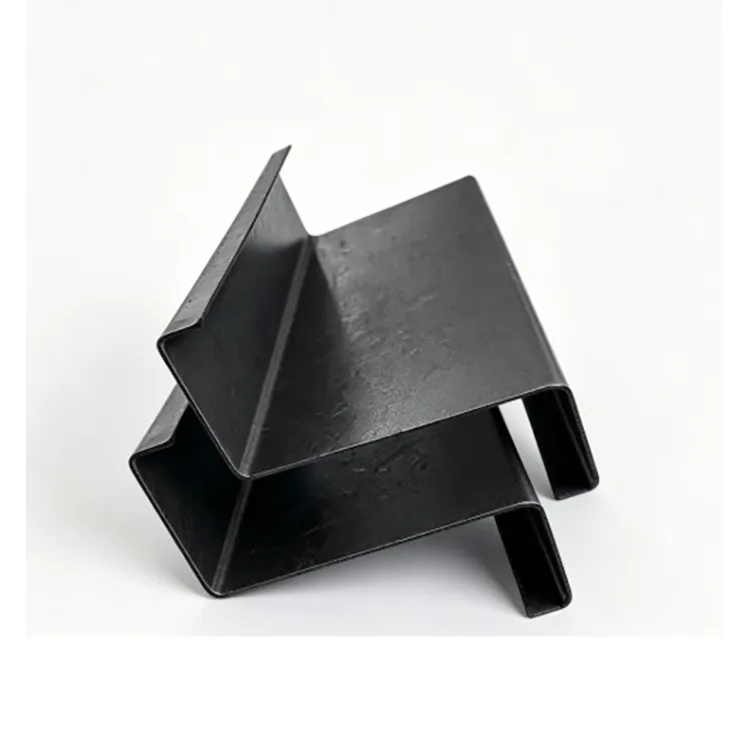
A galvanized Z purlin is a cold-formed structural steel section with a Z-shaped cross-section. It is typically manufactured from structural steel strip, formed through a series of roll-forming operations, processed to the required length and hole configuration, and then hot-dip galvanized as a completed profile.
The Z geometry is especially useful for sloped roof structures because adjacent members can overlap at their ends. This characteristic can support continuous purlin arrangements while reducing the need for separate connections at every structural span.
Rongheng's product information specifies Q235B and Q355B steel grades, Z100–Z300 section sizes, and wall thicknesses from 1.2 mm to 3.0 mm. The finished profiles can also be supplied with fixed-length cutting, punching, and corner processing according to project requirements.
Unlike an uncoated cold-formed Z section, a hot-dip galvanized profile has a zinc coating designed to protect the underlying steel against atmospheric corrosion. The coating can provide both barrier protection and sacrificial protection, making the material particularly useful for exposed structures.
Why Does the Z Section Matter in Roof Construction?
The main structural advantage of a Z purlin is its ability to overlap with another Z section. On a sloped roof, the flanges of adjacent members can be arranged to create an overlapping connection, helping extend the purlin line through successive spans.
This configuration can provide several practical benefits:
- Efficient use of the Z-shaped structural profile.
- Potentially fewer separate joints along continuous roof lines.
- Convenient application in sloped industrial roofs.
- Compatibility with pre-punched connection holes.
- Flexible sizing for different span and loading requirements.
For roofs with a slope above approximately 10°, the overlapping feature can be particularly useful. For flatter roof systems, a C purlin may sometimes provide a simpler structural arrangement. The final selection should always follow structural drawings and engineering calculations.
How Is Galvanized Z Purlin Manufactured?
Manufacturing sequence has a direct influence on coating coverage and dimensional consistency. A properly produced galvanized Z purlin is formed and fabricated before the hot-dip galvanizing stage.
A typical manufacturing process includes:
- Steel coil inspection and preparation.
- Leveling of the steel strip.
- Cold roll forming into the Z profile.
- Fixed-length cutting.
- Punching and corner cutting.
- Straightening and stress relief.
- Degreasing and pickling.
- Fluxing and drying.
- Hot-dip galvanizing in molten zinc.
- Cooling and passivation.
- Zinc coating inspection.
- Final appearance, dimensional and packing inspection.
Hot-dip galvanizing is performed at approximately 450°C. Completing the major cutting and punching operations before galvanizing allows processed areas, formed corners, and connection zones to receive zinc protection during the galvanizing stage.
What Are the Main Specifications of Galvanized Z Purlin?
Different construction projects require different combinations of section height, steel grade, thickness, length, and zinc coating. The following specifications provide a practical reference for purchasing and engineering discussions.
| Item | Typical Specification | Project Consideration |
|---|---|---|
| Steel Grade | Q235B / Q355B | Selected according to structural load requirements |
| Section Range | Z100–Z300 | Higher sections can suit larger spans and heavier loads |
| Wall Thickness | 1.2–3.0 mm | Depends on span, spacing, wind, snow and design loads |
| Forming Method | Cold roll forming | Creates consistent Z-shaped geometry |
| Galvanizing Method | Hot-dip galvanizing after forming | Protects the completed fabricated profile |
| Standard Zinc Coating | ≥85 μm | Suitable starting level for normal inland outdoor exposure |
| Higher Zinc Coating | 120–180 μm | Suitable for humid or medium-corrosion environments |
| High-Corrosion Coating | 200–275 μm | Considered for strong coastal or industrial exposure |
| Processing | Cutting, punching, corner cutting | Can be customized according to structural drawings |
These parameters should not be considered independently. Section height, wall thickness, steel grade, purlin spacing and structural loading work together to determine the appropriate design.
How Should Zinc Coating Be Selected?
The required zinc coating depends strongly on the environment in which the purlin will operate. A coating suitable for a dry inland factory should not automatically be used for a coastal building or chemically aggressive facility.
| Exposure Environment | Suggested Zinc Coating | Typical Application |
|---|---|---|
| Dry Indoor | Uncoated may be sufficient | Protected indoor structures |
| Normal Inland Outdoor | ≥85 μm | Factory roofs and rooftop PV |
| Humid / Medium Corrosion | 120–180 μm | Livestock buildings and humid workshops |
| Coastal / Strong Corrosion | 200–275 μm | Ports, coastal buildings and aggressive environments |
The final coating specification should be established according to the project's corrosion category, environmental exposure, applicable standards and expected service conditions.
Should You Choose Q235B or Q355B?
Q235B and Q355B are both available choices for galvanized Z purlins, but they are not interchangeable in every structural application.
Q235B can be appropriate for ordinary factory roofs, agricultural buildings and rooftop photovoltaic structures when the selected section and thickness satisfy the calculated structural requirements.
Q355B is often considered for larger spans, heavier snow loads, stronger wind conditions and more demanding structural applications. The higher-strength material can provide greater load capacity under comparable section conditions, but it does not automatically mean that a smaller section should be selected.
For procurement purposes, the steel grade should therefore be selected from the engineering design rather than from material preference alone.
Where Is Galvanized Z Purlin Commonly Used?
The combination of structural efficiency, overlapping geometry and corrosion protection makes galvanized Z purlin suitable for a wide range of construction applications.
- Factory roofs: Used as roof and wall purlins in industrial steel buildings.
- Rooftop photovoltaic systems: Suitable for sloped roofs where Z-section overlap can simplify purlin arrangements.
- Coastal buildings: Used where increased zinc coating protection is required for exposed steel.
- Agricultural structures: Useful for livestock buildings, agricultural sheds and greenhouse-related structures.
- Humid industrial facilities: Provides additional corrosion protection in moisture-prone environments.
- Outdoor light-steel structures: Can be incorporated into exposed roof and enclosure systems.
For any project, the selected section should be verified against structural drawings, span requirements, purlin spacing, wind loads, snow loads and allowable deflection.
How Should Buyers Select the Right Z Purlin?
Buying a Z purlin based only on the product name can lead to incomplete specifications. A professional purchasing request should define the critical parameters before quotation and production.
- Confirm the section size. Specify a required Z height such as Z160, Z200 or another drawing-based profile.
- Define wall thickness. Typical options range from 1.2 mm to 3.0 mm.
- Select the steel grade. Confirm whether Q235B or Q355B is required.
- Identify the corrosion environment. State whether the project is inland, humid, coastal or chemically aggressive.
- Specify zinc coating. For example, ≥85 μm, 120–180 μm or 200–275 μm according to project requirements.
- Confirm length. Fixed-length production can simplify installation and reduce on-site processing.
- Provide punching drawings. Hole diameter, spacing and position should be clearly specified.
- Confirm applicable standards. The product page references GB/T 6728-2025 for structural steel sections and EN ISO 1461 for galvanizing.
A clear specification such as Q355B / Z200 / 2.0 mm / 200 μm zinc / fixed length / pre-punched provides a manufacturer with substantially more useful information than a general request for galvanized Z steel.
What Quality Factors Should Buyers Check?
Quality control should cover the complete production chain rather than focusing only on the final appearance. Incoming steel coils should be checked for grade, thickness and surface condition before roll forming.
During forming and fabrication, important inspection points include:
- Section height and dimensional accuracy.
- Flange geometry and profile consistency.
- Wall thickness.
- Straightness and twisting.
- Punching position and hole dimensions.
- Fixed-length accuracy.
- Zinc coating thickness and coverage.
- Surface condition after galvanizing.
- Absence of bare steel, peeling or excessive zinc buildup.
If cutting or drilling is unavoidable after installation, the exposed steel should be properly cleaned and repaired with an appropriate zinc-rich coating. Welding similarly removes zinc around the heated area, so welded zones require suitable post-weld repair.
For galvanized structural components, preventing unnecessary site processing is generally preferable because pre-punched and pre-cut sections allow more of the finished profile to receive corrosion protection before installation.
FAQ About Galvanized Z Purlin
1. Can galvanized Z purlins be used for rooftop solar systems?
Yes. Galvanized Z purlins can be used for rooftop photovoltaic structures, particularly on sloped roofs where overlapping Z sections can support an efficient purlin arrangement. The section and coating should be selected according to structural loads and environmental exposure.
2. What zinc coating is suitable for a coastal project?
For strong coastal exposure, a 200–275 μm zinc coating can be considered as a starting specification. The final requirement should be determined according to the actual corrosion environment and applicable project specifications.
3. Can galvanized Z purlins be welded?
Yes, but welding damages the zinc coating around the heated area. The affected area should be cleaned and repaired with a suitable zinc-rich coating after welding. Where practical, bolted connections can simplify corrosion protection management.
4. Is a thicker Z purlin always better?
No. Increasing wall thickness increases steel consumption and may increase project cost. The correct thickness depends on span, purlin spacing, wind load, snow load, section height, allowable deflection and structural calculations.
5. Can Z purlins be used for walls?
Yes. Z purlins can be used as wall purlins and enclosure framing members. However, the overlap advantage of the Z profile is generally more valuable in sloped roof systems, so a C section may be more convenient for some wall applications.
6. Can galvanized Z purlins be pre-punched?
Yes. Hole size, position and spacing can be produced according to approved structural drawings. Performing the punching before hot-dip galvanizing also allows the processed areas to receive zinc protection during galvanizing.
Conclusion
Galvanized Z purlin provides a practical combination of structural efficiency, flexible fabrication and corrosion protection for modern steel construction. Its Z-shaped geometry is particularly useful for overlapping roof members, while hot-dip galvanizing after forming and fabrication helps protect the finished profile in outdoor and humid environments. Choosing the right product requires more than specifying a Z section: steel grade, section height, wall thickness, zinc coating, span, spacing, loading and environmental exposure should all be considered together.
For industrial roofs, rooftop photovoltaic projects, agricultural buildings, coastal structures or other light steel applications, Rongheng can review project requirements and provide galvanized structural steel solutions based on dimensions, material grade, coating requirements and processing specifications. If you are sourcing galvanized Z sections for an upcoming project, contact us with your required size, steel grade, zinc coating, quantity and drawings to discuss a suitable solution.