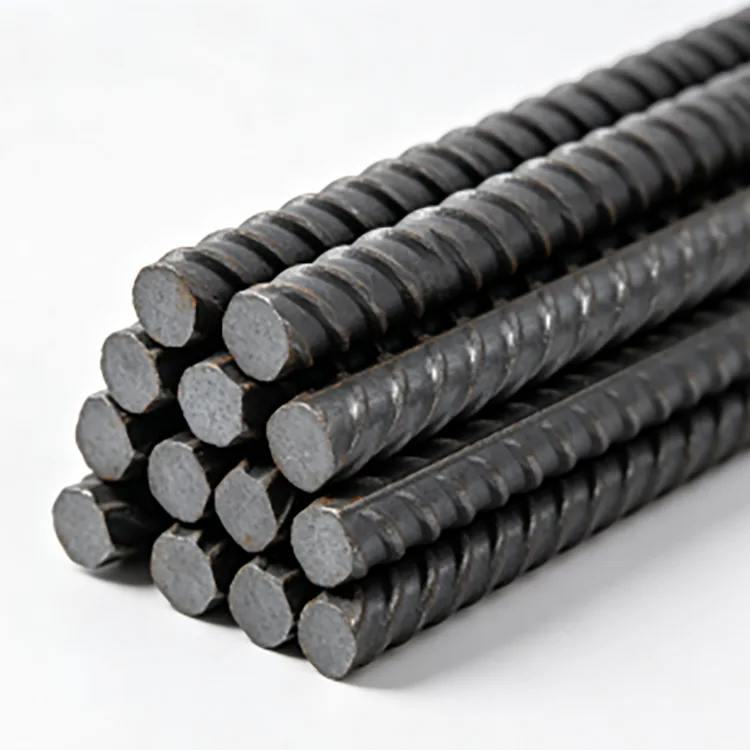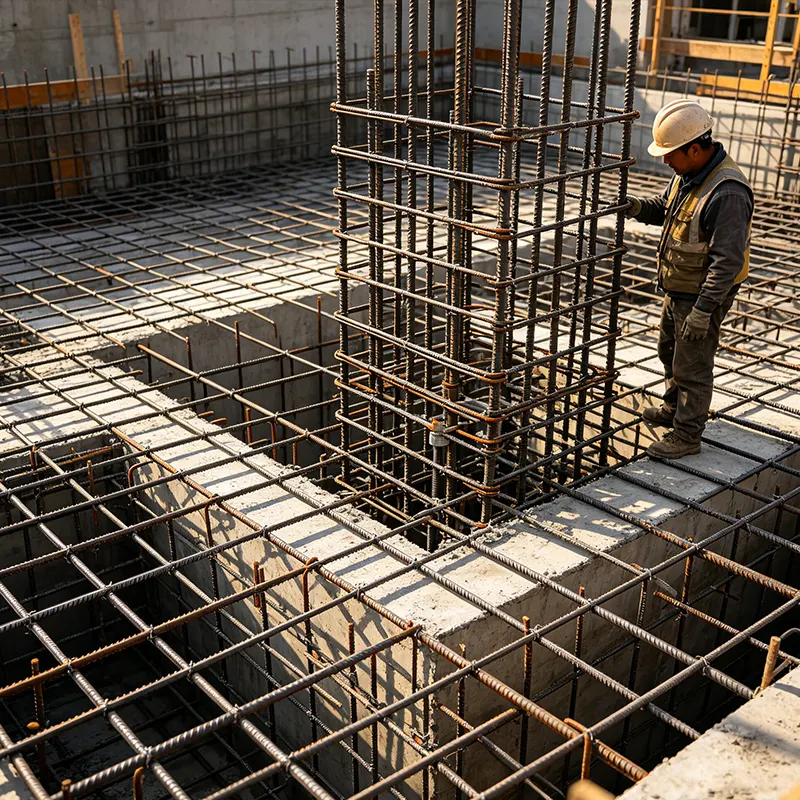
Steel Rebar serves as the framework of concrete structures, and its mechanical properties directly affect the safety and durability of buildings. The stress-strain curve of the steel bar is clearly divided into four stages: elastic, yield, strengthening, and necking. The yield strength is the core basis for the design of reinforced concrete structures. Taking the widely used HRB400 grade steel bar in China as an example, the latest research data shows that its average yield strength can reach 484.63 MPa, and the average ultimate strength is as high as 675.22 MPa, while maintaining an average elongation rate of 16.12%, demonstrating a good balance between strength and plasticity.
The plasticity indicators (such as elongation rate) and cold bending performance of the steel bar ensure that the components have sufficient deformation warning capabilities before failure. Under long-term stress, the steel bar will undergo creep, and when the length remains unchanged, the stress will relax. These two characteristics are particularly important for the design of prestressed concrete structures. In addition, the fatigue performance of the steel bar under repeated loads is also a key factor that must be considered in the design of structures that bear dynamic loads, such as bridges and offshore platforms.
We use cookies to offer you a better browsing experience, analyze site traffic and personalize content. By using this site, you agree to our use of cookies. Privacy Policy