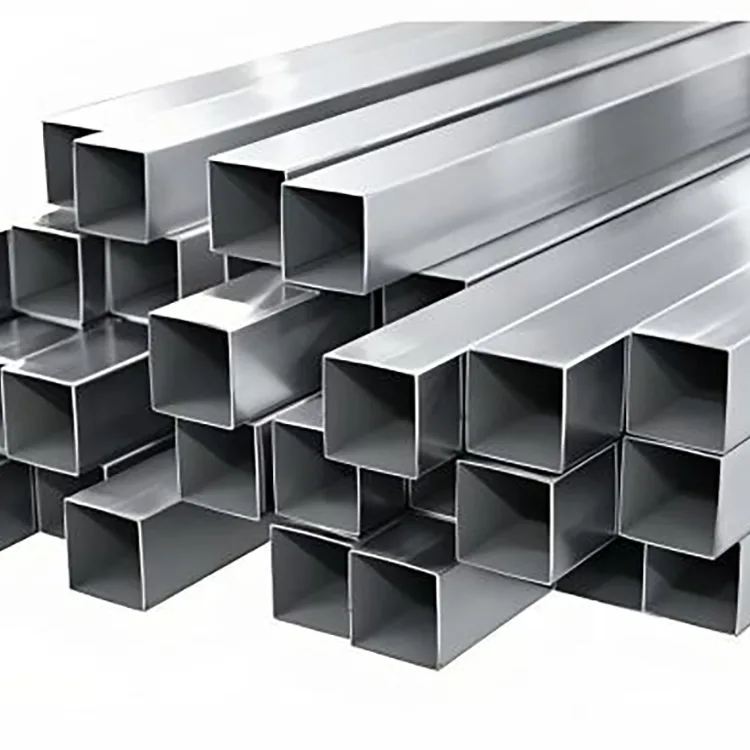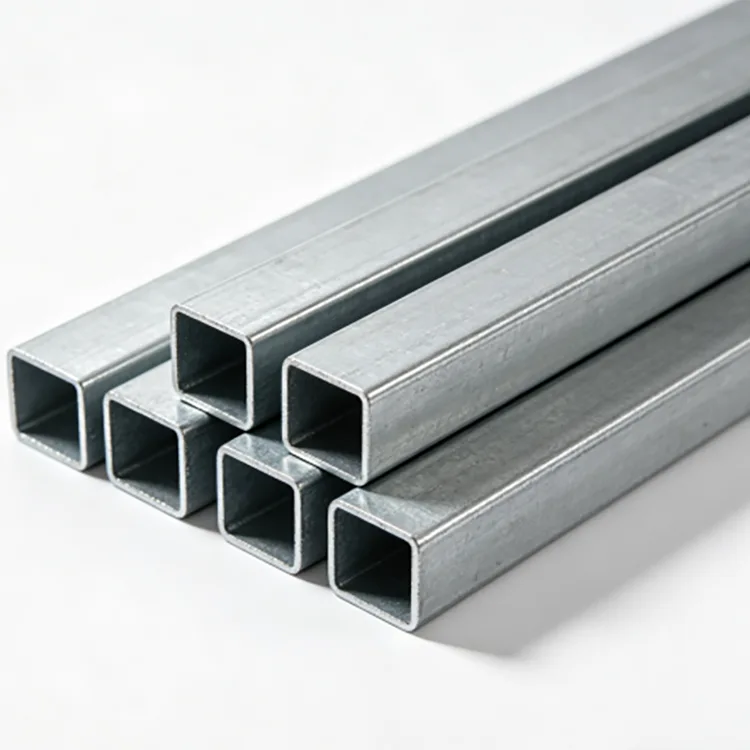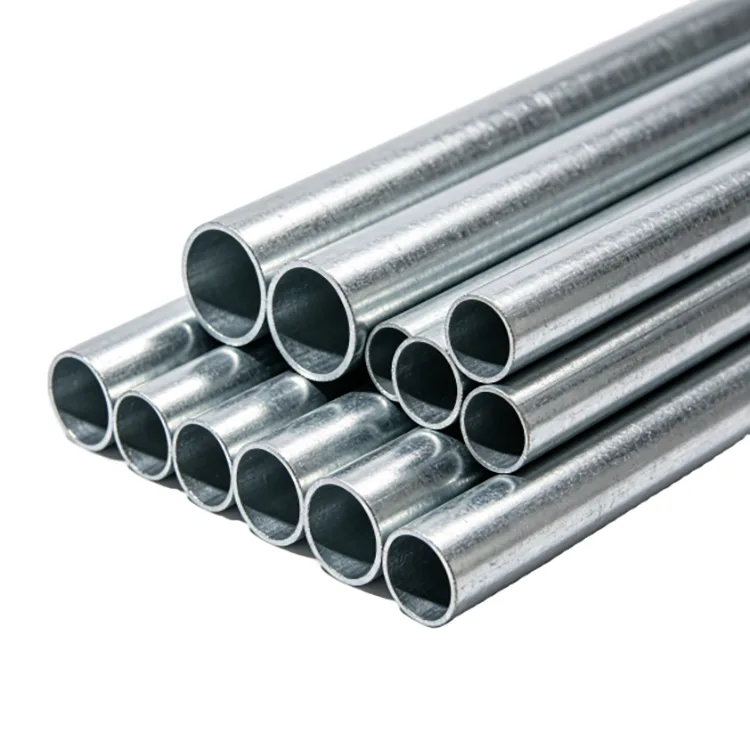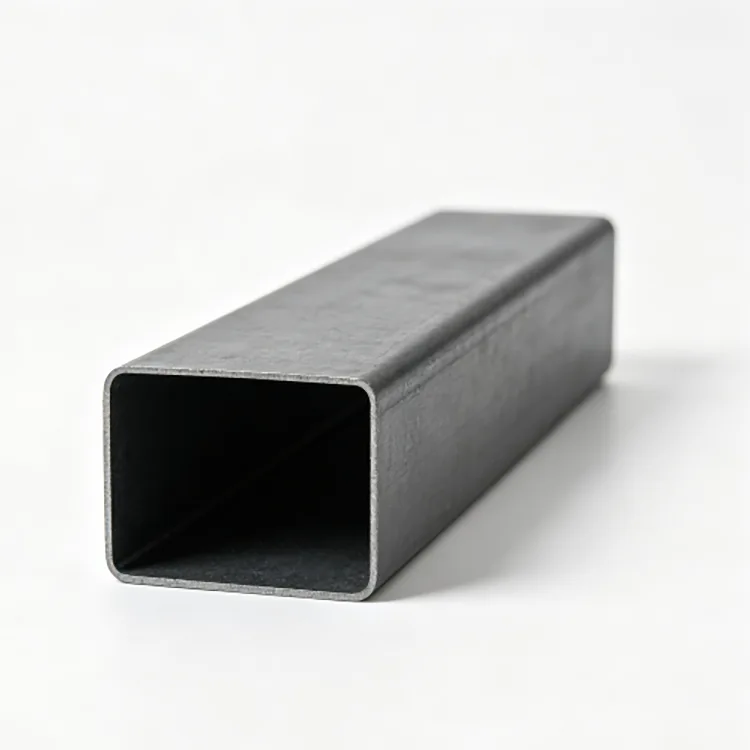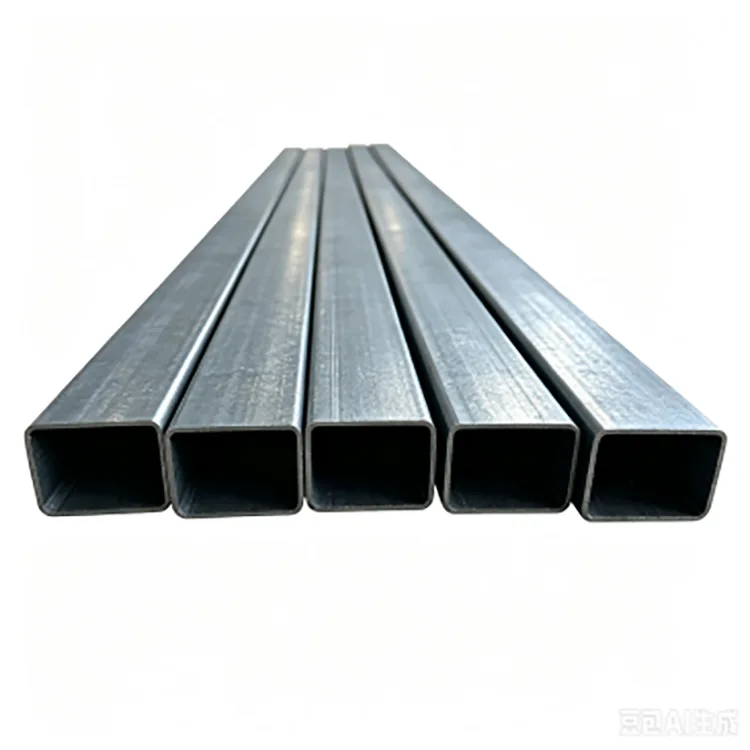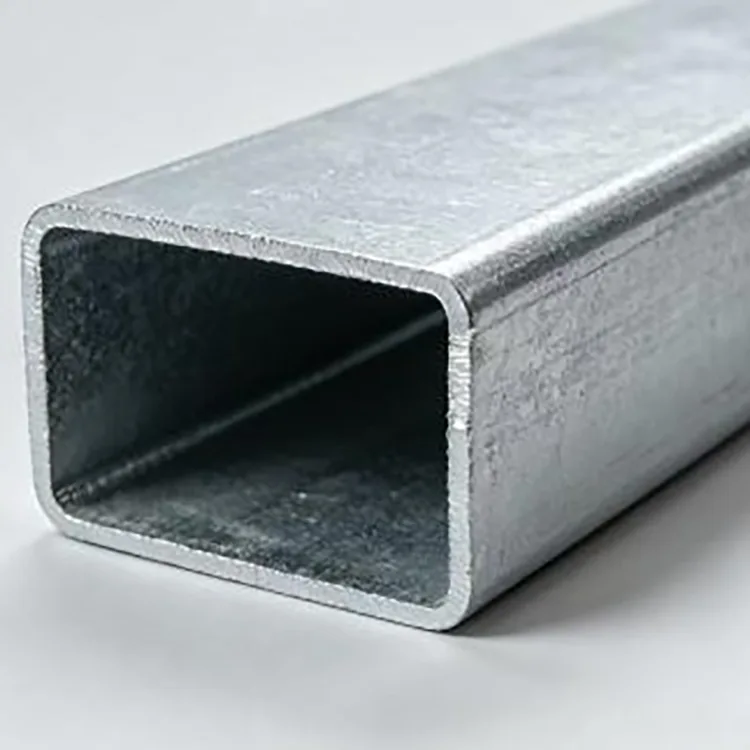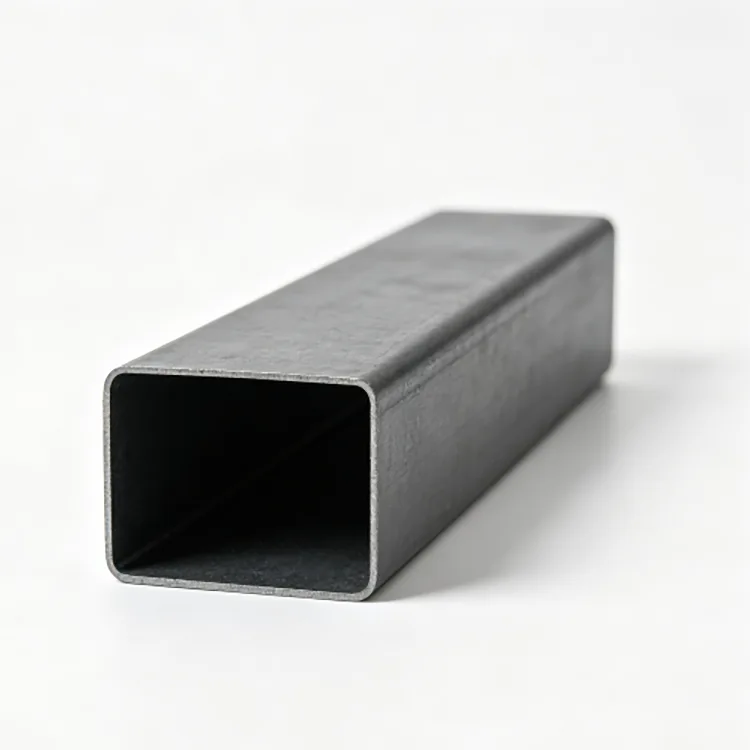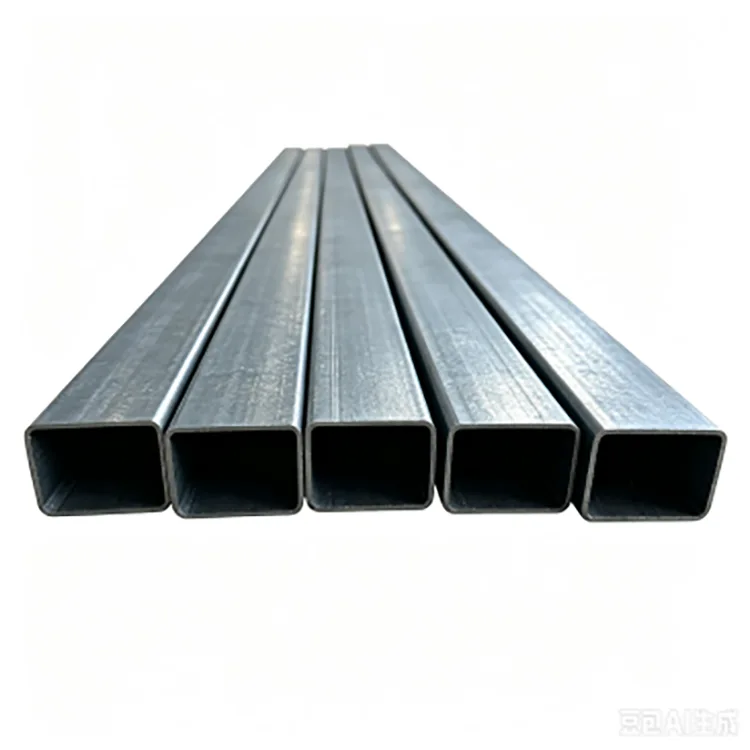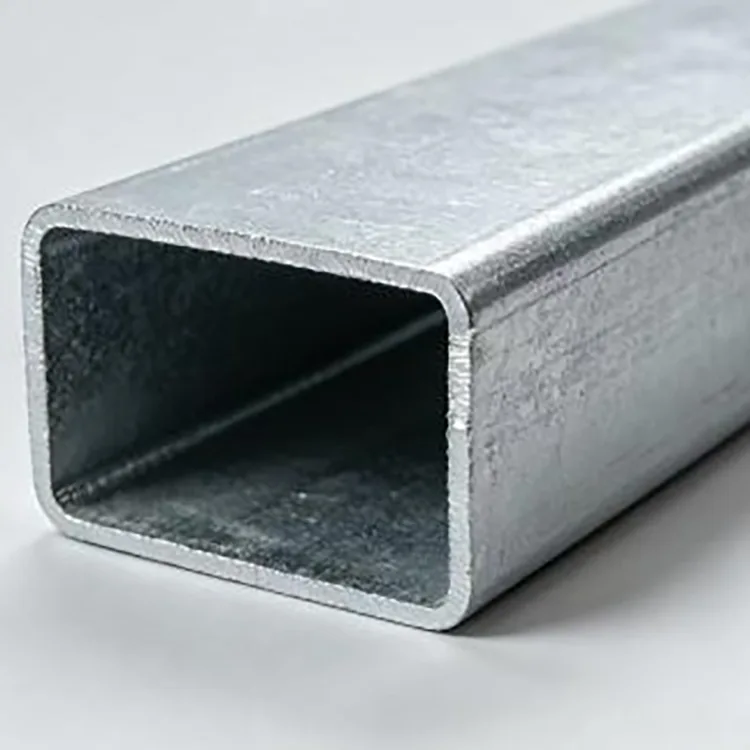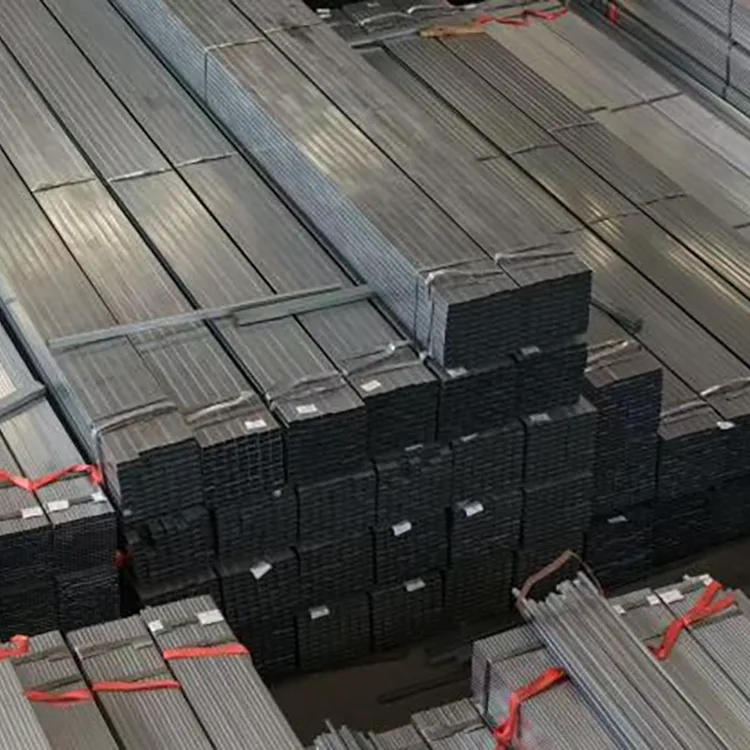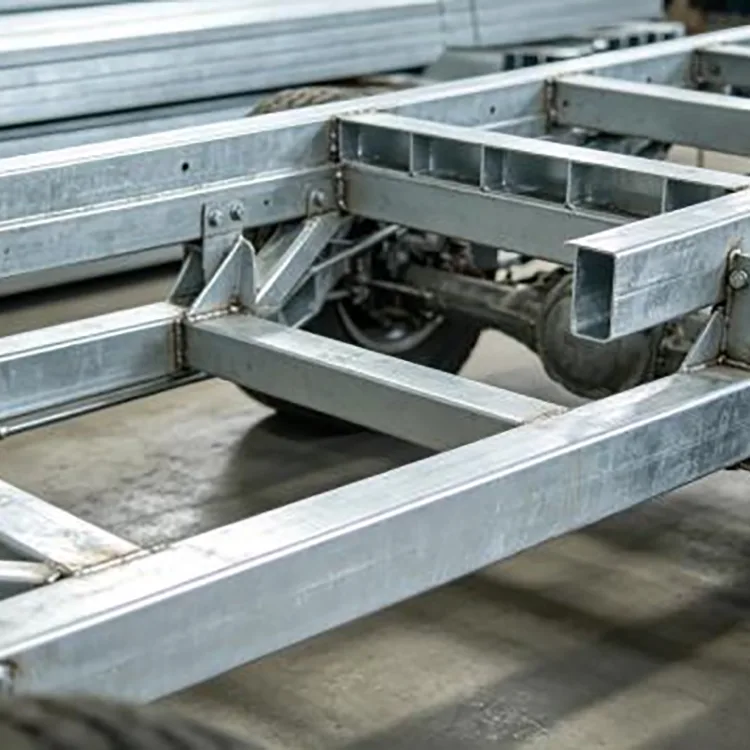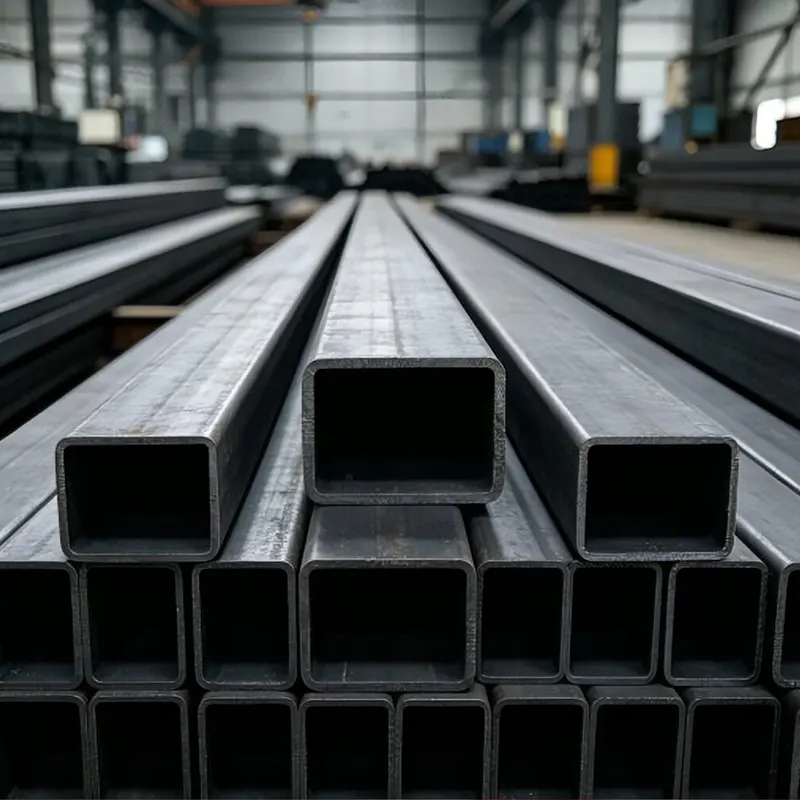
Hot-Dip Galvanized Rectangular Steel Tube is a welded rectangular hollow section manufactured from Q235B, Q355B or other specified carbon steel grades. The steel strip is cold-formed into a rectangular profile, high-frequency welded, sized and cut before the finished tube undergoes surface preparation and hot-dip galvanizing.
The rectangular section is useful when the load or installation space is more directional than a square tube allows. It provides a wider face for brackets, panels and connections while keeping the section relatively efficient in weight. For outdoor structures, the zinc coating provides additional protection against moisture and atmospheric corrosion, making the tube suitable for applications where uncoated black steel would require regular surface treatment.
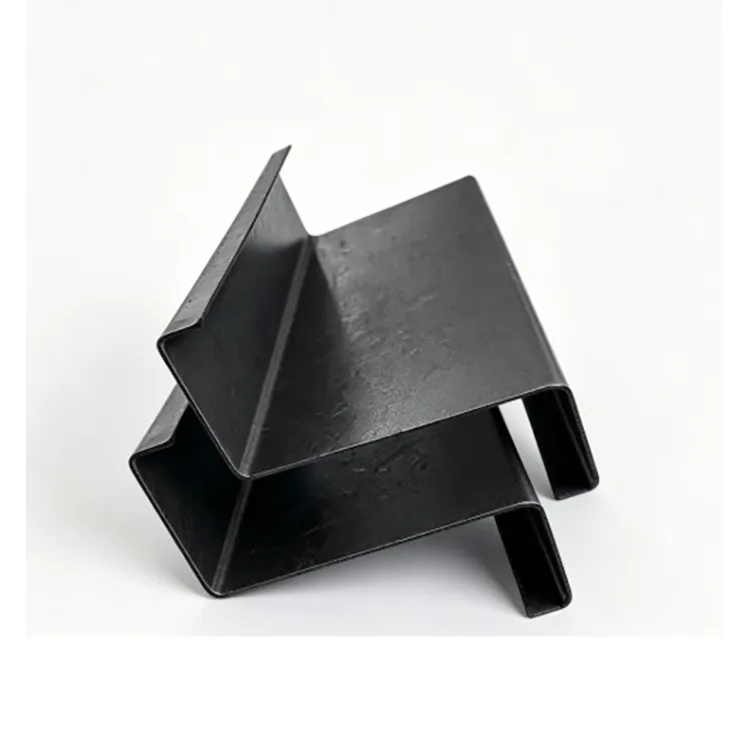
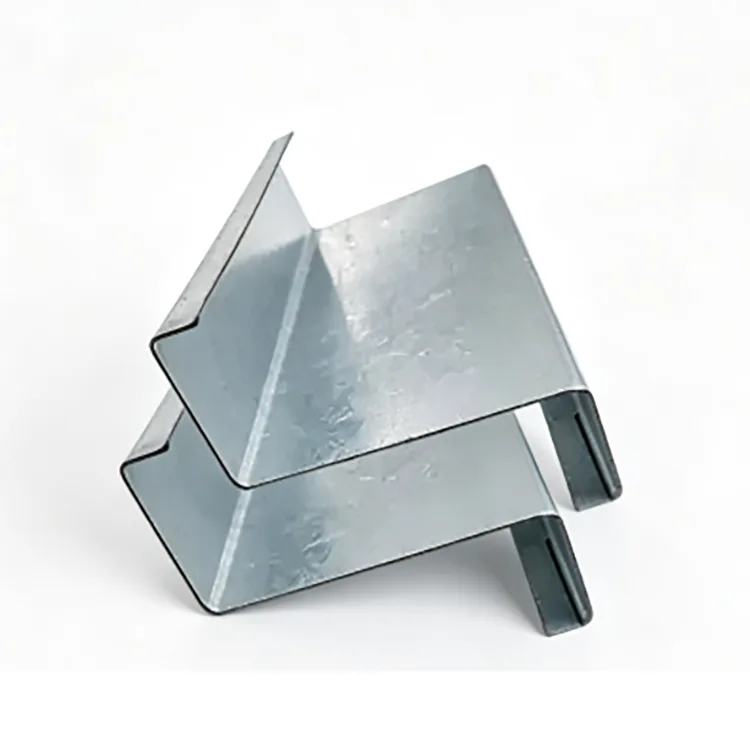
The tube can be supplied as a standard length or processed according to project drawings, including cutting, punching, bending, slotting, drilling, end closing and beveling.


|
Item |
Specification |
|
Product |
Hot-Dip Galvanized Rectangular Steel Tube |
|
Steel Grade |
Q235B, Q355B and other grades on request |
|
Rectangular Size |
20×40–200×400 mm |
|
Wall Thickness |
1.0–6.0 mm |
|
Standard Length |
6 m |
|
Fixed Length |
3–12 m |
|
Zinc Coating |
40–120 g/m² standard; 200–275 g/m² reinforced options |
|
Surface |
Hot-dip galvanized, silver-gray metallic finish |
|
Processing |
Cutting, bending, punching, slotting, drilling, end closing, beveling |
|
Supply |
Standard stock, project orders and customized production |
The main difference between rectangular and square hollow sections is not simply appearance. The width-to-height ratio changes how the section fits into a structure and how efficiently it uses available space.
A rectangular tube is often selected for horizontal members, frames and supports where one direction needs more section depth than the other. It also provides a wider mounting face for curtain wall components, panels, brackets and mechanical parts.
For example, a 100×60 mm section gives the fabricator a different combination of stiffness, installation space and material use from a 100×100 mm square tube. The correct choice should therefore be based on span, load, connection method and available installation space rather than section name alone.
The steel tube is formed and welded first, then prepared for galvanizing. Surface contaminants and oxides are removed through degreasing, pickling and activation so that molten zinc can react properly with the steel surface.
The prepared tube is immersed in molten zinc at approximately 450°C. After withdrawal, cooling and finishing are carried out to obtain a continuous protective coating.
This sequence is important for structural profiles because the finished rectangular section, including corners and exposed surfaces, receives the corrosion-protection treatment after forming. For project procurement, buyers should confirm the required zinc coating specification rather than simply asking whether a tube is “galvanized.”
The appropriate zinc coating depends on where the rectangular tube will be installed.
|
Environment |
Suggested Zinc Level |
Typical Applications |
|
Indoor / low-corrosion |
40–120 g/m² |
Machinery frames, warehouse structures, indoor supports |
|
Normal outdoor |
85–120 g/m² |
Fences, canopies, municipal structures, outdoor frames |
|
Humid / frequently exposed |
120–200 g/m² |
Outdoor supports, humid industrial areas, some PV structures |
|
Coastal / high-corrosion |
200–275 g/m² |
Coastal structures, salt-spray areas, selected PV and municipal projects |
These figures are coating options rather than a universal service-life guarantee. For coastal, chemical or continuously wet environments, the project should also consider additional coating systems, drainage, cut-edge protection and connection details.
Q235B is suitable for many conventional frames, supports, fences, machinery structures and general steelwork where the structural calculation does not require a higher-strength grade.
Q355B is more appropriate when the design involves higher loads, longer spans, stronger wind or snow requirements, or when reducing section weight is important. The final grade should be selected from the engineering calculation rather than simply choosing the stronger material for every application.
For export orders, the required steel grade, applicable standard, mechanical properties and inspection documents should be confirmed before production.
Wall thickness has a direct effect on section weight, stiffness, connection strength and fabrication performance.
Light-duty frames and enclosure structures may use thinner-wall sections, while load-bearing frames, equipment bases and larger outdoor structures normally require thicker walls.
The 20×40–200×400 mm range covers relatively compact frames through larger structural members. For a quotation, buyers should provide the required outside dimensions, wall thickness, length, steel grade, zinc coating requirement and quantity. If the tube will be used as a structural member, span, load and connection conditions are also useful for material selection.
Production starts with steel coils that are checked for grade, thickness and surface condition. The strip is then leveled and progressively cold-formed into the required rectangular profile.
High-frequency welding joins the formed strip, followed by sizing and straightening to control the finished section. Fixed-length cutting, punching or other pre-processing can be completed according to the order before galvanizing.
The prepared tubes then go through degreasing, pickling and flux treatment. Hot-dip galvanizing is carried out at approximately 450°C, followed by cooling, zinc-surface finishing and final dimensional and coating inspection.
Completing the main forming and punching operations before galvanizing also helps avoid unnecessary damage to the finished zinc coating during fabrication.
For bulk orders, quality is not determined by appearance alone. Incoming steel grade and thickness are checked first, followed by dimensional inspection during forming and finished-tube inspection.
Key checkpoints include rectangular dimensions, wall thickness, straightness, weld condition, cut length, surface quality and zinc coating. Coating weight or thickness can be checked against the agreed project specification.
For export projects, material certificates, inspection records, packing lists and other required documents can be prepared according to the order. Third-party inspection can also be arranged when required by the buyer or project.
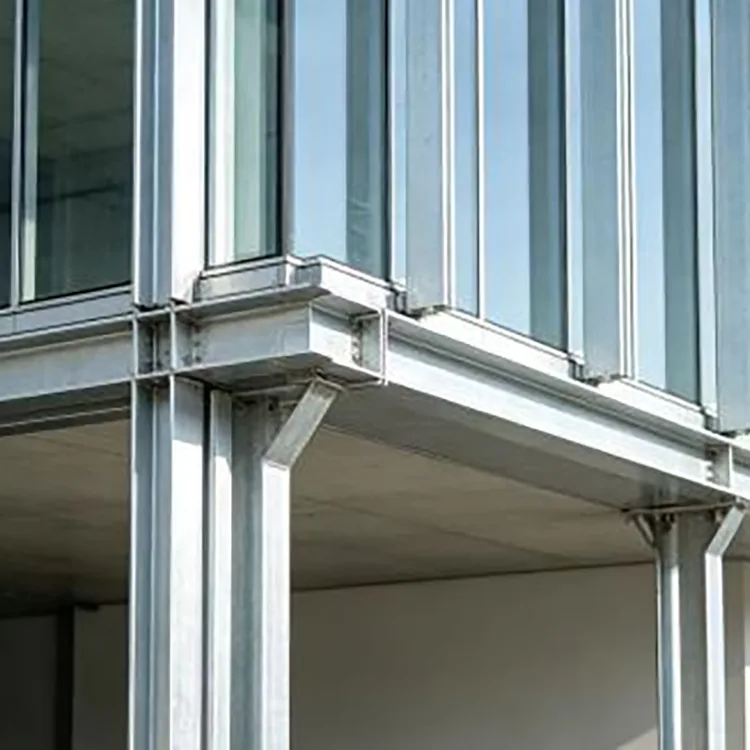
The rectangular face is convenient for curtain wall frames, façade supports, partitions and secondary structural members where connection space and directional stiffness matter.
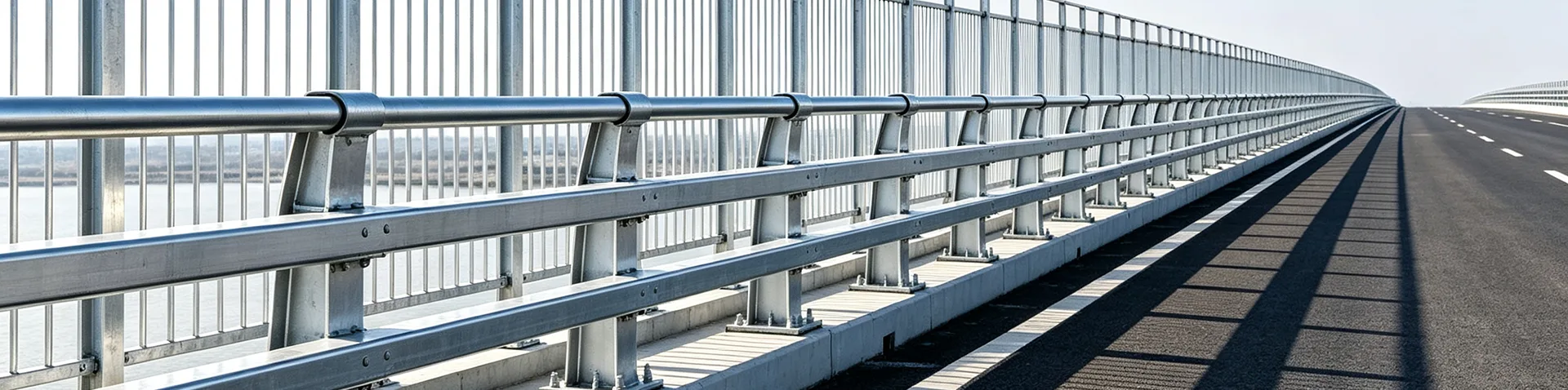
Guardrails, handrails, shelters, landscape structures, advertising frames and other exposed steelwork benefit from the additional corrosion protection of hot-dip galvanizing.
Rectangular tubes can be used for selected PV support members, equipment frames and auxiliary structures. For coastal or high-humidity projects, a higher zinc specification should be considered according to the corrosion environment.
The flat faces of the rectangular section simplify bracket installation and equipment mounting. Typical uses include machine bases, conveyor frames, automation supports and equipment platforms.
The tube can be used for rack components, support frames, warehouse structures and auxiliary members where dimensional consistency and corrosion resistance are required.
Its combination of rectangular geometry, moderate weight and available processing makes it suitable for greenhouse frames, stage structures, temporary frames and other fabricated assemblies.
For projects with repeated installation dimensions, pre-processing can reduce cutting and drilling work at the job site.
Common services include fixed-length cutting, punching, slotting, drilling, bending, beveling and end closing. Processing can be based on a drawing, DXF/CAD file or a dimension schedule.
When holes or cuts are made after galvanizing, the exposed steel area should receive appropriate zinc-rich repair protection. For this reason, it is generally preferable to complete planned punching and cutting before the hot-dip galvanizing stage whenever the production design allows it.
The choice depends mainly on the installation environment and maintenance requirements.
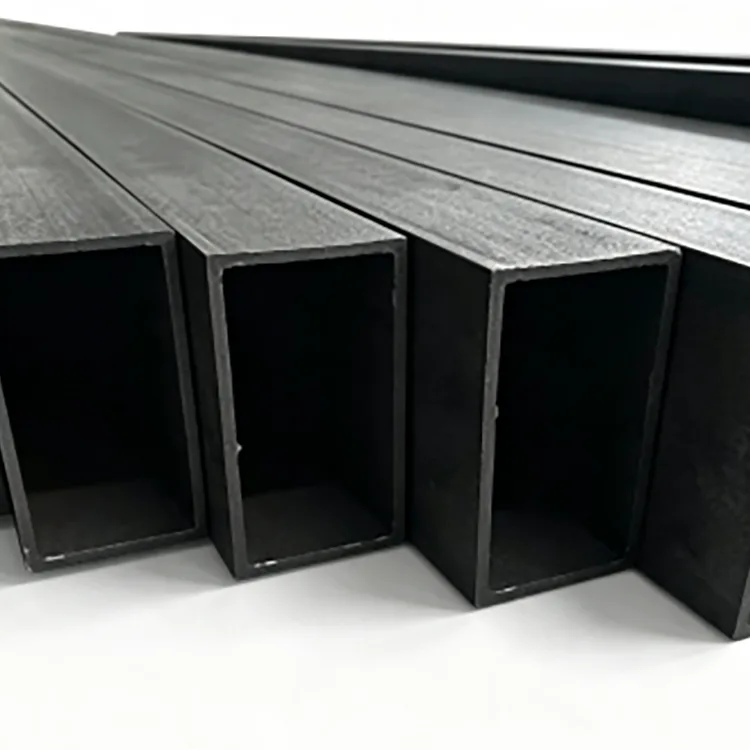
Black rectangular tube has a lower initial material cost and can work well for dry indoor structures where the surface will receive an appropriate coating or corrosion is not a major concern.
Hot-dip galvanized rectangular tube has a zinc coating that provides both a physical barrier and sacrificial corrosion protection. It is therefore more suitable for outdoor and humid applications where repeated painting or rust treatment would increase maintenance work.
For long-term outdoor projects, comparing only the purchase price can be misleading. The coating specification, expected exposure, fabrication requirements and maintenance plan should all be included in the cost comparison.
A municipal road and traffic project used Q235B 100×60×4 mm hot-dip galvanized rectangular tube for support frames, including road shelters and guardrail structures. The combination of rectangular-section stiffness and galvanized protection was selected for outdoor exposure to rain, wind and dust.
A logistics warehouse project used 40×80×2.0 mm hot-dip galvanized rectangular tube for rack and equipment-frame applications. The consistent section dimensions helped with assembly, while the galvanized surface was suitable for the humid conditions associated with warehouse and industrial use.


Before placing a bulk order, confirm these points:
|
Requirement |
Information to Confirm |
|
Section |
20×40–200×400 mm or custom |
|
Wall Thickness |
1.0–6.0 mm |
|
Steel Grade |
Q235B, Q355B or specified grade |
|
Length |
6 m standard or 3–12 m fixed length |
|
Zinc Coating |
Required coating weight/thickness |
|
Processing |
Cutting, punching, bending, slots, drilling, etc. |
|
Inspection |
Mill certificate, dimensional inspection, coating inspection, third-party inspection if required |
|
Packing |
Export waterproof wrapping, steel strapping and protection against handling damage |
Square tube has equal side dimensions and is commonly used for columns, frames and members requiring more balanced geometry. Rectangular tube has different side lengths and is often more convenient for horizontal members, curtain wall frames, equipment structures and applications where directional stiffness or a wider mounting surface is useful.
Yes. Non-standard section sizes, fixed lengths and processing requirements can be discussed according to the project drawing and production feasibility.
Yes. Cutting, punching, slotting, drilling, bending, end closing and beveling can be arranged. For galvanized products, planned processing is normally completed before hot-dip galvanizing where practical.
No. Normal inland outdoor exposure does not automatically require the highest zinc level. The coating should be selected according to humidity, salt spray, chemical exposure, wetting frequency and expected service period.
Not automatically. Although Q355B has higher strength, changing steel grade does not mean that the same section can always be used without checking the structural design, connections, welding requirements and applicable standard.
Yes, but welding damages the local zinc coating and produces zinc-containing fumes. Appropriate ventilation, welding procedures and post-weld zinc-rich repair are required.
Material certificates, product inspection records, packing lists, commercial invoices and other export or project documents can be prepared according to the agreed order requirements.
Common stock orders can normally be prepared for shipment in around 3–7 working days. Standard production orders are commonly around 10–15 working days, while large-volume or customized orders should be confirmed according to section size, zinc coating and processing requirements.
Address
Secondary Arterial Road No. 2-1, Expansion Area of Daqiuzhuang Industrial Zone, Jinghai District, Tianjin, China
Tel