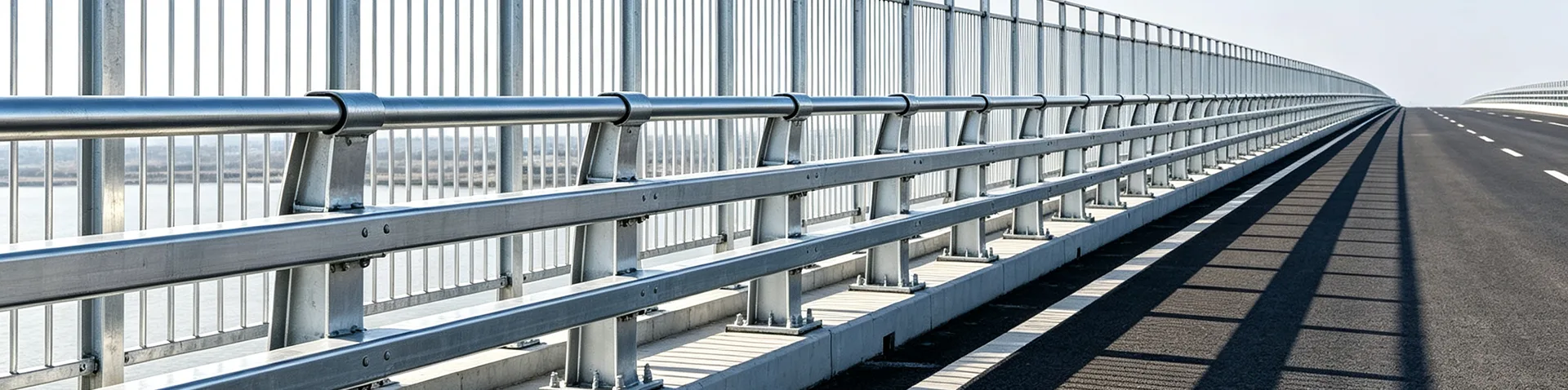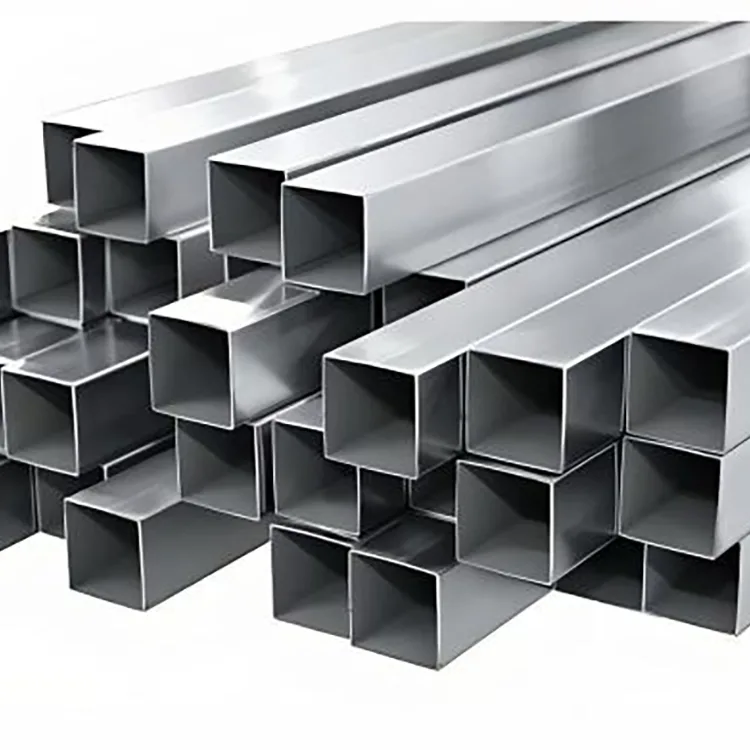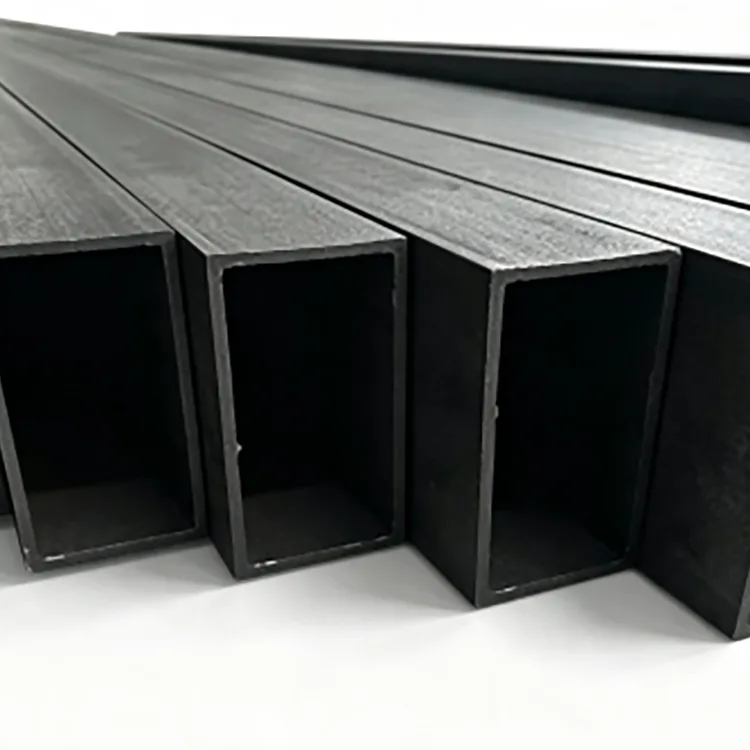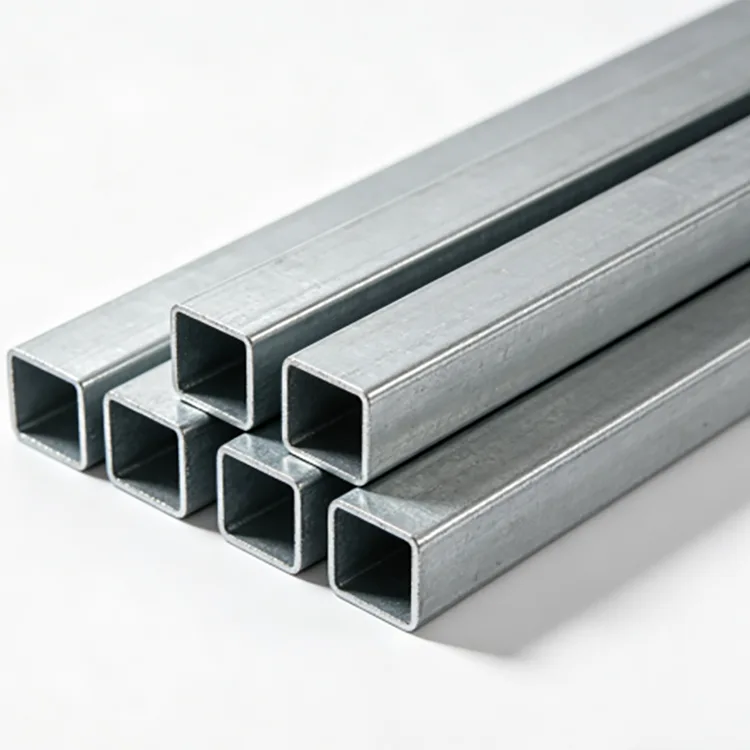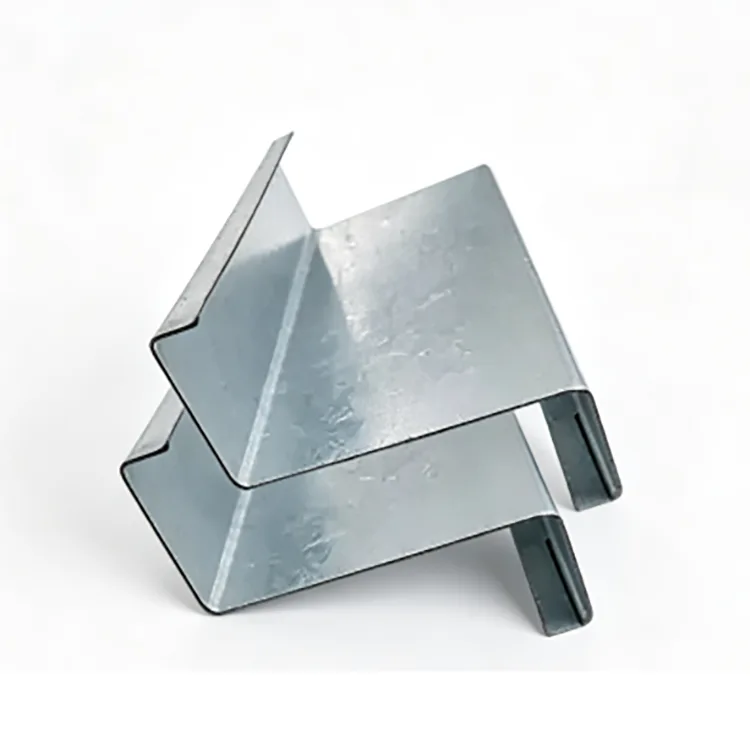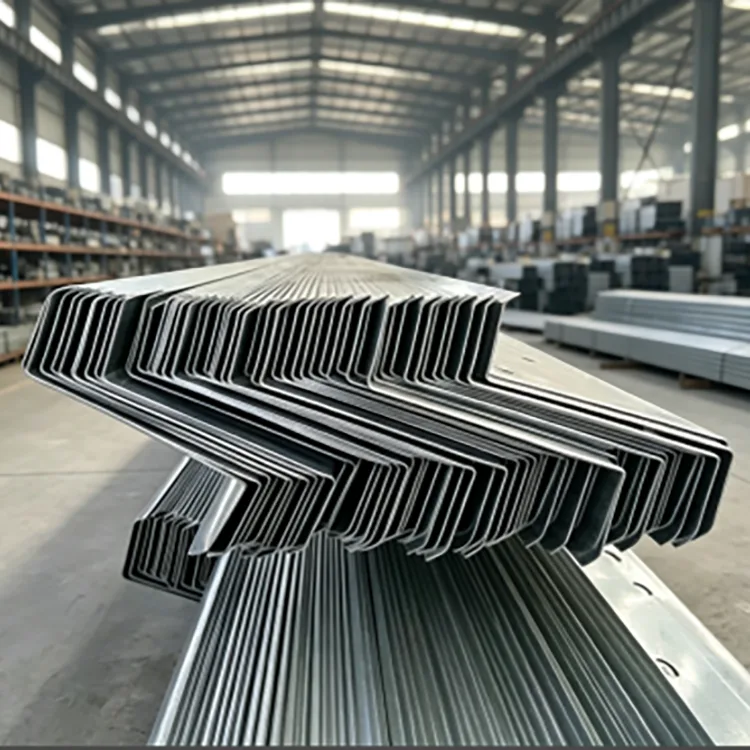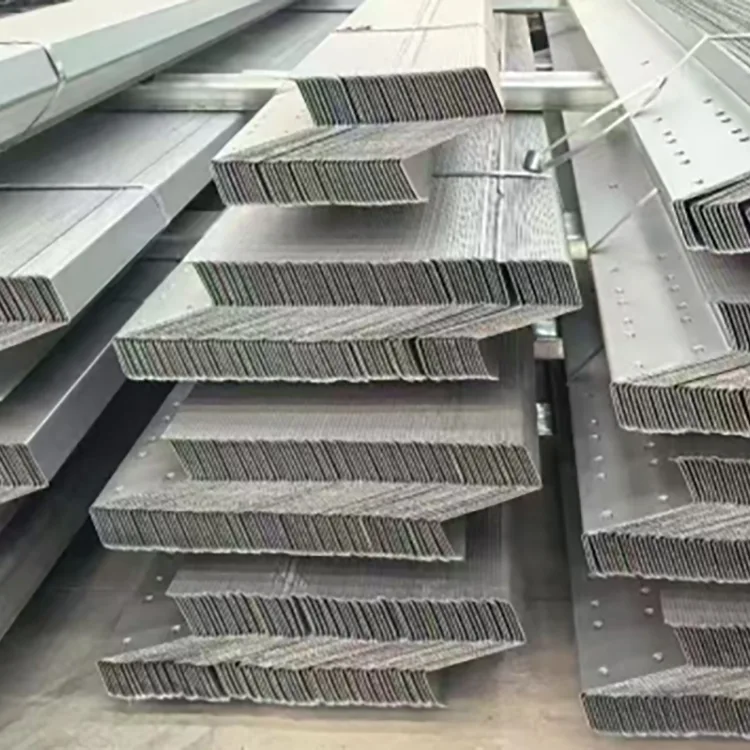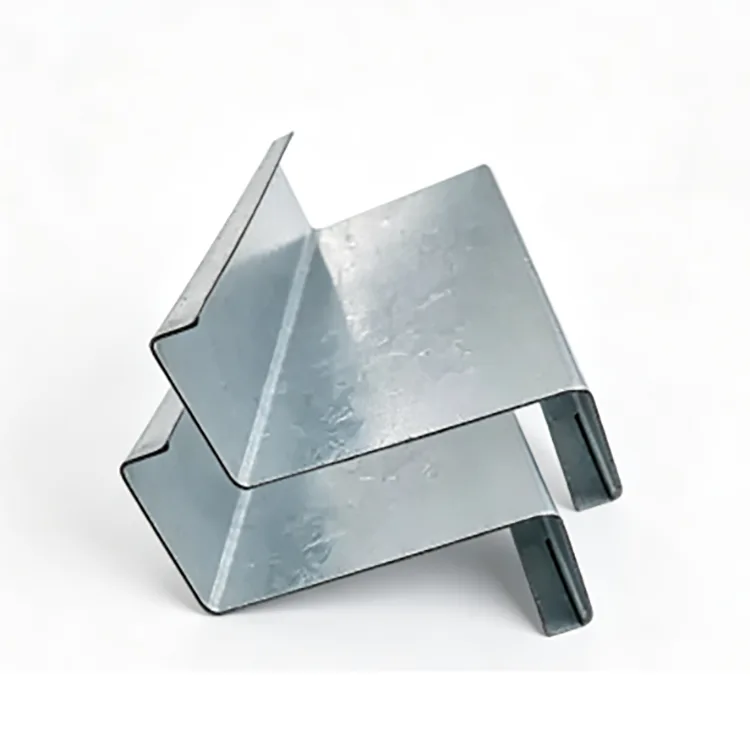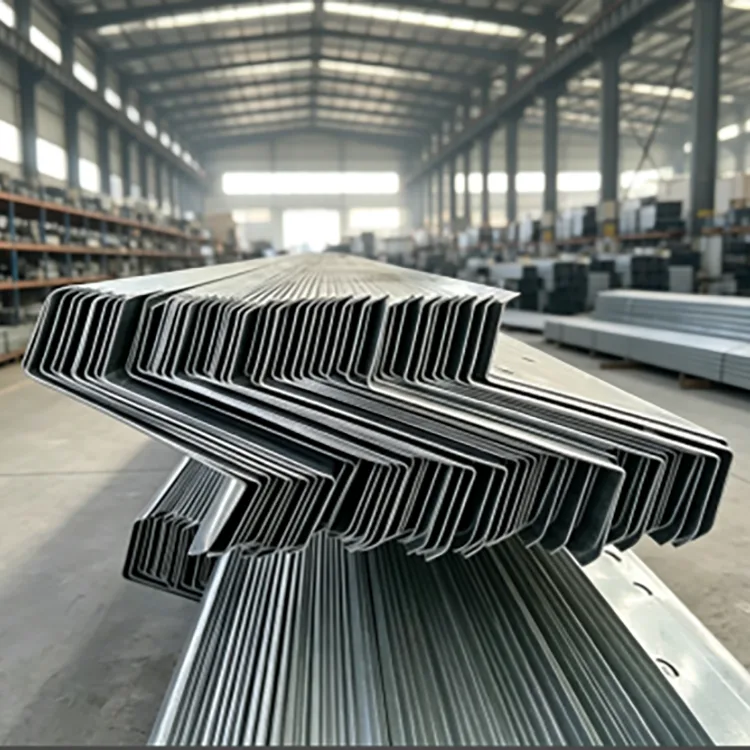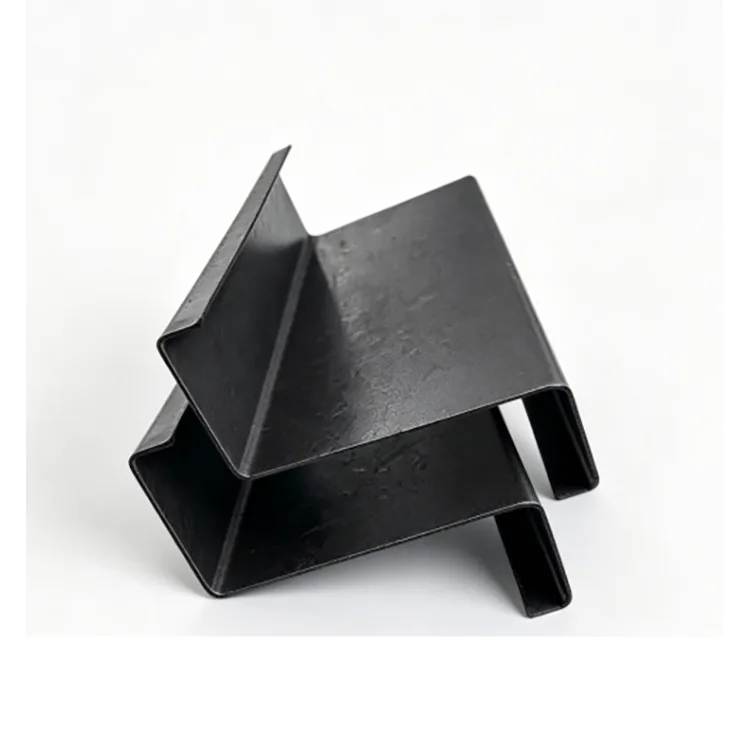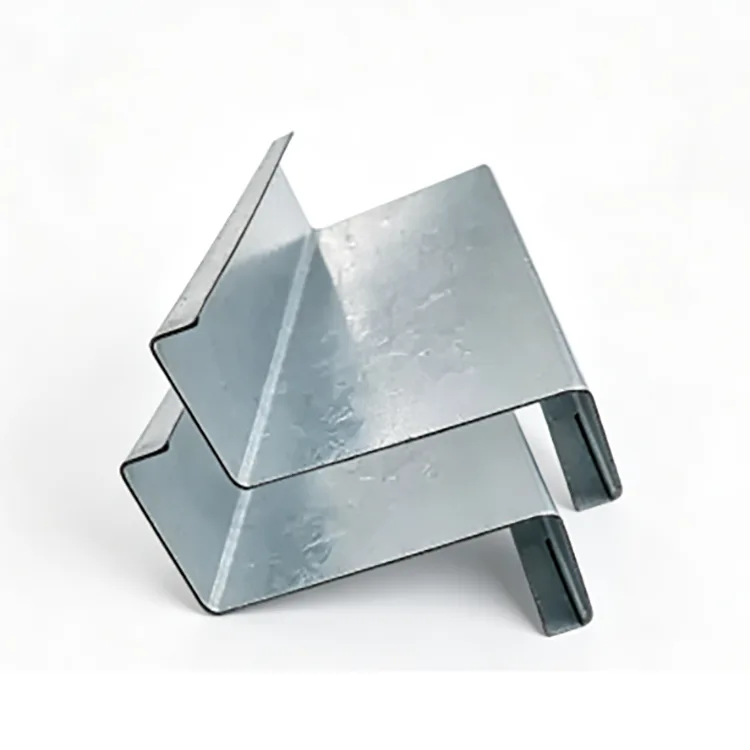
A hot-dip galvanized Z purlin is formed into a Z section first and galvanized as a finished profile afterward. This gives sloped roof structures the overlap advantage of Z steel while protecting the formed corners, connection areas and punched holes from outdoor corrosion. It is commonly specified for factory roofs, rooftop PV, coastal buildings, livestock facilities and humid industrial structures.
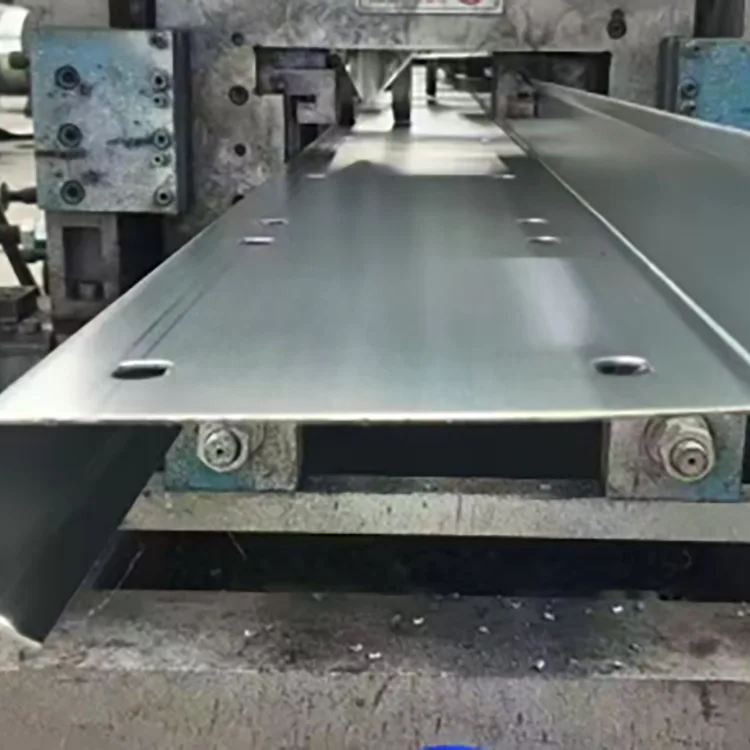
Galvanized Z purlin is a cold-formed structural section made from Q235B or Q355B steel strip. The strip passes through multiple forming rolls to create the Z profile, followed by cutting, punching and corner processing. The finished member is then pickled, fluxed and hot-dip galvanized as a complete section.
The Z profile is mainly used on sloped roofs because adjacent members can overlap at their ends. This supports continuous purlin lines and can reduce separate joints compared with conventional C sections. It can also be used for wall framing and other light steel structures when its geometry and load capacity suit the design.
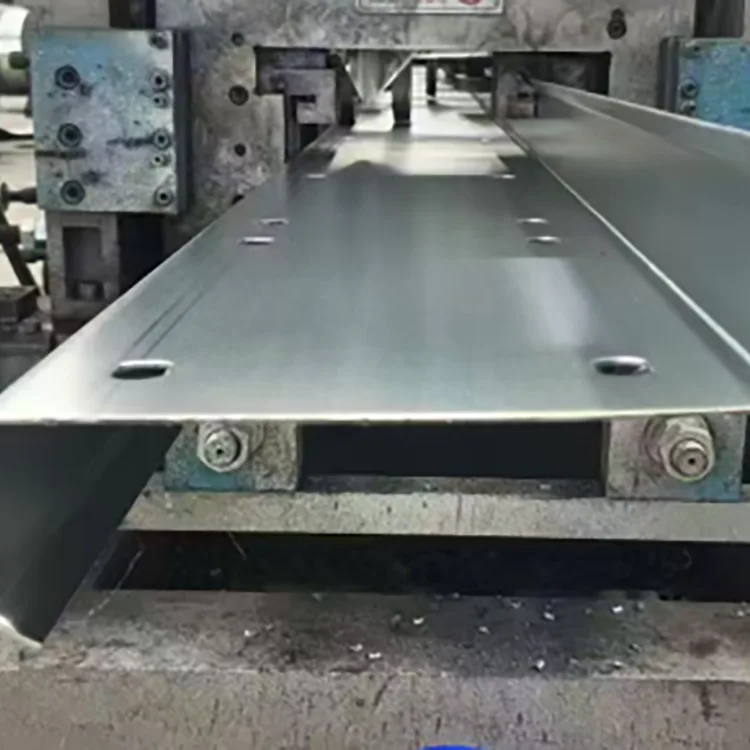
The manufacturing sequence is important: forming, cutting and punching are completed before galvanizing, allowing the completed Z section and its processed areas to receive the zinc coating during the galvanizing stage.
Where the Z Section Makes a Difference
The defining feature of a Z purlin is the overlap between adjacent members.
On a sloped roof, the upper and lower flanges of adjacent Z sections can overlap, allowing the purlin line to continue through the roof structure. This can reduce cutting and connection work compared with separate members at every span.
Roofs with a slope above 10° are generally more suitable for taking advantage of the Z-section overlap. Below about 8°, a C purlin may offer a simpler arrangement.
Z purlins can also be used as wall purlins. The final section should follow the structural drawings and load calculation.
The Galvanizing Is Done After Fabrication
The steel strip is first processed into the finished Z section. Cutting, punching and corner work are completed before the member enters the galvanizing bath. The complete profile is then cleaned, fluxed and immersed in molten zinc at approximately 450°C.
Steel coil → leveling → cold roll forming → fixed-length cutting → punching and corner cutting → straightening and stress relief → degreasing and pickling → fluxing → drying → hot-dip galvanizing → cooling and passivation → zinc coating inspection → appearance inspection → packing.
This sequence allows the formed corners and connection holes to be galvanized together with the completed profile.
Main Specifications
Item
Specification
Steel grade
Q235B, Q355B
Section range
Z100–Z300
Wall thickness
1.2–3.0 mm
Forming method
Cold roll forming
Galvanizing method
Overall hot-dip galvanizing after forming
Standard zinc coating
≥85 μm
Increased coating
120–180 μm
High-corrosion coating
200–275 μm
Surface
Silver-gray hot-dip galvanized finish
Surface requirement
No exposed steel, excessive zinc buildup or peeling
Processing
Cutting, punching, corner cutting, fixed-length production
Structural steel standard
GB/T 6728-2025
Galvanizing standard
EN ISO 1461
Zinc Coating Should Match the Corrosion Environment
For normal inland outdoor exposure, such as ordinary factory roofs and rooftop PV structures without salt spray or chemical gases, ≥85 μm is a common starting specification.
For livestock buildings, humid workshops and riverside structures, 120–180 μm provides a higher coating level.
For coastal areas, ports, chemical plants and wastewater surroundings, the recommended range can be increased to 200–275 μm.
Environment
Suggested Zinc Coating
Dry indoor
Uncoated Z purlin may be sufficient
Normal inland outdoor
≥85 μm
Humid / medium corrosion
120–180 μm
Coastal / strong corrosion
200–275 μm
The final coating should be confirmed according to the project's corrosion environment and design requirements.
Q235B or Q355B?
For ordinary factory roofs, rooftop photovoltaic structures and agricultural buildings, Q235B is commonly sufficient when the required section and thickness meet the calculated loads.
Q355B is suited to large-span purlins, heavy snow areas, strong-wind regions and demanding coastal projects. Based on the supplied project data, Q355B can provide approximately 30% higher load-bearing capacity at the same section under comparable conditions. Whether this allows a smaller section or lower steel consumption must be determined by structural calculation.
The material grade should therefore be selected according to the structural requirement.
Z Section and Wall Thickness Selection
The section height determines the overall geometry of the purlin, while wall thickness affects resistance to load and deformation.
Z Height
Typical Application
Z100–Z140
Small spans, light loads, secondary purlins, greenhouse structures
Z160–Z200
Factory roof purlins, rooftop PV, common steel buildings
Z220–Z300
Large-span roofs, heavy snow loads, large industrial buildings
For wall thickness:
1.2–1.4 mm is generally used for small-span and light-load enclosure applications.
1.5–2.0 mm is the common range for factory roof purlins and rooftop photovoltaic structures.
2.2–3.0 mm is more suitable when the roof has larger spans or higher snow, wind or structural loads.
Section height and thickness should be selected together with span, purlin spacing, roof load and allowable deflection.
Where Galvanized Z Purlin Is Used
Steel factory roofs: roof purlins and wall purlins for exposed industrial buildings.
Rooftop photovoltaic systems: particularly sloped roofs where Z-section overlap can simplify the purlin arrangement.
Coastal buildings: exposed roof and enclosure systems near coastlines and ports, using an increased zinc coating where required.
Livestock and agricultural structures: high-humidity sheds, greenhouses and other buildings where condensation can accelerate steel corrosion.
Humid industrial facilities: roof and wall framing around workshops where ordinary black steel would require additional corrosion protection.
Outdoor light-gauge steel structures: municipal and other exposed sloped-roof structures.
What Hot-Dip Galvanizing Adds
The zinc coating provides barrier protection and sacrificial protection. It separates the steel substrate from moisture and oxygen, while zinc can also provide electrochemical protection around small areas of local coating damage.
This is useful for roof purlins because repainting an installed roof structure is more difficult than treating steel at ground level.
Hot-dip galvanizing provides corrosion protection across the formed surfaces. It is not a substitute for proper drainage, connection design or site repair after cutting and welding.
Three Common Procurement Comparisons
Galvanized Z purlin vs galvanized C purlin
Z purlin is particularly useful when adjacent members can overlap along a sloped roof. C purlin is often more convenient for flatter roofs or layouts where overlap offers little practical benefit.
Galvanized Z purlin vs painted Z purlin
Paint provides surface protection, but damage around corners, holes, cuts and connection points needs to be considered. Hot-dip galvanizing is applied to the completed profile and provides corrosion protection for exposed steel. The often-quoted “5–10 times longer” life should not be treated as a universal rule because paint performance depends heavily on coating system, preparation and exposure.
Hot-dip galvanized Z purlin vs electrogalvanized Z purlin
Electrogalvanized coatings are normally much thinner than hot-dip galvanized coatings. For long-term outdoor exposure, hot-dip galvanizing is generally specified when substantial zinc protection is required.
What Buyers Should Check Before Ordering
For an engineered roof project, the order should identify more than just “Z purlin.”
Section: Z100–Z300 or a drawing-specific profile.
Wall thickness: 1.2–3.0 mm.
Steel grade: Q235B or Q355B.
Zinc coating: ≥85 μm, 120–180 μm or 200–275 μm according to exposure.
Length: standard or fixed non-standard length.
Punching: hole diameter, spacing and location according to drawings.
Surface: hot-dip galvanized after forming and fabrication.
A clear specification such as Q355B / Z200 / 2.0 mm / 200 μm zinc / fixed length / pre-punched is easier for the manufacturer to quote and produce consistently than a general request for “galvanized Z steel.”
Connection and Site Processing
The main cutting and punching should preferably be completed before galvanizing. If additional drilling or cutting is unavoidable on site, the exposed steel should be cleaned and treated with a suitable zinc-rich repair coating.
Welding removes the zinc around the weld. After welding, the area should be cleaned and repaired. Where the structural design permits, bolted connections are easier to manage on galvanized purlins.
Manufacturing and Quality Control
Production control starts with the steel strip. The incoming coil is checked for grade, thickness and surface condition before roll forming.
During forming, dimensional checks focus on section height, flange geometry, wall thickness, straightness and twisting. Punching is checked against the approved drawing.
After galvanizing, the coating is checked for coverage, thickness, appearance and defects such as bare areas, peeling or excessive zinc buildup. Fixed-length accuracy and overall straightness are also checked before packing.
Project Selection Reference
Inland steep factory roof or rooftop PV: Q235B, Z160–Z200, 1.5–2.0 mm, ≥85 μm.
Livestock, humid workshop or riverside project: Q235B or Q355B, 120–180 μm.
Coastal or port project: Q355B, 200–275 μm, with wall thickness selected for the structural load.
Large-span roof with heavy wind or snow: Q355B, larger Z section and 2.2–3.0 mm wall thickness where required.
Dry indoor roof: uncoated cold-formed Z purlin may be a more economical choice.
FAQ
Q1. Will the zinc coating be damaged when Z purlins overlap?
Normal bolted overlap should not cause large-area peeling when the galvanized coating has good adhesion. Small mechanical damage can be repaired with zinc-rich repair paint.
Q2. Can galvanized Z purlins be welded?
Yes, but the zinc coating around the weld will be damaged by heat. The welded area should be cleaned and repaired after welding. Bolted connections are generally preferred where practical.
Q3. Is Z purlin only suitable for roofs?
No. It can also be used as a wall purlin. However, C purlins are often more convenient for wall systems because the Z-section overlap is less useful on vertical wall framing.
Q4. Can galvanized Z purlin be used for a 25-year rooftop PV project?
It can be specified for long-life PV structures, but the zinc coating must be matched to the actual environment. Inland and coastal projects should not automatically use the same coating thickness.
Q5. How do I identify a Z purlin that was galvanized before forming?
Check the formed corners for continuous cracking or peeling of the zinc coating. For procurement, confirm the manufacturer's process and require the Z section to be formed and punched before hot-dip galvanizing.
Q6. Can the manufacturer supply pre-punched Z purlins?
Yes. Hole size, spacing and position can be produced according to the structural drawings. Completing the punching before galvanizing also allows the processed areas to receive zinc during the galvanizing stage.
Q7. What zinc coating should be used near the coast?
For strong coastal exposure, a 200–275 μm coating can be specified as a starting requirement. The final coating should be determined according to the project's corrosion conditions and applicable specifications.
Q8. Is a thicker Z purlin always better?
No. A thicker wall increases steel consumption and cost. The correct thickness depends on span, spacing, wind and snow loads, section height and structural calculation.
We use cookies to offer you a better browsing experience, analyze site traffic and personalize content. By using this site, you agree to our use of cookies. Privacy Policy