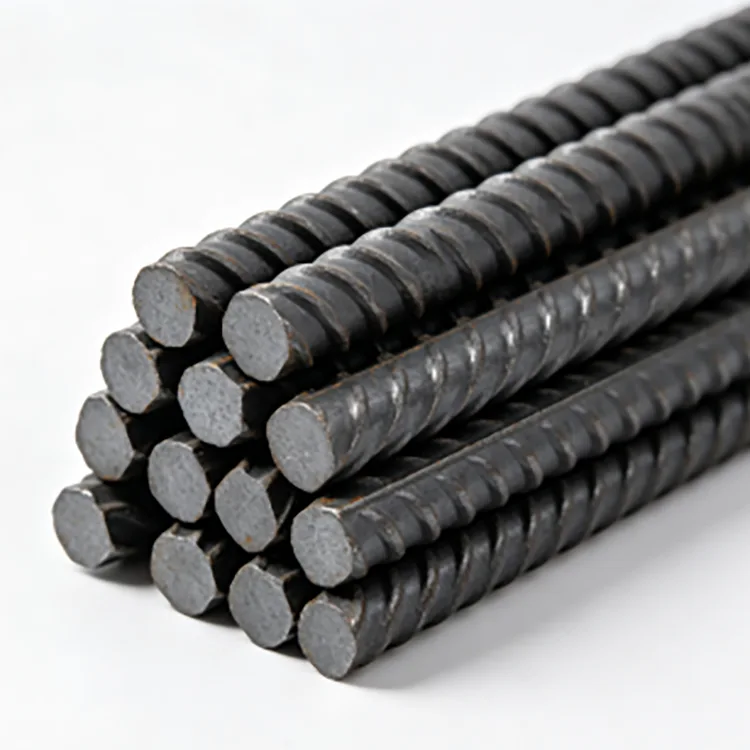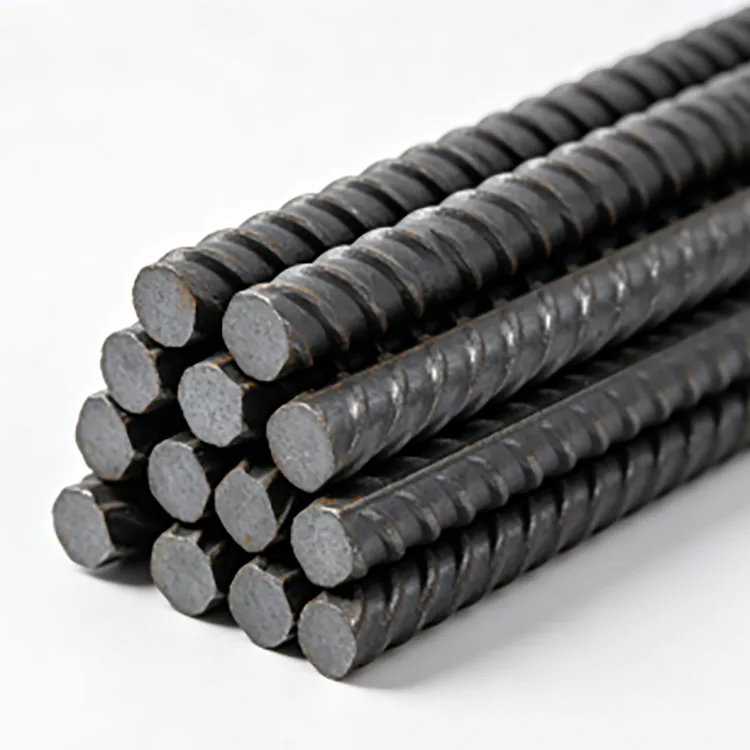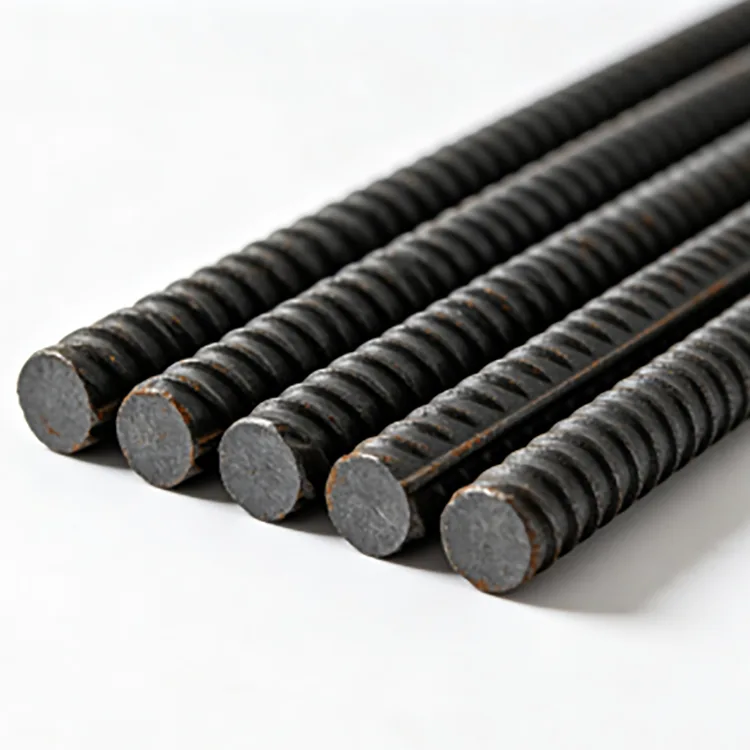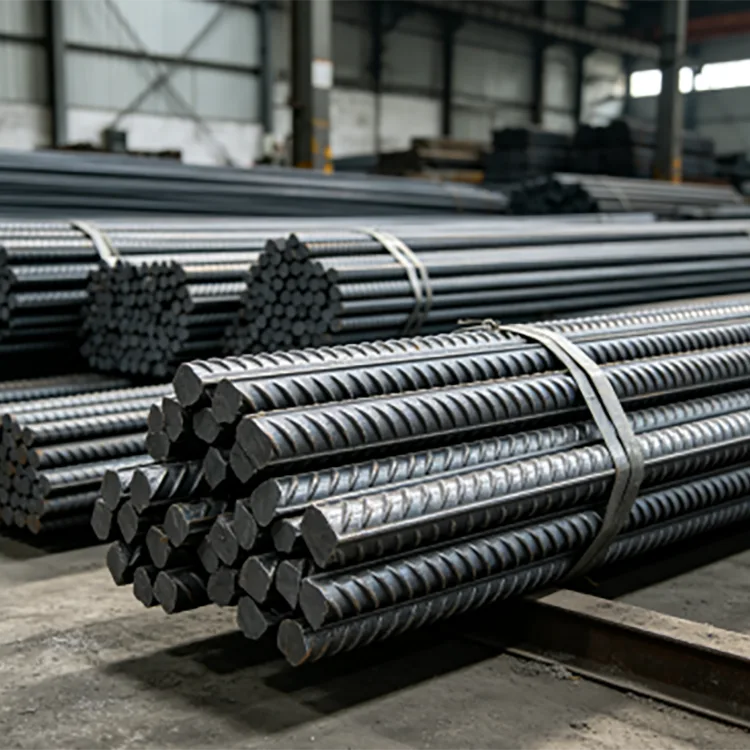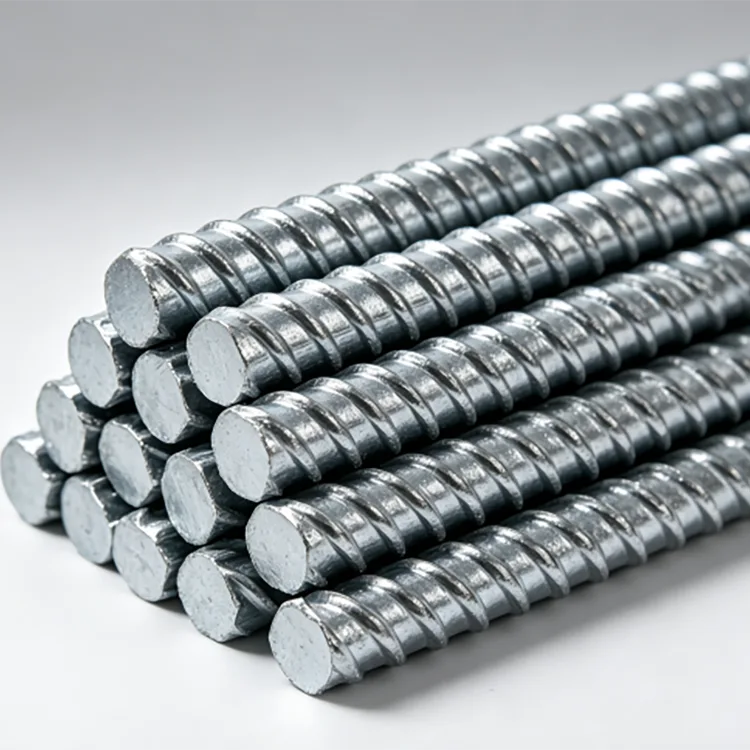
Hot-Rolled Steel Rebar is ribbed reinforcement steel for concrete buildings, industrial structures, bridges and civil works. Available in HRB400, HRB400E, HRB500 and HRB500E, with Φ6–Φ40 mm diameters, 9 m and 12 m standard lengths, and 6–15 m custom lengths.
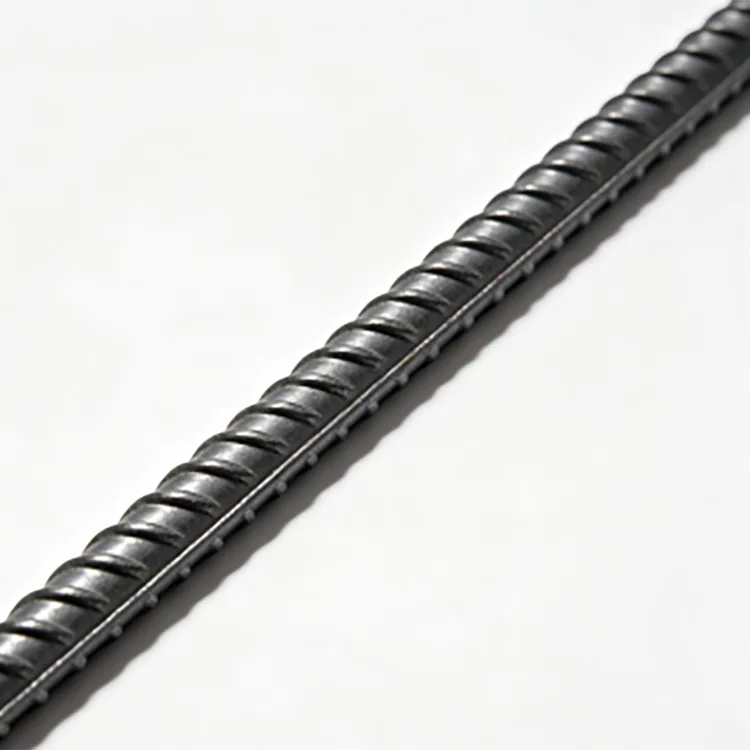
Hot-Rolled Steel Rebar is a ribbed reinforcing bar produced by heating steel billets and passing them through multiple rolling stands. The rolling process forms the required diameter and rib pattern in one continuous section.
The ribs provide mechanical interlock with concrete and help transfer forces between the steel and concrete. Rebar selection therefore depends on the specified grade, diameter, ductility, rib geometry, length and applicable standard.
Rongheng supplies HRB400, HRB400E, HRB500 and HRB500E Hot-Rolled Steel Rebar in diameters from Φ6 to Φ40 mm. Standard lengths are 9 m and 12 m, with custom lengths from 6–15 m and agreed fabrication available for project orders.
Cutting, bending, threading, stirrup forming and other agreed fabrication
HRB400, HRB400E, HRB500 and HRB500E
The four grades cover two nominal strength levels. The E grades have additional requirements for seismic applications.
Grade
Yield Strength
Tensile Strength
Elongation After Fracture
HRB400 / HRB400E
≥400 MPa
≥540 MPa
≥16%
HRB500 / HRB500E
≥500 MPa
≥630 MPa
≥15%
HRB400 is commonly used for general reinforced-concrete structures. HRB400E is specified where seismic-grade reinforcement is required. HRB500 and HRB500E provide a higher nominal strength level where required by the structural design.
HRB400 and HRB400E have the same nominal yield-strength level, but HRB400E has additional seismic requirements. The required grade should follow the structural drawings and applicable design code.
How Hot-Rolled Steel Rebar Is Produced
The production process starts with steel billets and forms the finished bar through controlled rolling:
Steel billet → reheating → rough rolling → intermediate rolling → finishing rolling → rib forming → controlled cooling → straightening / cutting → inspection → bundling
Rolling passes determine the bar diameter and rib geometry. Controlled cooling after rolling helps establish the required mechanical properties.
Rebar Diameter Selection
Diameter
Common Use
Φ6–Φ12 mm
Stirrups, slabs, secondary reinforcement and smaller structural members
Φ14–Φ25 mm
Main reinforcement for beams, columns, slabs and foundations
Φ28–Φ40 mm
Heavy foundations and heavily loaded structural members
These are common purchasing references rather than structural design rules. The required diameter depends on the reinforcement schedule, steel area, spacing, concrete member and structural calculation.
Applications
Hot-Rolled Steel Rebar is used to reinforce concrete structures in building, industrial and infrastructure projects.
Buildings: beams, columns, slabs, foundations and shear-wall systems
Industrial facilities: equipment foundations, heavy floor slabs and reinforced concrete bases
Infrastructure: bridges, roads, tunnels, retaining walls and culverts
Municipal projects: reinforced concrete structures and utility works
Energy projects: equipment foundations and reinforced concrete support structures
Rebar for Foundations and Heavy Structures
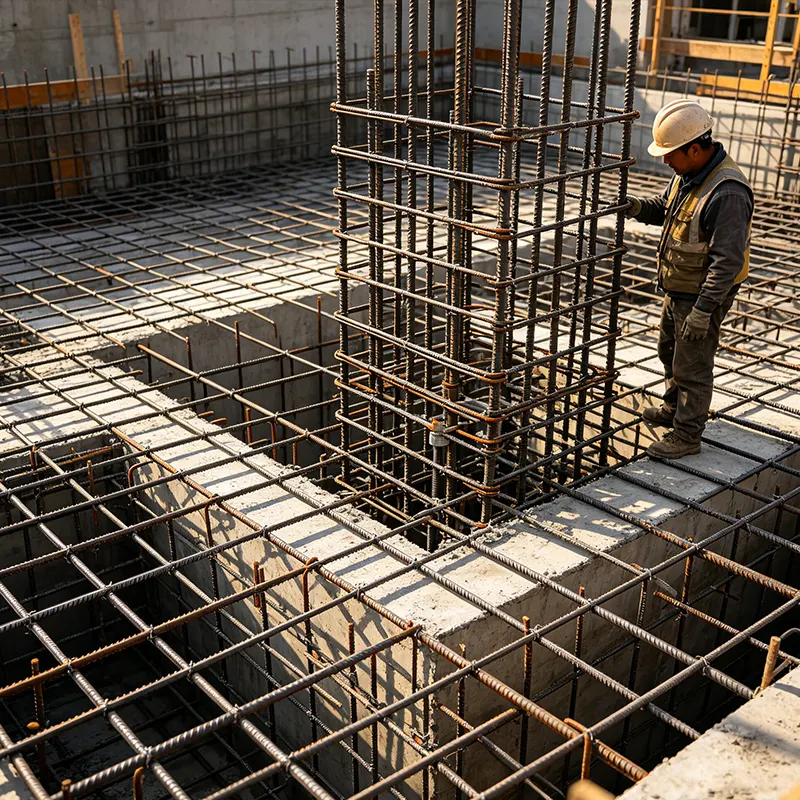
Foundation reinforcement is determined by the structural design rather than concrete thickness alone. Load, soil conditions, foundation geometry, bar spacing, concrete cover and development length all affect the reinforcement arrangement.
Φ28–Φ40 mm rebar may be specified for heavily loaded foundations and structural members, while smaller diameters are commonly used for secondary reinforcement and stirrups. Equipment foundations may also require consideration of concentrated loads and vibration.
Cutting, Bending and Fabrication
Rebar can be supplied in standard straight lengths or fabricated according to the reinforcement schedule.
Cutting to specified lengths
Bending
Threading
Stirrup forming
Other agreed reinforcement fabrication
For project orders, customers can provide a bar bending schedule, cutting list or fabrication drawings before production. Required lengths and shapes can then be prepared according to the approved schedule.
Welding and Mechanical Connections
Rebar may be used in welded reinforcement assemblies when the steel grade, welding procedure and project requirements permit it.
Welding should be checked against the material grade, welding procedure and applicable construction requirements before fabrication. Lap splices, mechanical couplers and welded connections are different connection methods and should follow the structural design.
Black Rebar Surface
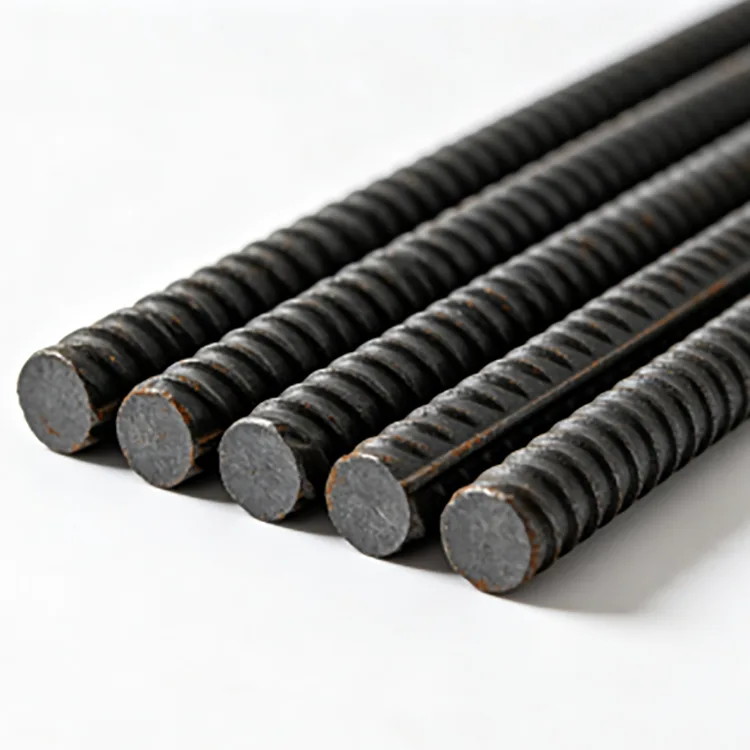
Hot-Rolled Steel Rebar is supplied without a corrosion-protection coating. Its dark surface is normally covered by hot-rolling mill scale, which is different from active red-brown rust.
Storage conditions should also be considered. Long-term exposure to moisture, standing water or direct contact with the ground can lead to corrosion before installation.
Quality Control
Rebar inspection covers the steel grade, dimensions, rib geometry and mechanical properties, as well as surface condition and traceability.
Steel grade: Verify the specified HRB grade.
Diameter: Check nominal diameter and applicable dimensional requirements.
Rib geometry: Verify compliance with the applicable standard.
Mechanical properties: Check yield strength, tensile strength and elongation.
Surface: Inspect for serious defects or excessive corrosion.
Traceability: Match the material with the relevant production and inspection records.
Material certificates and agreed inspection records can be supplied with project orders. Third-party inspection can also be arranged when required by the contract.
Rebar Weight and Quantity
Rebar is commonly purchased by weight but installed according to the diameter, length and quantity of individual bars.
For bulk orders, the purchase list should therefore separate each diameter and length instead of specifying only total tonnage. The theoretical unit weight can be used for material planning, while the settlement method should be agreed in the purchase contract.
Supply from Tianjin Daqiuzhuang
Rongheng's supply chain is based in Tianjin Daqiuzhuang, providing access to rebar supply, steel processing and regional logistics.
HRB400, HRB400E, HRB500 and HRB500E can be arranged according to the specified grade and project requirements. Standard 9 m and 12 m lengths are available, with custom lengths from 6–15 m for suitable project orders.
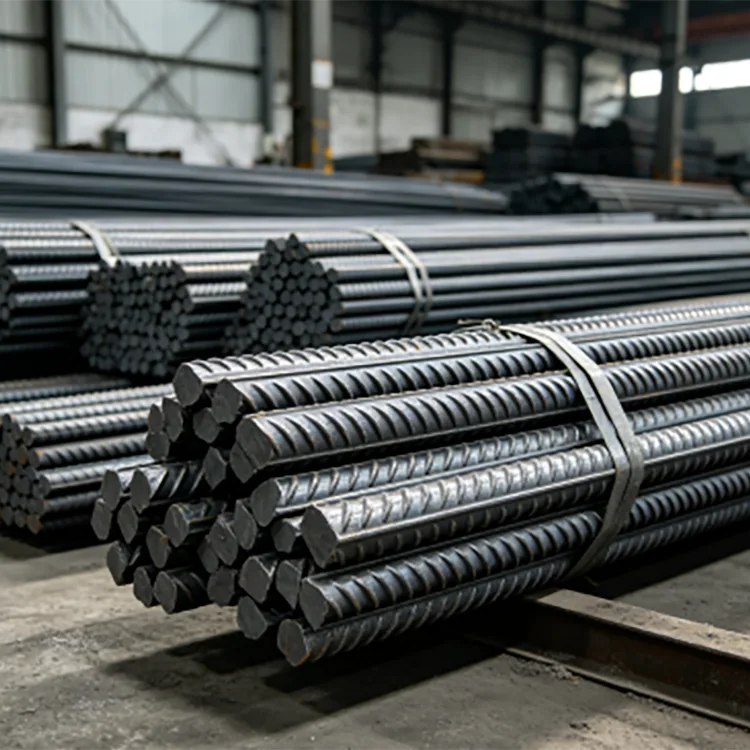
For export orders, rebar can be bundled and prepared for container loading and long-distance transportation. Material certificates and inspection records can be supplied according to the purchase contract.
FAQ
Q1. What is Hot-Rolled Steel Rebar used for?
It is used to reinforce concrete structures such as buildings, foundations, bridges, roads, tunnels, industrial facilities and municipal infrastructure.
Q2. What is the difference between HRB400 and HRB400E?
Both have a nominal yield-strength level of 400 MPa, but HRB400E has additional requirements for seismic applications. The required grade should follow the structural drawings and applicable design code.
Q3. What is the difference between HRB400 and HRB500?
HRB400 has a nominal yield-strength level of 400 MPa, while HRB500 has a nominal yield-strength level of 500 MPa. The required grade depends on the structural design.
Q4. What diameters are available?
The available range is Φ6–Φ40 mm, including Φ6, Φ8, Φ10, Φ12, Φ14, Φ16, Φ18, Φ20, Φ22, Φ25, Φ28, Φ32 and Φ40 mm.
Q5. What lengths are available?
Standard lengths are 9 m and 12 m. Custom lengths from 6–15 m can be discussed according to project requirements.
Q6. Can rebar be cut and bent before delivery?
Yes. Cutting, bending, threading, stirrup forming and other agreed fabrication can be arranged according to the reinforcement schedule.
Q7. Can HRB400 be replaced by HRB400E?
The two grades should not be treated as automatically interchangeable. Where the project specifies seismic-grade HRB400E, the specified E grade should be supplied.
Q8. Is the dark surface of rebar rust?
Normally, the dark surface is hot-rolling mill scale. This should be distinguished from active corrosion, which generally produces visible red-brown rust and may cause section loss when severe.
Q9. Can rebar be welded?
It can be welded for suitable grades and applications when the welding procedure meets the applicable project requirements. Weldability should be confirmed before fabrication.
Q10. How should rebar be stored?
Rebar should be kept above the ground where water can drain away. Long-term contact with standing water should be avoided to reduce corrosion before installation.
Q11. How is rebar purchased by weight?
Rebar is commonly quoted and purchased by tonne, while installation is based on bar diameter, length and quantity. The settlement method should be agreed before shipment.
Q12. What quality documents are available?
Material certificates and agreed inspection records can be supplied according to project requirements. Third-party inspection can also be arranged when required.
Hot Tags: Hot-Rolled Steel Rebar Supplier, Deformed Steel Bar Manufacturer, Reinforcing Steel Bar Wholesale
We use cookies to offer you a better browsing experience, analyze site traffic and personalize content. By using this site, you agree to our use of cookies. Privacy Policy