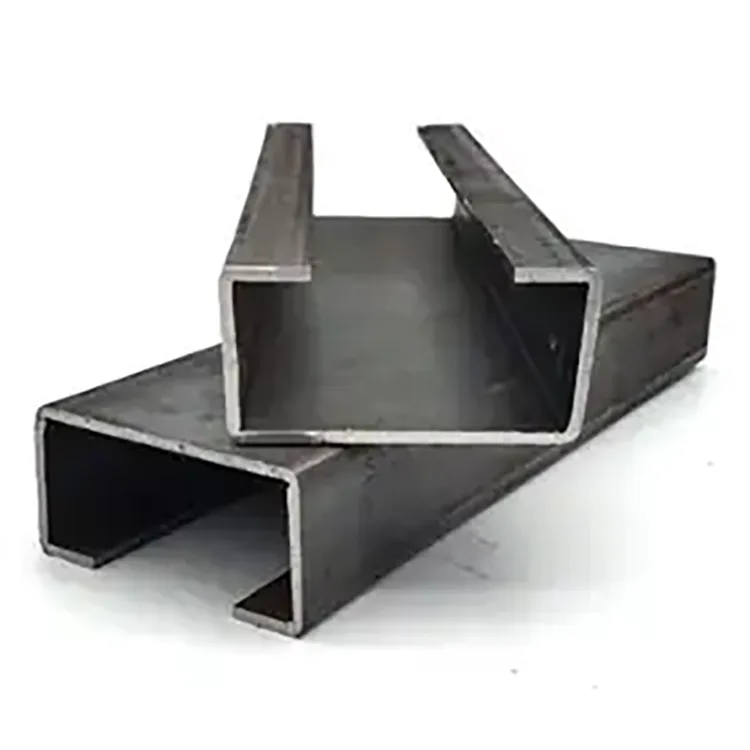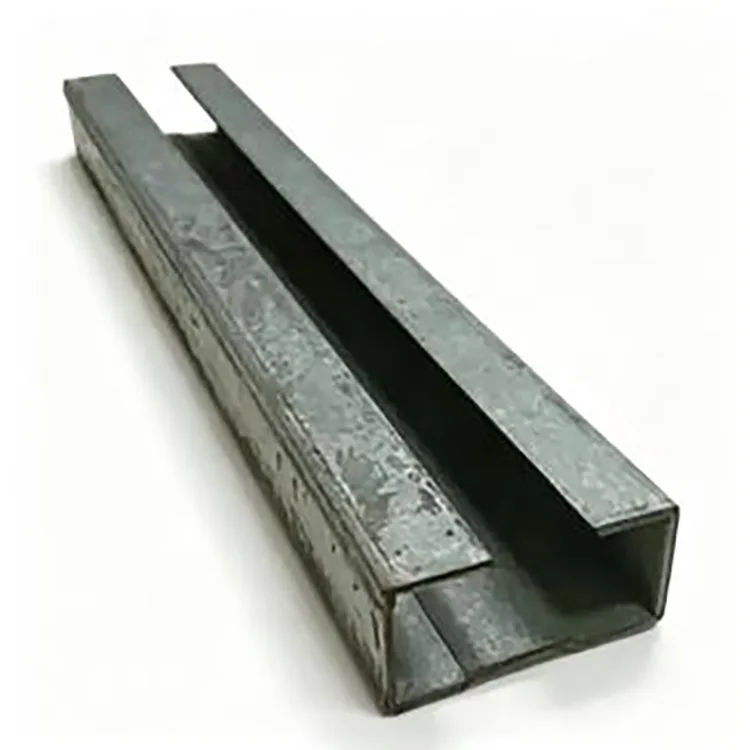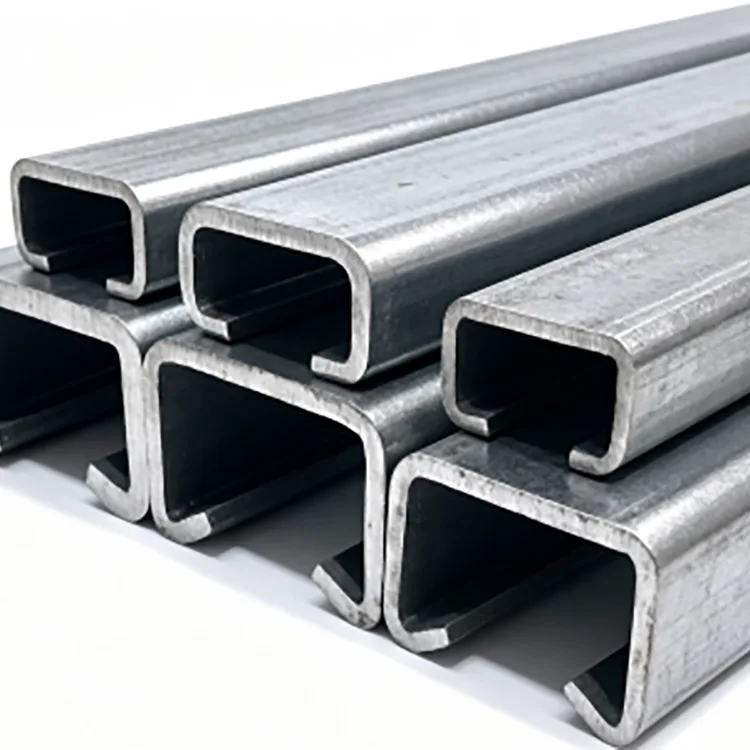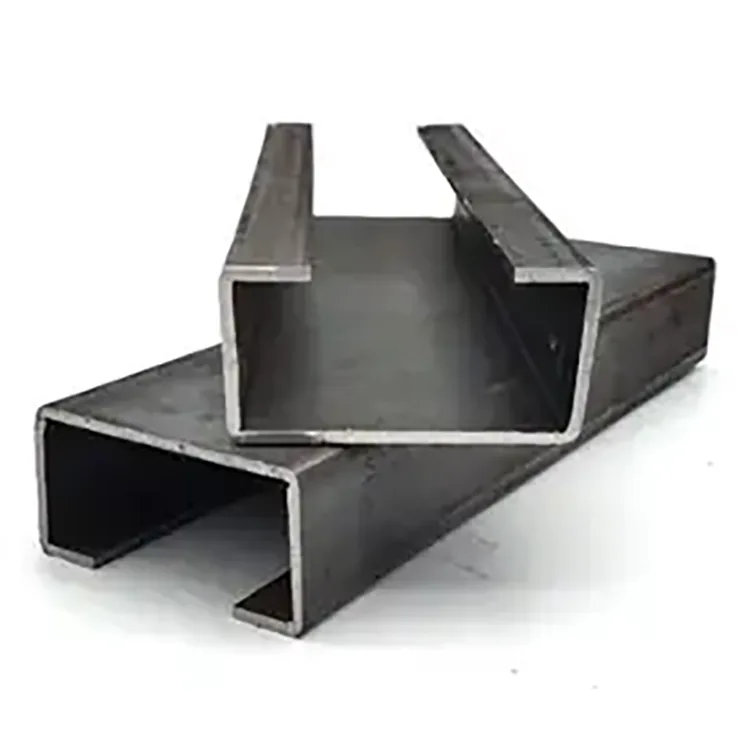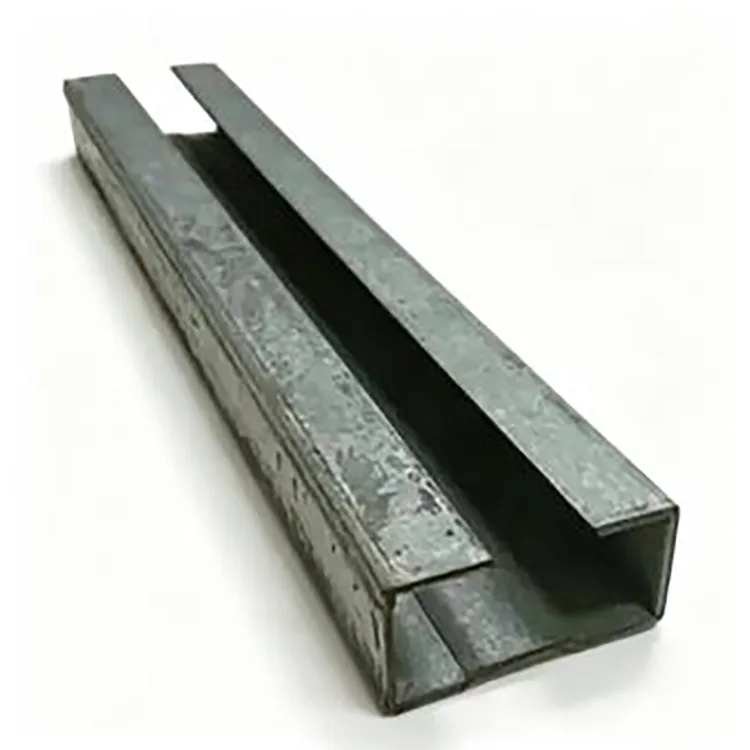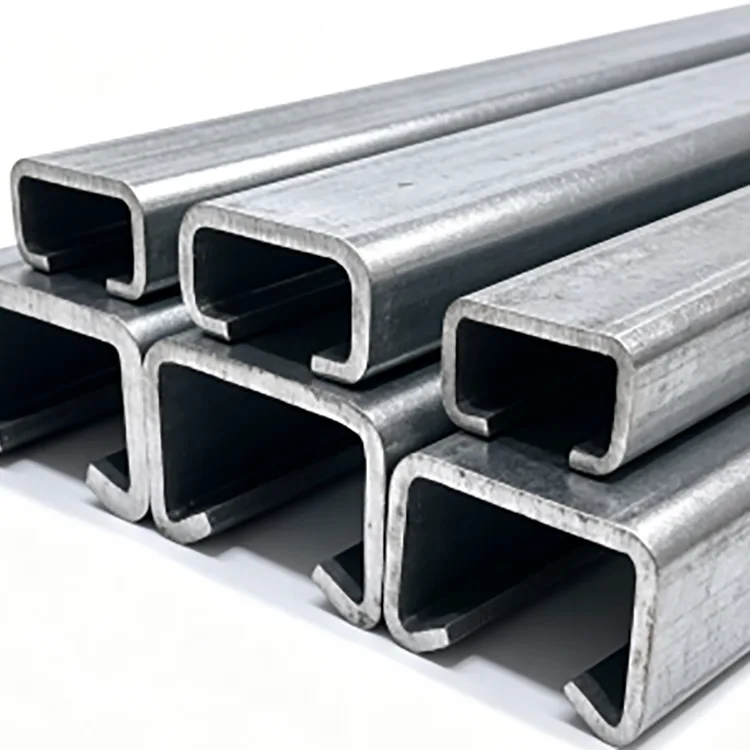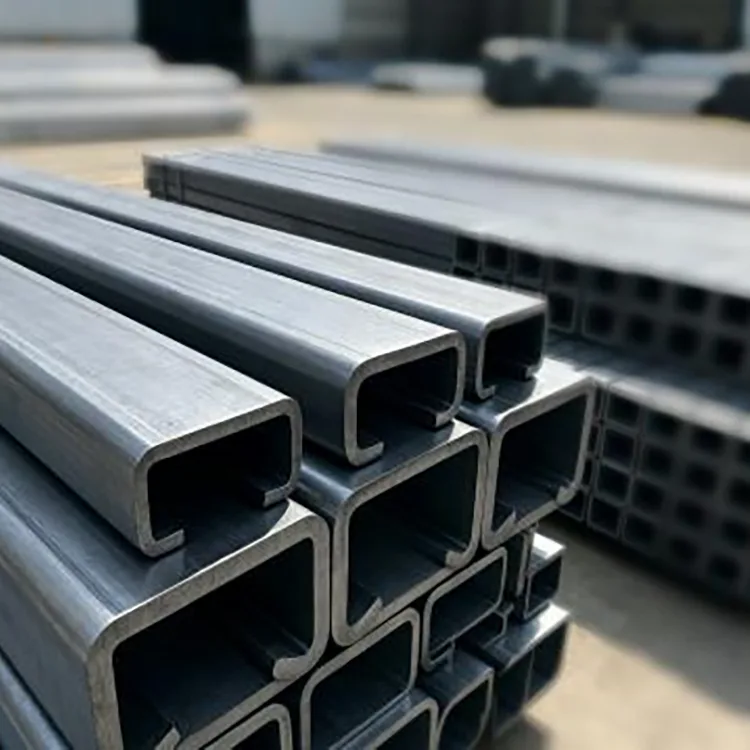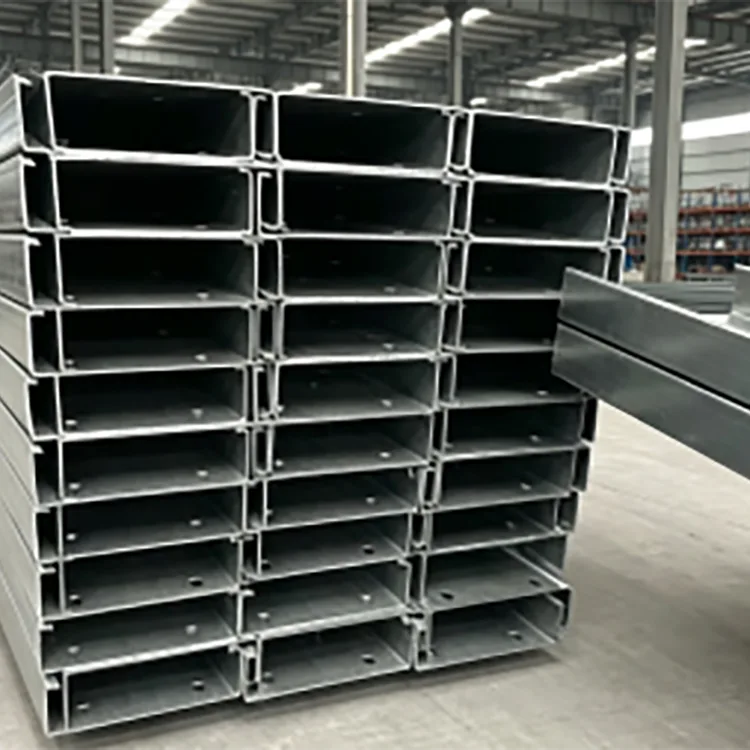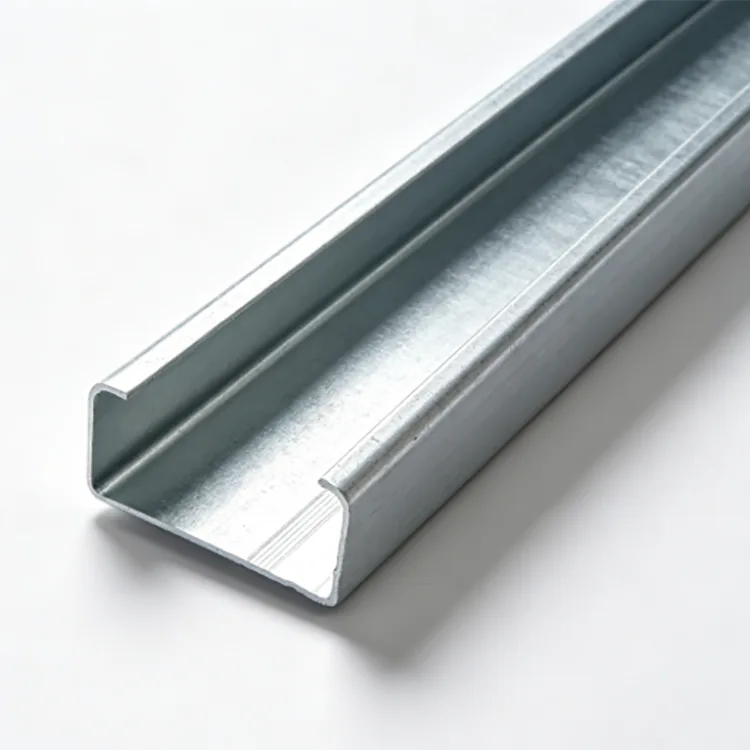
Cold-Formed C Section Steel is designed for steel structures where a high strength-to-weight ratio, consistent dimensions, and fast installation are more important than using heavy hot-rolled sections.
The profile is manufactured by continuously feeding steel strip through a series of forming rollers. The steel is gradually bent into a C-shaped section without high-temperature hot rolling. Because the forming process can control the section geometry and length continuously, the finished member is suitable for projects requiring repeated sections, fixed lengths, pre-punched holes, and fast bolted assembly.
Q235B and Q355B are available according to structural requirements. Common sections range from C80 to C300, with wall thicknesses from 0.8 mm to 3.0 mm.


|
Item |
Specification |
|
Product |
Cold-Formed C Section Steel |
|
Material |
Q235B, Q355B |
|
Section |
C80, C100, C120, C140, C160, C180, C200, C220, C250, C300 |
|
Wall Thickness |
0.8–3.0 mm |
|
Standard Length |
6 m, 9 m, 12 m |
|
Custom Length |
Fixed-length cutting available |
|
Manufacturing Process |
Cold roll forming, leveling, punching and cutting |
|
Surface |
Black steel / pickled steel, uncoated |
|
Standard |
GB/T 6728-2017 |
|
Processing |
Punching, cutting, corner cutting, customized dimensions |
|
Application |
Purlins, wall framing, mezzanines, partitions, equipment supports and light steel structures |
The production process is different from manufacturing a conventional hot-rolled channel.
A steel strip starts as a flat material. It passes through multiple forming stations, with each roller set introducing a controlled amount of deformation until the final C-section is reached.
This gradual forming process allows the manufacturer to control:
Section depth
Flange width
Lip geometry where required
Wall thickness
Overall straightness
Hole position
Fixed length
For repeated construction members, this dimensional consistency can be more valuable than simply selecting a heavier steel section.
The final structural performance, however, should always be checked against the actual section dimensions, material grade, span, support conditions, connection method, loads, and applicable design code.
Q235B or Q355B steel strip is selected according to the required section and structural application.
Incoming material is checked for thickness, surface condition, and material information before entering the forming line.
The coil is uncoiled and leveled to remove unwanted deformation. Stable strip feeding is important because variation at this stage can later affect section straightness and hole positioning.
The leveled strip passes through multiple roller stations.
Instead of bending the material into the final C shape in one operation, the section is gradually formed. This reduces sudden deformation and allows the section dimensions and flange geometry to be controlled throughout production.
If the project requires bolt holes, service holes, or repeated mounting holes, punching can be integrated into the production line.
Hole spacing and positioning should be confirmed from the customer's drawings before production, particularly when the sections will be assembled directly on site.
After forming and punching, the section is sized and checked for straightness.
This stage helps control twisting, flange deviation, and dimensional variation that could otherwise make frame assembly more difficult.
The continuous section is cut according to the specified length.
Standard supply includes 6 m, 9 m, and 12 m lengths, while fixed-length cutting can be arranged within the customized range.
Finished C sections are checked before bundling.
Inspection focuses on section dimensions, wall thickness, straightness, hole position where applicable, cutting length, surface condition, and batch consistency.
Cold forming allows the steel strip to be shaped into an efficient open section. When the structural design permits a thin-walled member, this can reduce the amount of steel required compared with a heavier conventional section.
The actual weight saving should be calculated from the selected C-section, wall thickness, span, load, and design requirements rather than assuming a fixed percentage for every project.
Continuous roll forming provides repeatable section dimensions over long production runs.
For projects using hundreds or thousands of repeated purlins or framing members, consistent dimensions can simplify fabrication and reduce the need for site correction.
Pre-cut lengths and pre-punched holes can be supplied for bolted assembly.
This is particularly useful for light steel structures where the installation sequence depends on accurate hole positions and repeatable member lengths.
C80 through C300 sections cover a range of light structural and framing requirements.
Wall thickness can also be selected from 0.8–3.0 mm according to the required section capacity and design conditions.
The uncoated steel surface can be prepared for painting, powder coating, galvanizing, or other specified corrosion-protection processes.

Choosing a C section should start with the structural requirement rather than simply selecting the largest available profile.
|
Section Range |
Typical Use |
Main Consideration |
|
C80–C100 |
Light framing, partitions, indoor supports |
Suitable for relatively light loads and shorter spans |
|
C120–C160 |
Purlins, wall framing, equipment supports |
Common range for light steel construction |
|
C180–C220 |
Heavier purlins, mezzanine secondary members, industrial framing |
Requires load and span verification |
|
C250–C300 |
Heavier structural framing and support applications |
Section capacity, local buckling and connection design should be checked |
The actual selection should be confirmed through structural calculation. For thin-walled sections, local buckling, distortional buckling, lateral restraint, and connection details can affect the usable capacity.
|
Material |
Typical Selection |
Consideration |
|
Q235B |
Indoor framing, purlins, partitions, equipment supports, light-duty structures |
Suitable where the design strength requirement is within the capability of the grade |
|
Q355B |
Higher-load framing, heavier purlins, equipment bases and structural members |
Higher strength grade where structural calculations call for increased material strength |
Using Q355B does not automatically mean that a thinner section can replace a thicker Q235B section. The complete section design must be checked for strength, stability, buckling, connections, and serviceability.
The standard Cold-Formed C Section Steel is supplied without a protective zinc coating.
This makes it economical for:
Dry indoor workshops
Enclosed warehouses
Indoor mezzanines
Interior partitions
Equipment frames
Temporary indoor structures
Projects receiving their own paint or protective coating
It should not be selected as untreated black steel for prolonged exposure to rain, condensation, coastal salt spray, buried conditions, or corrosive chemicals.
For outdoor or humid applications, galvanized C sections or another specified corrosion-protection system should be considered.
C sections can be used as roof and wall secondary members in light steel buildings. Section size and thickness should be selected according to span, load, spacing, wind conditions, and connection design.
The relatively low self-weight of cold-formed sections can be useful for indoor mezzanine and platform systems where the existing building has limitations on additional dead load.
C sections are suitable for interior wall framing, ceiling support systems, partition structures, and other lightweight framing applications.
The sections can be fabricated into equipment supports, cable and pipe support frames, machine structures, and industrial brackets.
C sections can be used for racks, workstations, light platforms, and other industrial structures when the selected section has been verified for the required loads.
Different projects often require different hole patterns and member lengths. Instead of cutting every section on site, the production line can prepare members according to the approved fabrication drawings.
Available options include:
Custom section dimensions
Custom wall thickness
3–12 m fixed lengths
Pre-punched holes
Hole patterns according to drawings
Cut-to-length production
Corner cutting
Special end processing
Surface treatment arrangements
For customized production, buyers should provide the section drawing, material grade, wall thickness, length, hole diameter and spacing, quantity, and required surface treatment.
For cold-formed sections, the final section geometry is closely related to the condition of the incoming steel strip and the stability of the roll-forming process.
Quality checks therefore cover the entire production route.
Material inspection: Q235B or Q355B material information and incoming strip condition are checked before production.
Thickness inspection: Actual strip thickness is monitored to ensure that the finished section meets the specified wall-thickness requirement.
Section inspection: Section depth, flange dimensions, and other critical dimensions are checked after forming.
Straightness inspection: Finished members are checked for bending, twisting, and deformation.
Hole inspection: For pre-punched products, hole diameter, spacing, and position are checked against the production drawing.
Length inspection: Cut lengths are checked before bundling.
Batch consistency: Samples from different production stages are compared to identify dimensional drift during long production runs.
This approach is particularly important for large orders because a small dimensional deviation repeated across hundreds of members can create significant installation problems on site.
Rongheng Intelligent Manufacturing (Tianjin) Import & Export Co., Ltd. provides steel products through an international sales platform backed by Tianjin Gefu Steel.
Located in Daqiuzhuang Industrial Zone, Tianjin, the company works with steel production and processing resources covering steel pipes, hollow sections, steel profiles, galvanized products, and photovoltaic mounting systems.
For engineering procurement, the supply side can support:
Bulk steel orders
Fixed-length production
Pre-punched C sections
Customized dimensions
OEM/ODM requirements
Third-party inspection according to project requirements
Container shipment
The standard MOQ is one 20-foot container, approximately 20–25 tons. Standard lead time is generally 15–25 days depending on specification, quantity, processing, and customization requirements.
For a quotation, the most useful information is the C-section size, wall thickness, material grade, length, hole pattern, quantity, surface treatment, destination, and applicable standard.
Yes, cold-formed C sections are widely used as structural and secondary framing members. However, strength cannot be judged from the forming process alone. The section size, wall thickness, steel grade, span, load, bracing, connection method, and buckling behavior must all be considered.
It can be significantly lighter when an efficiently designed thin-walled C section can meet the required structural capacity. The actual weight difference depends on the selected sections and the engineering design.
Thin-walled sections require proper design and restraint. Local buckling, distortion, lateral stability, and connection details should be checked rather than assuming that a thinner section will perform like a heavy hot-rolled channel.
Yes. Automatic punching can be arranged for repeated bolt holes or other openings. Hole diameter, spacing, edge distance, and pattern should be confirmed from the fabrication drawing before production.
Untreated black steel is not recommended for long-term outdoor exposure. Rain, condensation, salt spray, and other moisture can accelerate corrosion. Galvanized or painted C sections are more appropriate where corrosion protection is required.
In a dry, well-ventilated indoor environment, additional corrosion protection may not always be necessary. If humidity, condensation, chemical vapors, or other corrosive conditions are present, a suitable protective coating should be considered.
Q355B has a higher specified yield strength than Q235B and can be selected when the structural design requires greater material strength. It does not automatically mean that every Q355B section can be made thinner; the complete structural design still needs to be checked.
Common lengths are 6 m, 9 m, and 12 m. Fixed-length cutting can also be arranged according to project requirements.
Yes. Customized section dimensions, wall thicknesses, lengths, hole patterns, and other processing requirements can be discussed according to drawings and production feasibility.
Provide the C-section dimensions, wall thickness, material grade, required length, quantity, hole pattern if applicable, surface treatment, and delivery requirements. A section drawing is recommended for non-standard products.
Address
Secondary Arterial Road No. 2-1, Expansion Area of Daqiuzhuang Industrial Zone, Jinghai District, Tianjin, China
Tel