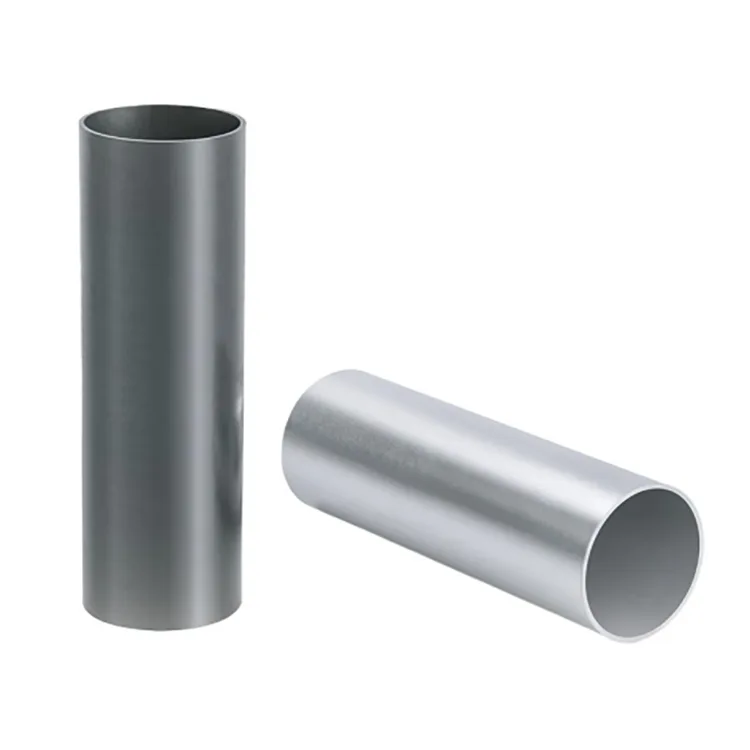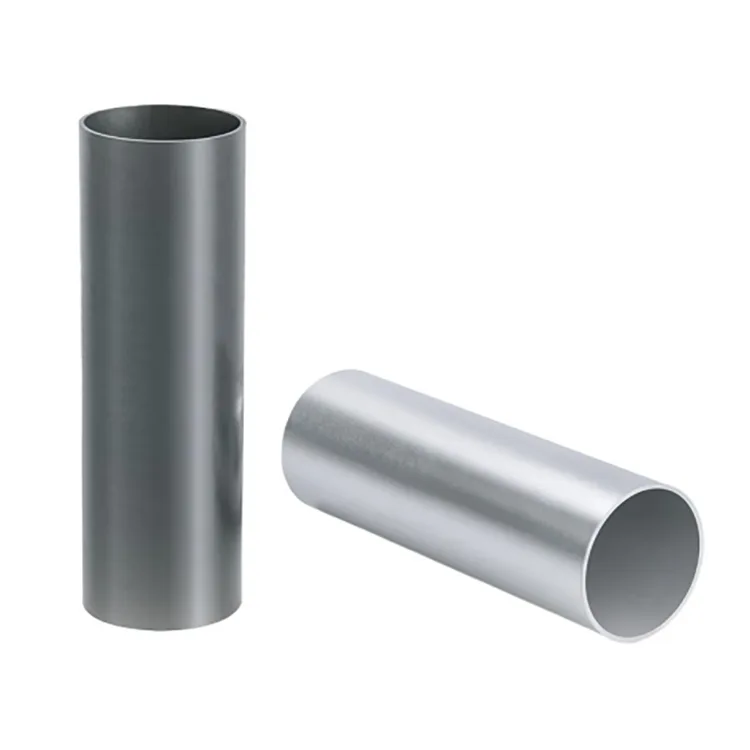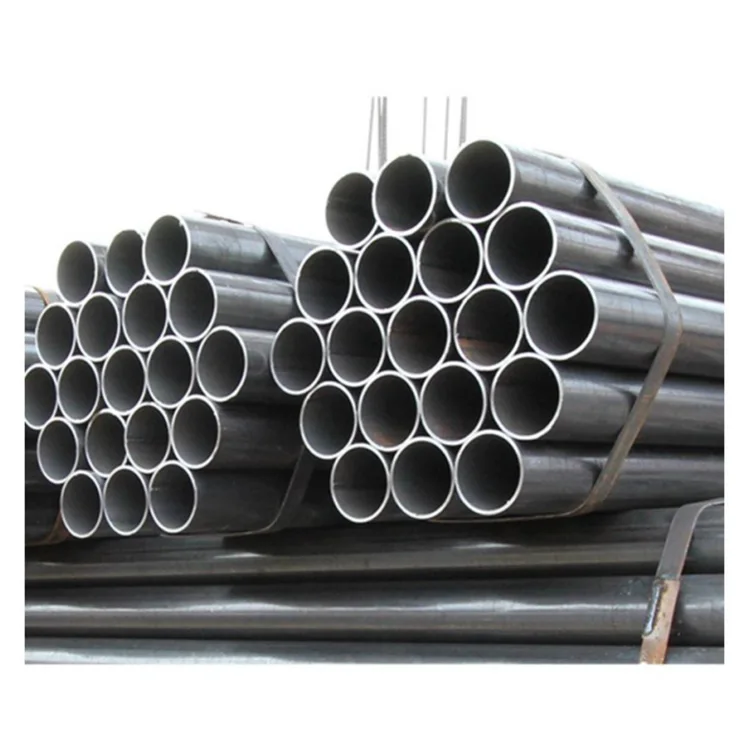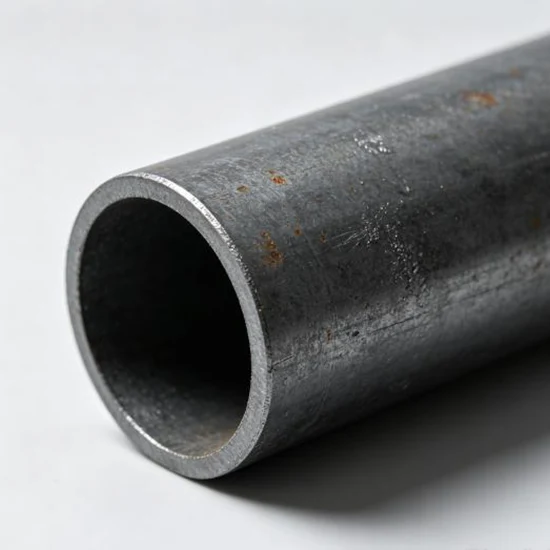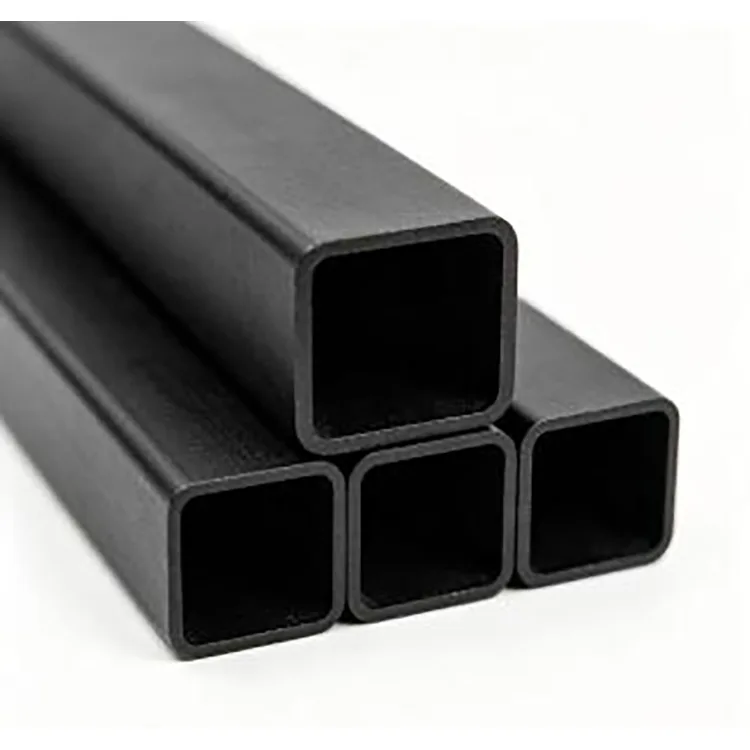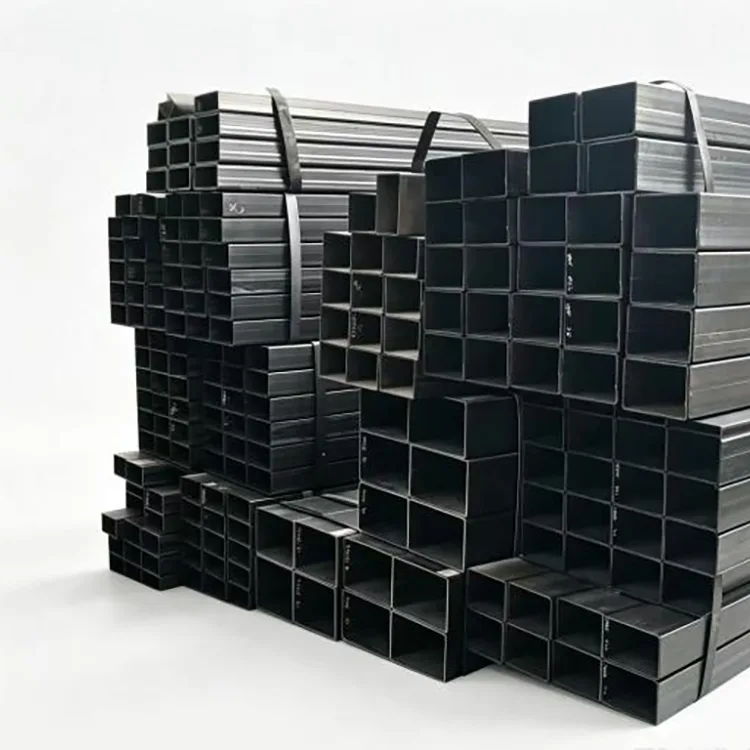
Rongheng supplies ERW Round Steel Pipe manufactured by high-frequency induction welding, with fast forming, accurate welding and stable mechanical performance. It is available in multiple diameters, wall thicknesses and steel grades for construction, machinery, steel structures, HVAC, automotive parts and municipal projects, with non-standard sizes and further processing available.
ERW Round Steel Pipe is formed from steel strip and joined along the longitudinal seam through high-frequency induction heating and resistance welding. After welding, the tube is sized, straightened and cut to the required length. This production method is well suited to continuous production and large-volume orders where consistent dimensions and repeatable processing are important.
Rongheng supplies ERW Round Steel Pipe in Q195-Q235, Q235B, Q355A, Q355B and Q355C, with outside diameters from Φ18 mm to Φ219 mm and wall thicknesses from 1.0 mm to 7.75 mm. Standard 6 m, 9 m and 12 m lengths are available, while 4–12 m fixed lengths can be produced according to customer requirements.
Why Use High-Frequency Welding?
The main advantage of high-frequency welding is its ability to join the edges of the formed steel strip continuously and at high production speed. The welding area is concentrated at the strip edges, while the tube passes through forming, welding, sizing and straightening in a continuous line.
For buyers, the practical result is not simply a faster manufacturing process. It also allows the manufacturer to maintain production parameters across a large quantity of pipe, which is important for projects requiring repeated cutting, welding, assembly or installation.
The welded seam is formed by heating and pressing the strip edges together. Subsequent sizing and straightening help bring the finished tube to the specified outside diameter and shape.
Production Process
The complete manufacturing sequence includes:
Raw Material Inspection → Steel Strip Leveling → Automatic Feeding and Forming → High-Frequency Induction Welding → Weld Squeezing and Fusion → Tube Sizing → Cooling and Shaping → CNC Fixed-Length Cutting → End Deburring → Non-Destructive Quality Inspection → Surface Inspection → Bundling and Storage → Shipment Inspection
Each stage serves a different purpose. Incoming inspection checks the steel strip before production. Forming establishes the round tube shape, while high-frequency welding joins the longitudinal edges. Sizing and straightening then control the finished geometry before cutting and final inspection.
Material Selection
The available material grades cover different structural and general fabrication requirements.
Q195-Q235: Suitable for common general-purpose applications where the required mechanical properties match the project specification.
Q235B: Commonly used in construction, steel structures, supports and general fabrication.
Q355A, Q355B and Q355C: Available for projects requiring the corresponding higher-strength structural steel grades.
Other materials can also be discussed for customized orders. The steel grade should be confirmed against the drawing, application and applicable standard before production rather than selected only according to pipe price.
Diameter, Wall Thickness and Length
Pipe dimensions should be selected according to how the finished tube will be used.
Outside Diameter: The diameter affects the overall section size and connection arrangement. It should match the required fittings, clamps, supports or fabrication drawings.
Wall Thickness: Wall thickness affects weight, structural capacity, fabrication and material cost. Using a thicker pipe is not always necessary if the engineering requirement can be met with a suitable thinner specification.
Length: Standard 6 m, 9 m and 12 m pipes are convenient for common construction and fabrication work. For projects with repetitive cutting dimensions, fixed lengths from 4–12 m can reduce cutting work and material waste.
Black Round Pipe and Galvanized Round Pipe
The surface treatment should be selected according to the working environment and subsequent fabrication process.
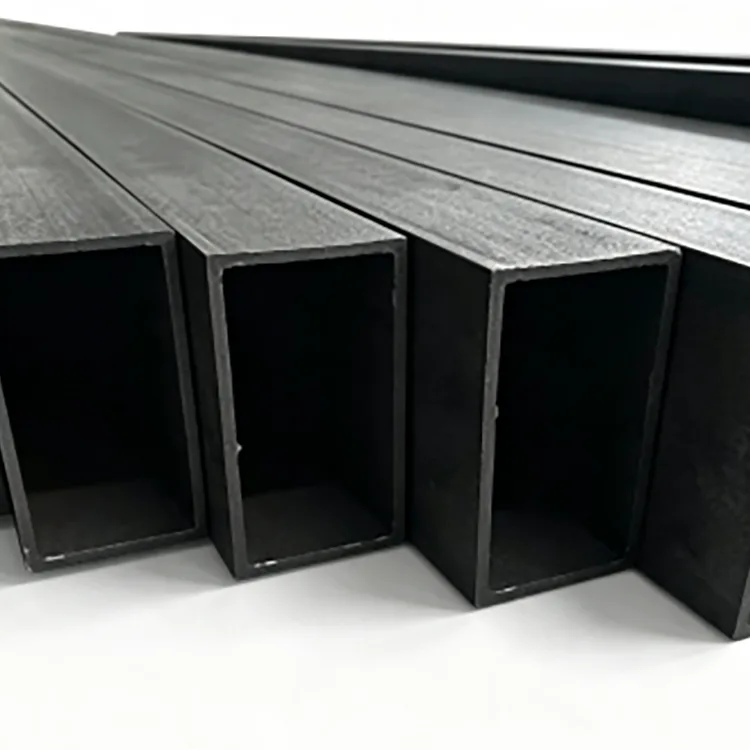
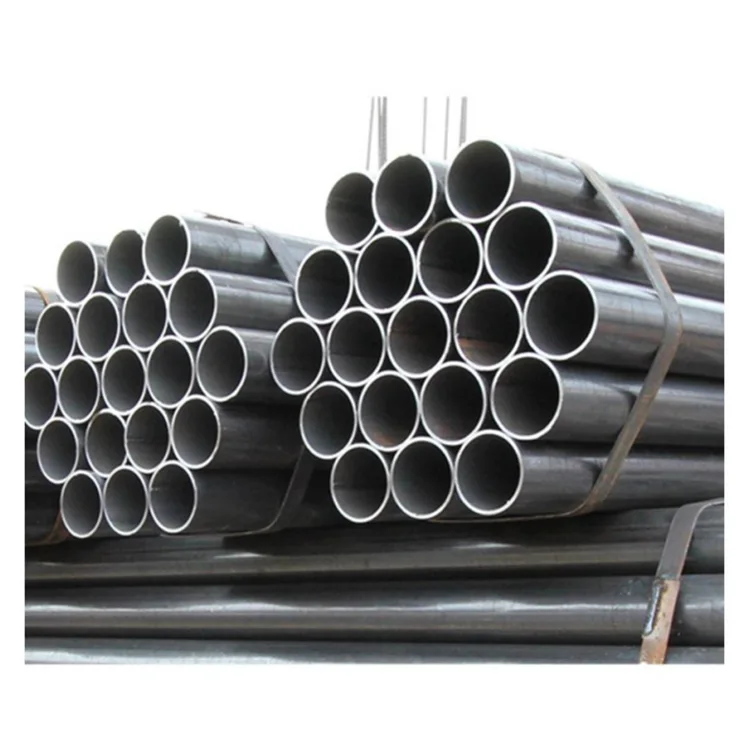
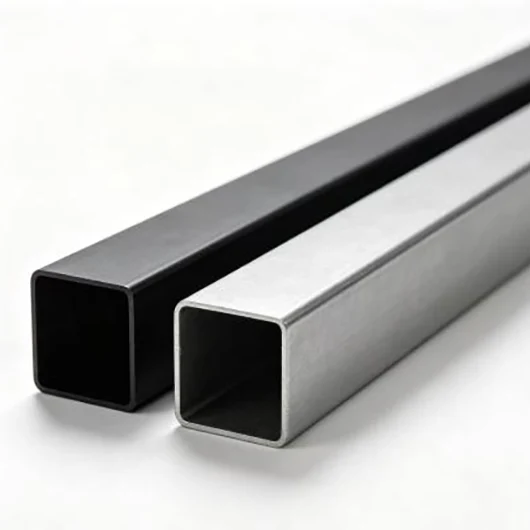
Black ERW Pipe is commonly used for indoor structures, machinery frames, general fabrication and applications where painting or another protective coating will be applied later.
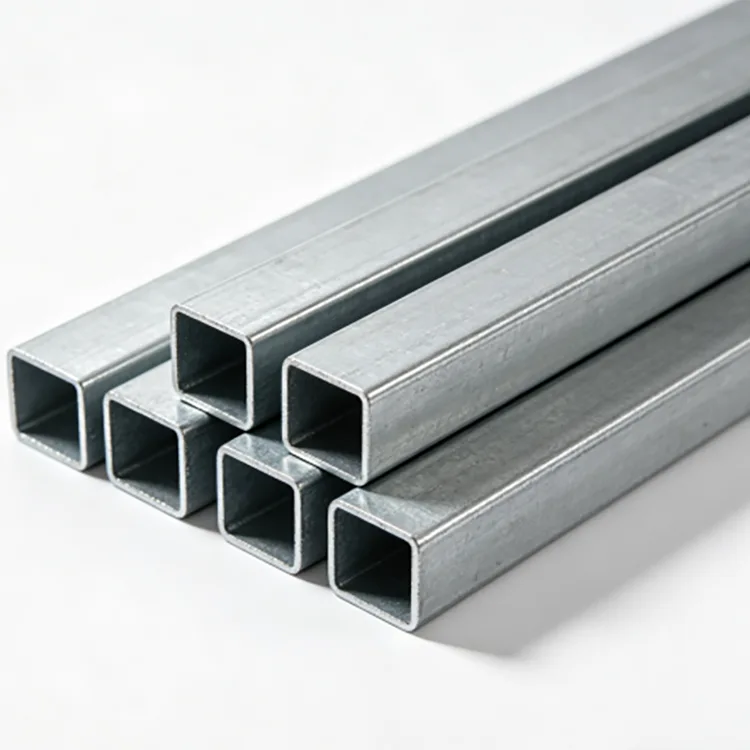
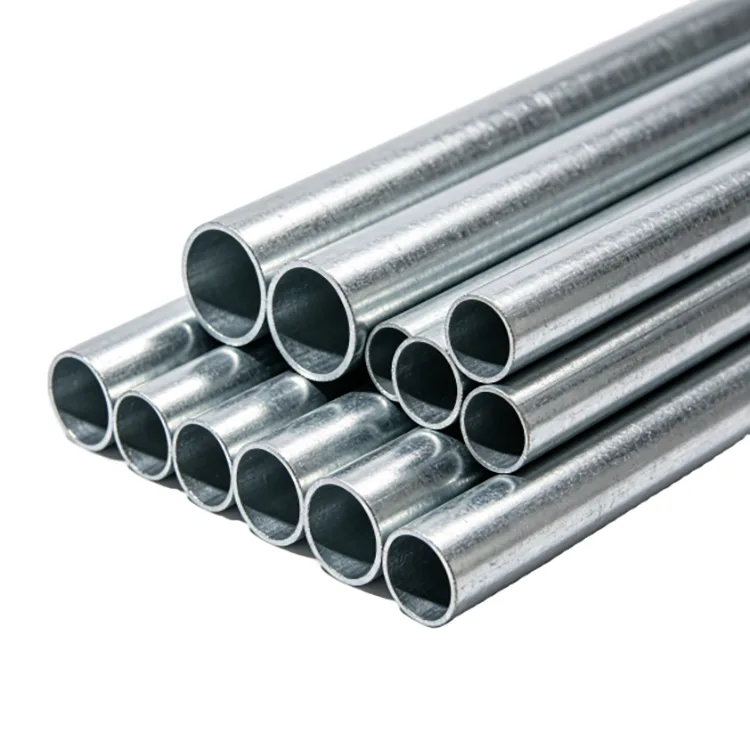
Galvanized ERW Pipe is better suited to outdoor, humid or exposed environments where additional corrosion protection is required. Hot-dip galvanizing can be arranged according to the order requirements.
For galvanized products that require cutting, drilling or welding after treatment, the exposed areas should be repaired with a suitable corrosion-protection method.
Main Applications
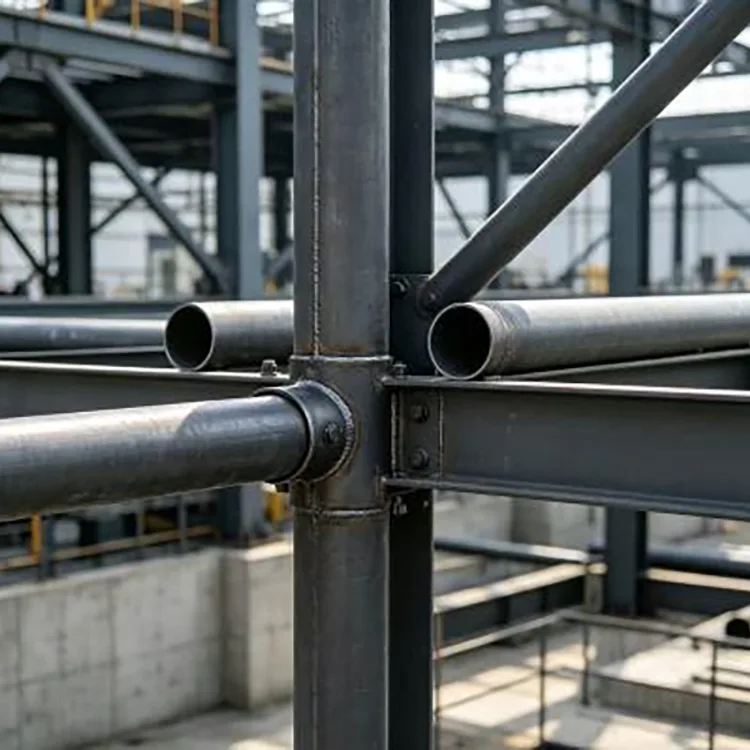
Construction and Steel Structures
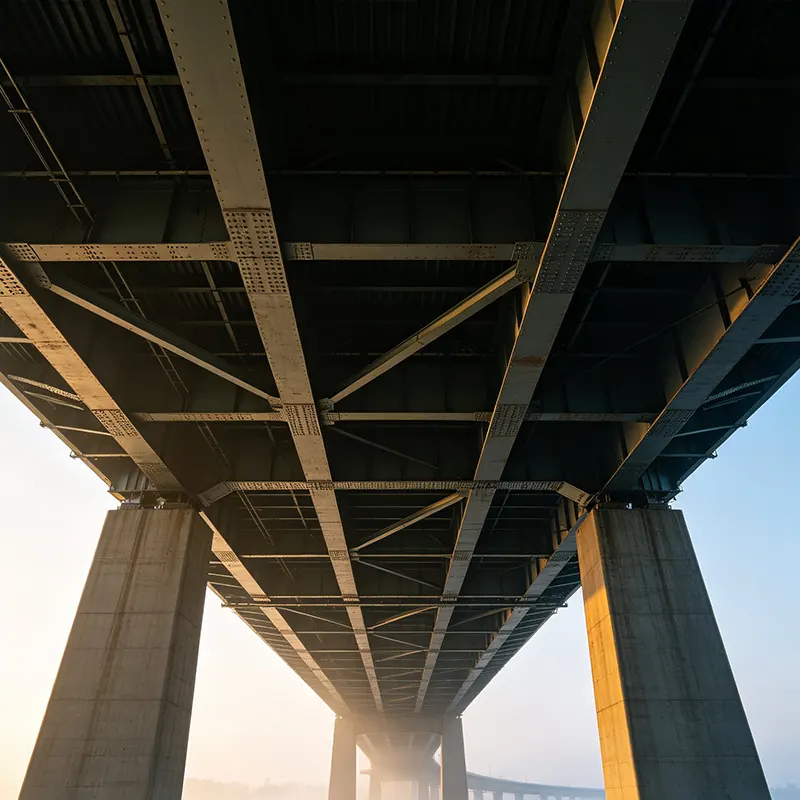
Used for factory frames, structural supports, stadium components, curtain wall structures, columns, auxiliary bridge components and other fabricated steel structures.
Machinery Manufacturing
Used for equipment frames, machine bases, conveyor components, agricultural machinery parts and engineering equipment structures.
Municipal Infrastructure
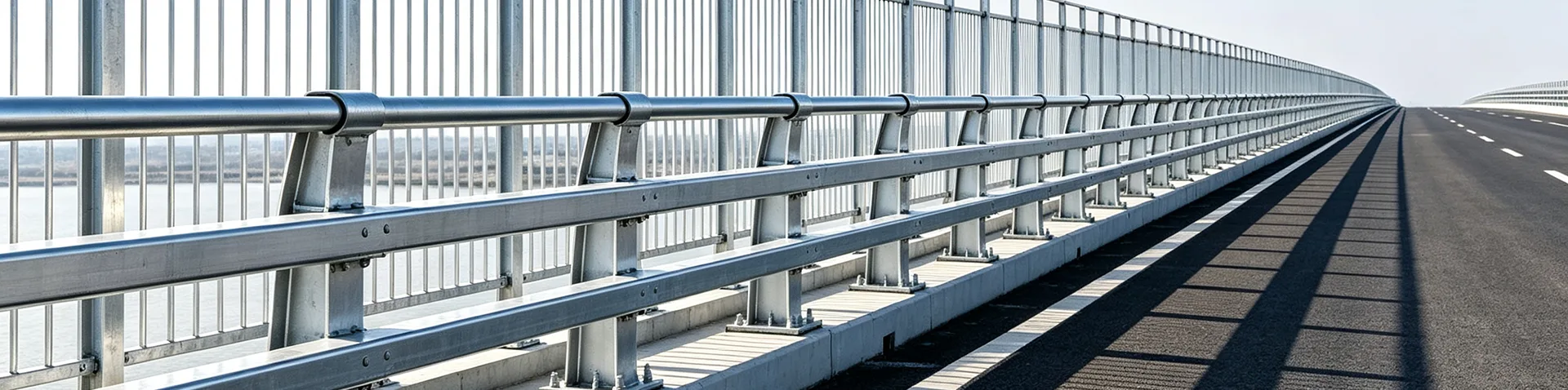
Suitable for road barriers, lighting supports, traffic facility frames, fencing posts and other municipal fabrication applications.
HVAC and Fluid Systems
Can be used for selected water, ventilation and low-pressure fluid applications when the pipe specification and applicable standard meet the system requirements.
Automotive and Equipment Components
Used for selected automotive components, electric vehicle parts, appliance frames, refrigeration equipment and related fabricated components.
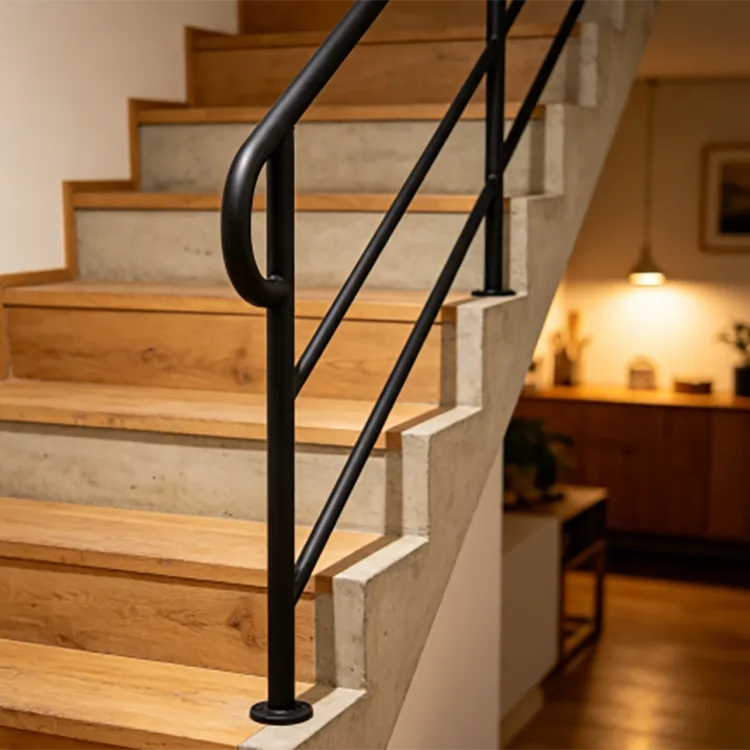
Furniture and Decorative Products
Suitable for furniture frames, fitness equipment, decorative metalwork and other applications requiring round steel tubing.
Technical Specifications
Parameter
Specification
Product Name
ERW Round Steel Pipe
Common Materials
Q195-Q235, Q235B, Q355A, Q355B, Q355C; other materials available by customization
Outside Diameter
Φ18 mm–Φ219 mm; large and small diameter sizes can be customized
Wall Thickness
1.0 mm–7.75 mm
Standard Length
6 m, 9 m, 12 m; customized 4–12 m fixed lengths
Weld Performance
Weld fusion rate ≥98%, no cracks or porosity, weld strength consistent with the base material
Applicable Standards
GB/T 700, GB/T 13793, GB/T 3091
Manufacturing Process
High-frequency induction heating and welding, automatic squeezing, sizing, straightening and CNC cutting
Quality Control
Quality control covers the material entering the production line, the welding process and the finished pipe.
Raw steel strip is checked before forming. During production, the forming and welding conditions are controlled to maintain the required pipe geometry. Finished pipes are then inspected for outside diameter, wall thickness, length, straightness, surface condition and weld quality according to the order requirements.
The production line also includes non-destructive quality inspection and final appearance inspection. For engineering and bulk orders, inspection records and other quality documents can be arranged according to the agreed purchasing requirements.
Processing and Custom Orders
Standard pipe is only one delivery option. For customers purchasing according to fabrication drawings, Rongheng can arrange additional processing such as:
● Fixed-length cutting
● End chamfering
● Hole drilling
● Bending
● Hot-dip galvanizing
● Anti-corrosion painting
● Polishing
● Customized bundling and packing
For a non-standard order, buyers can provide a drawing or specification showing the required diameter, wall thickness, length, steel grade, processing requirements and quantity. This gives the production team the information needed to confirm feasibility before quotation.
Bulk Supply and Purchasing
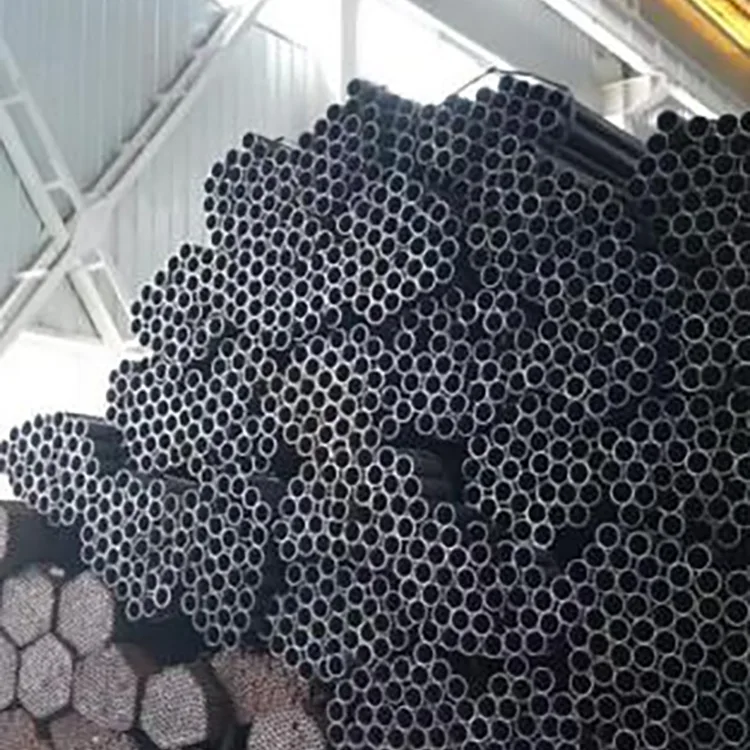
Rongheng supports bulk procurement for construction projects, steel fabricators, distributors and overseas buyers. Standard specifications can be supplied according to production and stock availability, while non-standard dimensions and processing requirements can be scheduled before production.
The standard MOQ is 1 × 20-foot container, approximately 20–25 tons. Normal lead time is 15–25 days, depending on specification, order quantity and processing requirements.
For repeat procurement, buyers can keep the same material grade, dimensions, surface treatment and inspection requirements in each purchase order. This makes it easier to maintain consistency across different shipments.
Frequently Asked Questions
Q1: Can you provide samples of the ERW Round Steel Pipe?
Yes. Samples can be arranged according to the required diameter, wall thickness and material. Common small and medium-size samples are easier to arrange, while large-diameter or thick-wall samples may require additional sample costs.
Q2: How quickly can stock products be shipped?
Common black round pipe specifications may be available from stock and can be arranged for shipment according to the actual inventory. Special wall thicknesses, larger sizes and products requiring additional processing need to be scheduled according to the production plan.
Q3: Will the dimensions remain consistent when I purchase several batches?
Production parameters and raw material specifications are controlled according to the purchase order. Outside diameter, wall thickness and other key dimensions are inspected during production and on finished products to reduce variation between batches.
Q4: Is light surface rust normal on black round pipe?
Black pipe does not have a galvanized protective layer, so light oxidation may occur during transportation or storage, especially in humid conditions. Surface rust can normally be removed before painting or further processing. If corrosion protection is required during storage or outdoor use, anti-rust oil, painting or galvanizing can be considered.
Q5: Can black round pipe be used for greenhouses, supports and railings?
Yes. It can be used for greenhouse frames, indoor supports, equipment bases and railings when the pipe specification meets the application requirements. For long-term outdoor exposure, galvanized pipe or an appropriate anti-corrosion coating is recommended.
Q6: Can the pipe be cut, drilled or bent before delivery?
Yes. Cutting, chamfering, drilling and bending can be arranged for suitable specifications. Galvanizing, painting and other surface treatments are also available according to the confirmed order requirements.
Q7: What information should I provide when requesting a quotation?
Please provide the outside diameter, wall thickness, steel grade, length, quantity, surface treatment and applicable standard. For customized processing, drawings or detailed processing requirements should also be included.
We use cookies to offer you a better browsing experience, analyze site traffic and personalize content. By using this site, you agree to our use of cookies. Privacy Policy