News

How Can a Hot-Rolled I-Beam Deliver Reliable Strength and Cost Efficiency for Structural Projects

2026-10-19 0 Leave me a message

Article Summary: A hot-rolled I-beam is a widely used structural steel section designed to provide practical bending resistance and dependable support for industrial buildings, equipment bases, platforms, and pipe racks. Understanding its cross-sectional geometry, steel grade, dimensions, manufacturing process, and surface protection helps engineers and purchasing teams select the right product for their applications. Rongheng supplies hot-rolled I-beams in Q235B and Q355B grades, with common sizes from 10# to 63# and standard lengths of 6 m, 9 m, and 12 m. This guide explains how to evaluate specifications, compare material options, and prepare a more accurate steel procurement plan.

Hot-Rolled I-Beam

Table of Contents


What Is a Hot-Rolled I-Beam?

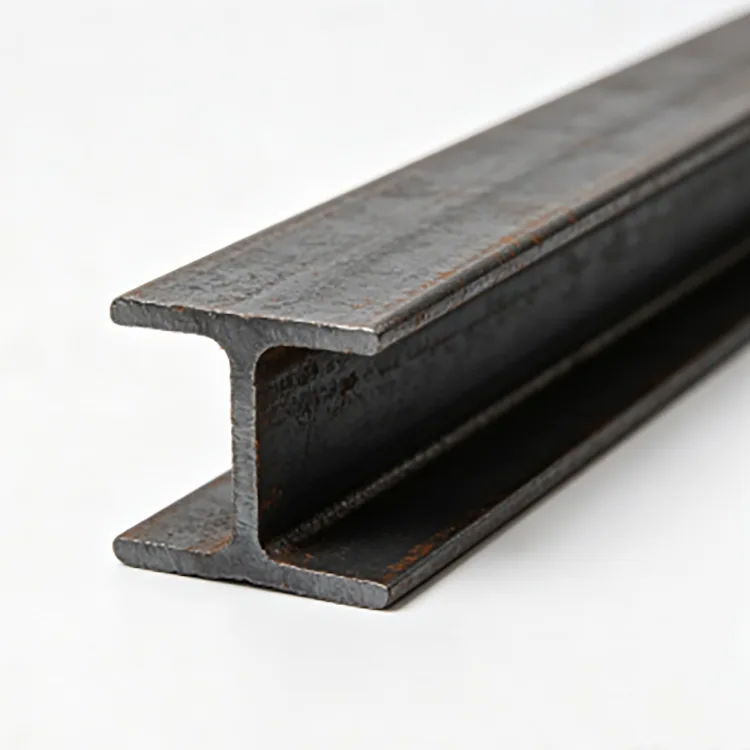
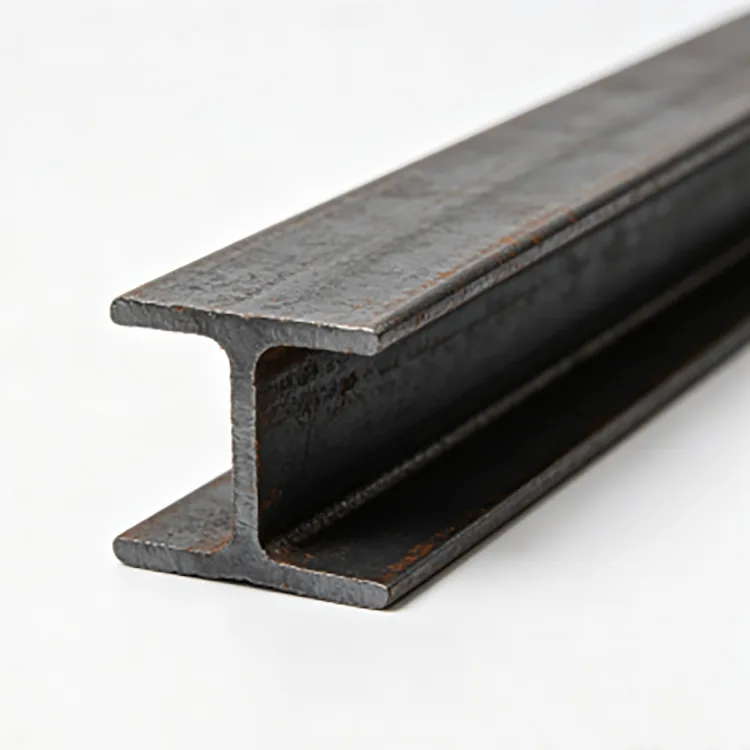
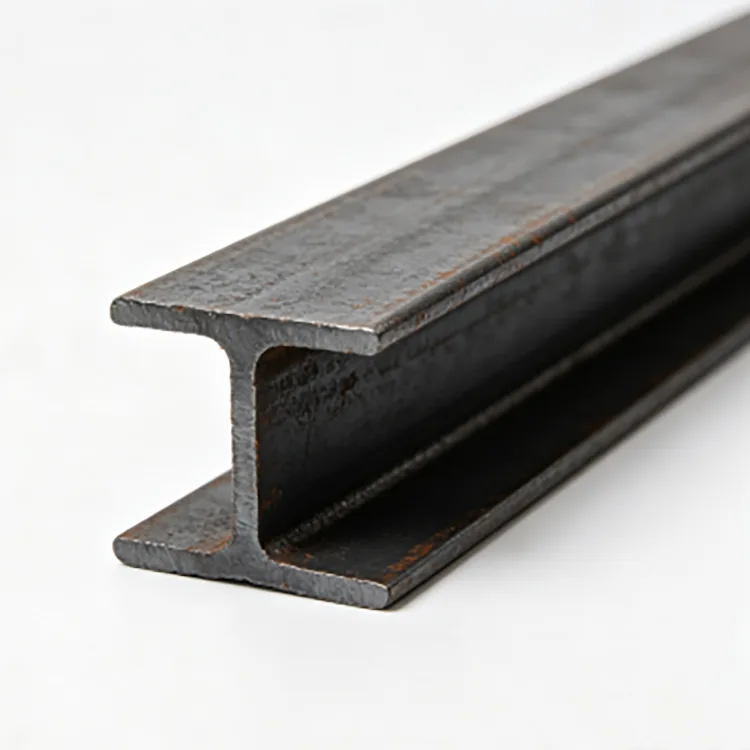
A hot-rolled I-beam is a structural steel profile manufactured by rolling heated steel through a series of forming passes. Its cross-section consists of two horizontal flanges connected by a vertical web, creating the recognizable I-shaped profile. This geometry distributes material efficiently for resisting bending, making the section suitable for many load-bearing applications.

Unlike a fabricated beam assembled from separate steel plates, a standard hot-rolled I-beam obtains its basic cross-sectional shape directly during the rolling process. This reduces the need to manufacture the fundamental section through longitudinal plate welding and provides a standardized profile for subsequent fabrication.

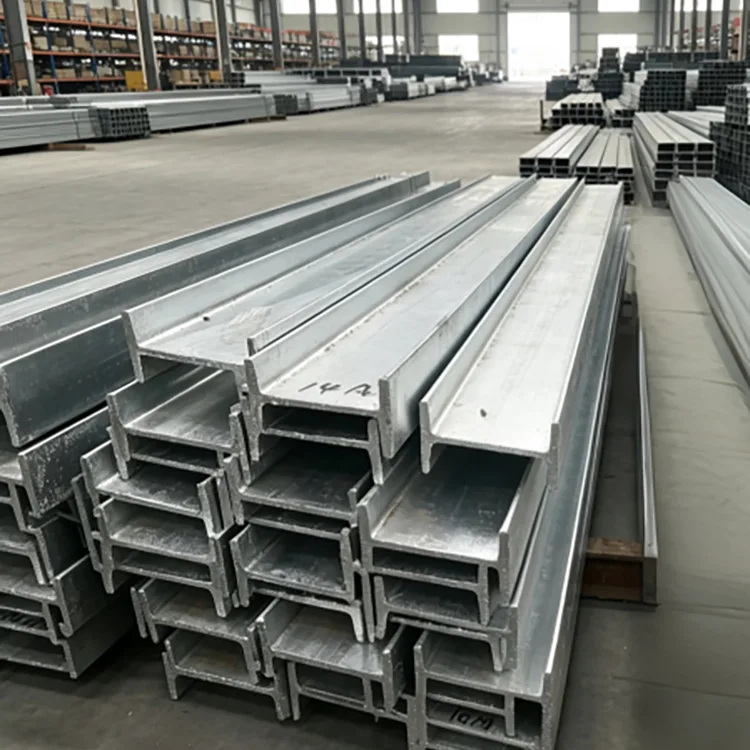
Rongheng supplies Hot-Rolled I-Beam products in Q235B and Q355B grades. The available range includes common Chinese standard sizes from 10# to 63#, with fixed-length cutting and additional processing available according to confirmed project requirements.

The web primarily connects the flanges and contributes to shear resistance, while the flanges provide much of the section's bending resistance. However, actual performance depends on the complete cross-sectional properties, steel grade, support conditions, loading pattern, and structural design.


How Does the Hot-Rolling Process Work?

Hot rolling shapes steel at elevated temperatures, allowing the material to pass through forming rolls more readily than it would at room temperature. For an I-beam, successive rolling operations establish the web and flanges and bring the section toward its specified dimensions.

A typical production sequence includes the following stages:

  1. Steel billet preparation: The incoming steel material is checked and prepared for rolling.
  2. Heating: The billet is heated to a suitable temperature for hot deformation.
  3. Rough rolling: Initial rolling passes reduce the material and begin establishing the required profile.
  4. Intermediate and finishing rolling: Additional passes form the web and flanges and refine the cross-section.
  5. Sizing and straightening: The section is brought within the applicable dimensional and straightness requirements.
  6. Cutting and inspection: The beam is cut to the required length and checked against the relevant specifications.
  7. Bundling and shipment: Accepted products are prepared for storage, handling, and transportation.

The exact manufacturing and inspection arrangements depend on the production facility and applicable product standard. For purchasers, the essential point is to verify that the finished beam meets the agreed requirements for section dimensions, material grade, length, and surface condition.


What Specifications Should Buyers Check?

Choosing a hot-rolled I-beam requires more than identifying a nominal size. Buyers should confirm the section designation, steel grade, dimensional standard, length, processing requirements, and delivery conditions before placing an order.

The following table summarizes the principal supply information published for Rongheng's hot-rolled I-beam range.

Specification Available Options or Details What Buyers Should Confirm
Product type Hot-rolled structural I-beam Required cross-sectional profile
Steel grade Q235B, Q355B Grade specified in the structural drawings
Size range 10#–63# Exact section designation and series
Section series a-series and b-series options Correct dimensional configuration
Standard lengths 6 m, 9 m, 12 m Required stock length or cutting schedule
Surface condition Black hot-rolled steel Whether additional coating is necessary
Processing options Cutting, drilling, beveling, straightening, deburring Drawing details and processing tolerances
Applicable standard GB/T 706-2016; other requirements can be discussed Required standard and acceptance criteria
Inspection documents Material certificates and agreed inspection records, subject to project requirements Required documentation and inspection scope

These options are not a substitute for a project-specific specification. Actual dimensions, flange width, web thickness, unit weight, and tolerances vary with the selected section and applicable standard. Purchasers should request the relevant dimensional information rather than assuming all beams within the same nominal size range have identical properties.

For additional product information, visit the Rongheng Steel I-Beams product category.


Where Are Hot-Rolled I-Beams Commonly Used?

The I-shaped profile makes hot-rolled I-beams useful in structures where bending resistance, practical fabrication, and compatibility with established steel construction methods are important. Their suitability must still be confirmed through engineering calculations for each application.

  • Factory buildings and workshops: I-beams can serve as roof-related beams, platform members, and supporting components in industrial facilities.
  • Warehouse structures: Properly selected sections can support designated structural framing and storage-related facilities.
  • Equipment bases: Steel beams provide a framework for mounting industrial machinery, production equipment, and mechanical assemblies.
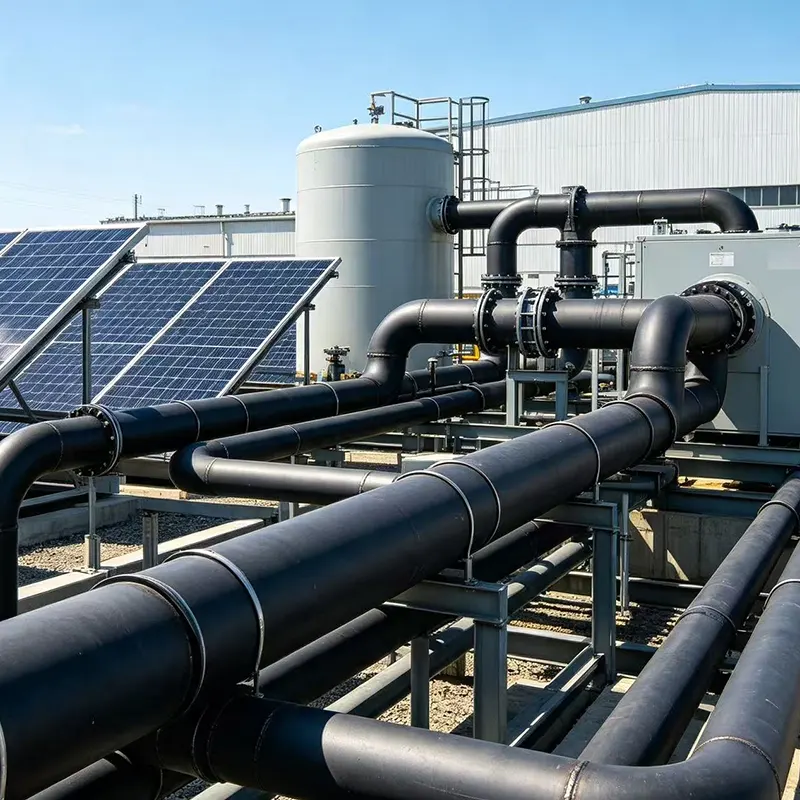
  • Pipe racks: They can form part of the support structure for industrial piping and associated equipment.
  • Platforms and walkways: I-beams can support elevated working platforms when the loads, connections, and serviceability requirements are appropriately addressed.
  • Conveyor systems: The sections can be incorporated into material-handling structures and equipment support frames.
  • Infrastructure projects: They may be used in designated structural components where the selected section complies with the project design and applicable codes.

For equipment bases, buyers should consider vibration, concentrated loads, mounting positions, and repeated operating forces. For building structures, span, beam spacing, connection details, deflection limits, and overall stability can be equally important.

A beam that works for a lightly loaded platform may not be appropriate for a crane-supporting structure or a machine subject to significant dynamic forces. Application-specific engineering should always guide the final selection.


How Should You Choose Between Q235B and Q355B?

Q235B and Q355B are common structural steel grades used for different engineering requirements. The main consideration is whether the material's specified mechanical properties meet the design requirements when combined with the selected beam section.

Q235B for General Structural Applications

Q235B is frequently considered for general structural fabrication, including factory support frames, platforms, equipment supports, and other applications where its specified properties are sufficient. Its suitability depends on the design loads, section dimensions, connection details, and applicable standard.

Q355B for Higher-Strength Requirements

Q355B offers higher specified yield strength than Q235B under the applicable material standard. It may be selected when a project requires higher material strength or when the engineer determines that it is appropriate for the intended loading conditions.

Nevertheless, a higher-strength grade does not automatically make a smaller beam acceptable. Deflection, local and overall stability, connection capacity, fatigue where relevant, and other design checks may still govern the selection.

Comparison Factor Q235B Q355B
General positioning Common structural steel grade Higher-strength structural steel grade
Potential applications General frames, platforms, and supports Applications requiring higher specified material strength
Beam size selection Must satisfy the structural calculations Must satisfy the structural calculations
Welding and fabrication Follow the applicable grade requirements and approved procedures Follow the applicable grade requirements and approved procedures
Final selection Based on engineering specifications Based on engineering specifications

Before ordering, confirm the required grade against the structural drawings and material specification. Substituting one grade for another without approval may affect compliance, fabrication procedures, or structural performance.


What Is the Difference Between I-Beams and H-Beams?

I-beams and H-beams are both structural steel profiles with a web and two flanges, but their cross-sectional proportions and section properties can differ significantly. Traditional I-beams generally have narrower flanges, while H-beams usually have wider flanges and a profile suited to a different range of structural requirements.

Comparison Point I-Beam H-Beam
Cross-sectional appearance Typically narrower flanges relative to section depth Typically wider flanges
Common structural role Beams, platforms, equipment supports, and selected framing members Columns, building frames, and other load-bearing members
Design considerations Section modulus, shear resistance, stability, and deflection Section properties, stability, axial loads, bending, and connections
Interchangeability Requires engineering verification Requires engineering verification

Neither profile is universally superior. The appropriate choice depends on the load path, span, support conditions, member orientation, connection design, and relevant section properties. A substitution should never be made solely because two profiles appear similar or have comparable nominal depths.

Projects requiring multiple structural profiles can also review Rongheng's structural steel sections to compare available product categories.


How Can Quality and Corrosion Resistance Be Managed?

Product quality involves more than visual appearance. For a hot-rolled I-beam, purchasers should verify that the supplied section matches the purchase order and that its dimensions, material identification, and surface condition satisfy the agreed acceptance criteria.

A practical inspection plan may cover the following points:

  • Material identification: Confirm the steel grade and traceability information against the order and available material documentation.
  • Section dimensions: Check the nominal section designation, beam height, flange width, web thickness, and other specified dimensions.
  • Length and straightness: Verify the supplied length and relevant straightness requirements.
  • Surface condition: Examine for significant cracks, laminations, or other defects relevant to acceptance.
  • Documentation: Confirm the availability of material certificates, inspection records, and third-party inspection where contractually required.

Standard black hot-rolled I-beams do not automatically include a corrosion-protection coating. The surface normally retains mill scale, and additional protection may be necessary depending on the operating environment.

For indoor applications in dry conditions, the specified black surface may be adequate. Outdoor installations, humid facilities, coastal locations, and chemically aggressive environments may require a suitable paint system, hot-dip galvanizing, or another engineered protective coating.

Where galvanizing is specified, cutting, drilling, and other fabrication operations should generally be coordinated before coating. This helps reduce the amount of exposed steel that would otherwise need protective repair after processing. The final coating system should be selected according to the environment, design life, maintenance plan, and project requirements.


What Should You Confirm Before Ordering?

Clear purchasing specifications help reduce material mismatches, unnecessary fabrication, and installation delays. Before requesting a quotation, prepare the following information whenever possible.

  1. Section designation: Provide the exact beam number and series shown in the drawings.
  2. Steel grade: Identify Q235B, Q355B, or another approved grade required by the project.
  3. Applicable standard: State the required dimensional and material standards, including any contractual acceptance requirements.
  4. Quantity: Specify the number of pieces, total length, or estimated tonnage.
  5. Required lengths: Confirm whether standard 6 m, 9 m, or 12 m lengths are acceptable or fixed-length cutting is needed.
  6. Processing details: Supply cutting lists, drilling positions, bevel requirements, and other fabrication drawings.
  7. Surface treatment: Identify whether black hot-rolled steel, paint, galvanizing, or another finish is required.
  8. Inspection documents: Define the material certificates, inspection records, and third-party verification required for acceptance.
  9. Delivery arrangements: Confirm packaging, shipment destination, delivery schedule, and export documentation requirements.
  10. Weight settlement: Agree whether invoicing will use actual weight or theoretical weight as specified in the purchase contract.

For example, a project requiring 12 m beams with drilled mounting holes should specify both the final cut length and the hole locations. If the order simply states a beam size and quantity, the supplier may not have enough information to prepare the required processed components.

Rongheng can coordinate standard sections, fixed-length cutting, drilling, beveling, straightening, and deburring according to agreed requirements. Providing complete drawings and a consolidated cutting list makes it easier to review the order before production or shipment.


Frequently Asked Questions

1. What is a hot-rolled I-beam mainly used for?

It is commonly used for factory structures, roof-related beams, platforms, equipment bases, pipe racks, warehouse framing, and industrial support structures. The specific application must be checked against the structural design.

2. What sizes of hot-rolled I-beams does Rongheng supply?

Rongheng lists a common size range from 10# to 63#, including a-series and b-series options. Exact dimensions and theoretical unit weights depend on the selected section designation.

3. What standard lengths are available?

Common standard lengths are 6 m, 9 m, and 12 m. Fixed-length cutting can also be discussed according to the confirmed project dimensions and order requirements.

4. Is Q355B always better than Q235B?

No. Q355B has higher specified yield strength, but the appropriate grade depends on the engineering design, loading conditions, section size, fabrication requirements, and applicable standard. Higher material strength alone does not guarantee better overall structural performance.

5. Can a hot-rolled I-beam replace an H-beam?

Not automatically. The two profiles can have different section properties and structural behavior. Any substitution should be checked and approved by the responsible structural engineer.

6. Can Rongheng provide customized cutting and drilling?

Yes. Cutting, drilling, beveling, straightening, and deburring can be arranged according to agreed processing requirements. Buyers should provide the necessary drawings, dimensions, and tolerances before ordering.

7. Does a black hot-rolled I-beam have corrosion protection?

A standard black hot-rolled surface is not equivalent to a dedicated corrosion-protection coating. Depending on the environment, the project may require painting, hot-dip galvanizing, or another suitable protective system.

8. What information should be included in a quotation request?

Include the section designation, steel grade, applicable standard, quantity, required length, processing details, surface treatment, inspection requirements, and delivery destination. These details help the supplier assess the order more accurately.

9. How is the theoretical weight of an I-beam calculated?

Theoretical weight is calculated by multiplying the published unit weight of the selected section by its length. For example, a section with a theoretical unit weight of 20 kg/m and a length of 12 m has a theoretical weight of 240 kg. The actual unit weight must be confirmed for the selected section, and the contract should specify the settlement method.

10. Can hot-rolled I-beams be supplied for international projects?

Yes. International orders can be coordinated around the agreed section specifications, processing requirements, inspection documents, packaging, container loading, and export documentation. Delivery arrangements should be confirmed for each order.


Conclusion: Choosing the Right Hot-Rolled I-Beam

A hot-rolled I-beam can provide an efficient structural solution when its dimensions, steel grade, and section properties match the demands of the project. Successful procurement requires more than comparing prices: buyers should verify the applicable standard, confirm the correct section series, specify processing and corrosion protection, and establish clear inspection and delivery requirements.

Rongheng supports structural steel sourcing with Q235B and Q355B hot-rolled I-beams, common sizes from 10# to 63#, standard lengths of 6 m, 9 m, and 12 m, and agreed processing options. Whether you are purchasing steel for a factory structure, equipment base, industrial platform, or pipe rack, accurate specifications can help streamline fabrication and reduce avoidable procurement risks.

Looking for a dependable supply of Hot-Rolled I-Beam for your next structural project? Share your required section size, steel grade, quantity, cutting dimensions, surface treatment, and delivery destination with Rongheng. Our team can review your requirements and discuss suitable supply options. For product details, project quotations, and customized processing arrangements, contact us today to discuss your steel sourcing needs.

Related News
Leave me a message
X
We use cookies to offer you a better browsing experience, analyze site traffic and personalize content. By using this site, you agree to our use of cookies. Privacy Policy
RejectAccept